Build
- Steps defined by operations, not engineering
- Mix deterministic actions with AI-assisted steps in the same workflow
- Reuse the flows, rules, queues, and integrations you already have
Work gets stuck, bounces between teams, and gets patched by hand. Your flows, routing, and AI tools all run. Nothing runs them as one. So your team does.
Ortoo Orchestrator runs your existing flows, routing, AI steps, and integrations as one coordinated workflow, so case triage, lead routing, and claims run end to end, natively in Salesforce.
TRUSTED BY OPERATIONS TEAMS USING SALESFORCE
'%20id='layer1'%3e%3cpath%20d='M%20372.07821,531.63637%20L%20372.07821,530.40262%20L%20367.33659,530.40262%20C%20365.00484,530.40262%20363.91609,531.20162%20363.91609,532.43762%20C%20363.91609,533.57087%20364.96609,534.57162%20367.64846,534.57162%20C%20370.95121,534.57162%20372.07821,534.2705%20372.07821,531.63637%20z%20M%20361.93559,523.36912%20L%20360.26259,525.05662%20C%20358.70596,524.12187%20357.11284,523.48812%20354.97484,523.48812%20C%20352.44846,523.48812%20351.59384,524.35537%20351.59384,525.52312%20C%20351.59384,526.25675%20352.21559,526.9905%20354.19721,527.12475%20L%20357.46246,527.32362%20C%20359.47721,527.43875%20360.89334,528.017%20361.81371,528.89712%20C%20362.88834,527.97975%20364.48659,527.39612%20366.59834,527.39612%20L%20372.07821,527.39612%20L%20372.07821,525.67425%20C%20372.07821,524.07262%20370.87359,523.50525%20368.03571,523.50525%20C%20365.97659,523.50525%20364.63221,524.11237%20363.59509,525.069%20L%20361.93559,523.36912%20z%20M%20391.42271,527.65687%20L%20400.58646,527.65687%20C%20400.58646,524.72437%20398.40484,523.26912%20395.98771,523.26912%20C%20393.57196,523.26912%20391.42271,524.69825%20391.42271,527.65687%20z%20M%20377.70559,528.94887%20C%20377.74184,531.714%20377.78584,532.1495%20378.50521,532.92425%20C%20379.06559,533.53012%20380.28059,534.2385%20381.92259,534.2385%20C%20383.52321,534.2385%20384.56346,533.53012%20385.12571,532.92425%20C%20385.84584,532.1495%20385.92671,531.67812%20385.92671,528.94887%20C%20385.92671,526.187%20385.84584,525.714%20385.12571,524.94062%20C%20384.56346,524.33437%20383.52321,523.62625%20381.92259,523.62625%20C%20380.28059,523.62625%20379.06559,524.33437%20378.50521,524.94062%20C%20377.78584,525.714%20377.66809,526.16462%20377.70559,528.94887%20z%20M%20375.21084,522.85987%20C%20375.33771,522.6965%20375.47934,522.53275%20375.63596,522.35687%20C%20376.52871,521.38975%20378.28009,520.28987%20380.84346,520.28987%20C%20382.86584,520.28987%20384.46009,520.95662%20385.93646,522.29087%20L%20385.93646,520.48937%20L%20389.89971,520.48937%20L%20389.89971,522.34262%20C%20391.47184,520.86625%20393.58496,520.28987%20395.56209,520.28987%20C%20399.89746,520.28987%20403.63109,523.26037%20403.65434,528.25212%20C%20403.65959,529.10612%20403.55859,530.63237%20403.55859,530.63237%20L%20391.41759,530.63725%20C%20391.41759,533.3955%20393.29896,534.43675%20396.01234,534.43675%20C%20397.52109,534.43675%20399.43809,533.7465%20400.60059,532.71825%20L%20403.26034,534.65%20C%20401.32271,536.57712%20398.72184,537.62675%20396.08796,537.62675%20C%20393.92134,537.62675%20391.59221,537.1195%20389.89971,535.5755%20L%20389.89971,537.00012%20C%20389.89971,542.10375%20385.85746,544.43812%20381.35059,544.43812%20C%20378.82359,544.43812%20376.25771,543.30325%20374.50896,541.603%20L%20377.57871,539.50237%20C%20378.55184,540.33562%20379.91171,541.03625%20381.42696,541.03625%20C%20384.07059,541.03625%20385.93646,539.73562%20385.93646,537.367%20L%20385.93646,535.63275%20C%20384.69284,536.7995%20382.86584,537.60012%20380.84346,537.60012%20C%20378.62496,537.60012%20377.01596,536.77637%20376.04284,535.92712%20L%20376.04284,537.64287%20L%20372.07821,537.64287%20L%20372.07821,535.91425%20L%20372.00221,535.91425%20C%20371.18546,537.082%20369.82484,537.61537%20367.14284,537.61537%20C%20364.63609,537.61537%20362.72621,536.88762%20361.54646,535.71787%20C%20360.06971,536.937%20357.71734,537.597%20355.01434,537.597%20C%20351.82671,537.597%20348.87196,536.59612%20346.34546,534.56237%20L%20349.10484,532.22775%20C%20350.81484,533.66012%20352.68009,534.3965%20355.32459,534.3965%20C%20357.58021,534.3965%20359.21121,533.66012%20359.21121,532.22775%20C%20359.21121,531.026%20358.16246,530.6595%20356.80121,530.55925%20L%20353.30309,530.29262%20C%20350.03846,530.05937%20347.62846,528.39125%20347.62846,525.49025%20C%20347.62846,522.05412%20350.81484,520.28625%20354.97484,520.28625%20C%20357.97946,520.28625%20360.13284,520.96612%20361.92084,522.06187%20C%20363.37121,520.76212%20365.27596,520.304%20367.84184,520.304%20C%20371.26109,520.304%20373.92921,520.99762%20375.21084,522.85987'%20style='fill:%23008066;fill-opacity:1;fill-rule:nonzero;stroke:none'%20id='path2489'%20/%3e%3c/g%3e%3c/svg%3e)









%20--%3e%3csvg%20xmlns:svg='http://www.w3.org/2000/svg'%20xmlns='http://www.w3.org/2000/svg'%20version='1.0'%20width='800'%20height='110.066'%20viewBox='0%200%20800%20110.066'%20id='svg2'%20xml:space='preserve'%3e%3cdefs%20id='defs23'%20/%3e%3cg%20style='display:none'%20id='Grade'%3e%3c/g%3e%3cg%20id='Camada_1'%3e%3c/g%3e%3cg%20id='Área_de_trabalho'%3e%3c/g%3e%3cg%20id='Linhas-guia'%3e%3c/g%3e%3cg%20id='Page_1'%3e%3cg%20id='Camada_1_1_'%3e%3cg%20id='g10'%3e%3cpolygon%20points='0,4.723%200,19.33%2023.959,19.33%2070.846,107.261%20128.543,107.261%20175.43,19.184%20199.385,19.033%20199.437,4.723%20127.761,4.723%20127.761,19.083%20146.849,19.083%20113.74,81.595%2077.933,19.301%20104.05,19.184%20104.004,4.723%200,4.723%20'%20style='fill:%230d3896;fill-rule:evenodd'%20id='polygon12'%20/%3e%3cpolygon%20points='462.405,4.723%20462.405,19.33%20486.357,19.33%20533.245,107.261%20590.944,107.261%20637.831,19.184%20661.789,19.033%20661.832,4.723%20590.169,4.723%20590.169,19.083%20609.249,19.083%20576.141,81.595%20540.33,19.301%20566.455,19.184%20566.406,4.723%20462.405,4.723%20'%20style='fill:%230d3896;fill-rule:evenodd'%20id='polygon14'%20/%3e%3cpath%20d='M%20344.515,4.723%20L%20344.515,19.33%20L%20368.47,19.33%20L%20368.51,91.118%20L%20343.255,91.118%20L%20343.255,107.119%20L%20368.527,107.262%20L%20488.139,107.262%20L%20488.139,59.532%20L%20472.558,59.532%20C%20471.704,84.803%20449.782,91.152%20440.548,91.152%20C%20432.087,91.152%20415.693,91.119%20415.693,91.119%20L%20415.693,19.301%20L%20439.288,19.183%20L%20439.256,4.722%20L%20344.515,4.722%20L%20344.515,4.723%20z%20'%20style='fill:%230d3896;fill-rule:evenodd'%20id='path16'%20/%3e%3cpath%20d='M%20262.808,94.13%20C%20248.453,94.13%20236.822,76.935%20236.822,55.713%20C%20236.822,34.486%20248.453,17.278%20262.808,17.278%20C%20277.159,17.278%20288.794,34.486%20288.794,55.713%20C%20288.794,76.935%20277.159,94.13%20262.808,94.13%20L%20262.808,94.13%20z%20M%20263.864,1.777%20C%20223.144,1.777%20190.135,26.024%20190.135,55.922%20C%20190.135,85.822%20223.143,110.066%20263.864,110.066%20C%20304.581,110.066%20337.595,85.822%20337.595,55.922%20C%20337.595,26.024%20304.581,1.777%20263.864,1.777%20L%20263.864,1.777%20z%20'%20style='fill:%230d3896;fill-rule:evenodd'%20id='path18'%20/%3e%3cpath%20d='M%20725.215,93.857%20C%20710.865,93.857%20699.235,76.377%20699.235,54.804%20C%20699.235,33.239%20710.866,15.755%20725.215,15.755%20C%20739.567,15.755%20751.195,33.239%20751.195,54.804%20C%20751.196,76.376%20739.567,93.857%20725.215,93.857%20L%20725.215,93.857%20z%20M%20726.276,0%20C%20685.547,0%20652.548,24.642%20652.548,55.028%20C%20652.548,85.413%20685.546,110.05%20726.276,110.05%20C%20766.99,110.05%20800,85.413%20800,55.028%20C%20800,24.642%20766.99,0%20726.276,0%20L%20726.276,0%20z%20'%20style='fill:%230d3896;fill-rule:evenodd'%20id='path20'%20/%3e%3c/g%3e%3c/g%3e%3c/g%3e%3c/svg%3e)
The problem
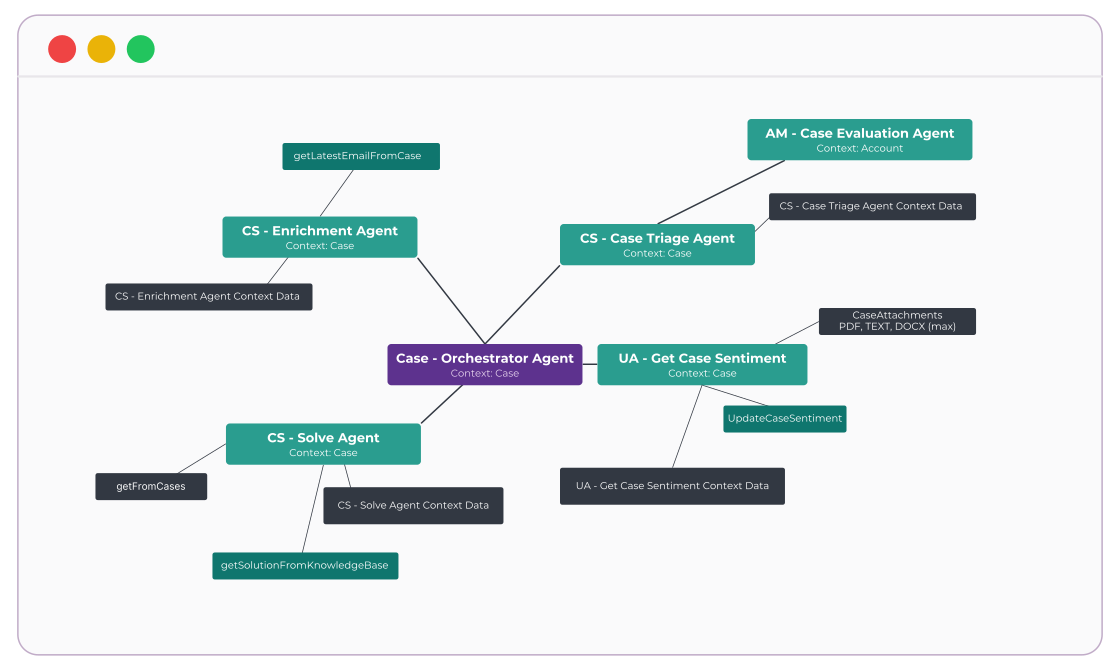
Your Salesforce has flows, routing rules, queues, AI tools, integrations. Each one was built to solve one problem. Nothing was built to run them as one system.
Ortoo Orchestrator is the missing coordination layer.
It orchestrates workflows that your team can change easily in Salesforce without filing a ticket or touching code, that hold up at volume and enterprise complexity.
Before and after
Most ops and IT teams still hold Salesforce together by hand. Manual fixes are the operating model. Workflows stall at the handoffs no one owns. Cases and leads bounce between teams. With Ortoo Orchestrator, workflows run as one process. The team gets back the hours they were spending on reconciliation.
Before
Without Ortoo Orchestrator
of senior agent time
60%
Absorbed by manual operational work.
Cars.com, pre-Ortoo
After
With Ortoo Orchestrator
Reduction in time to resolve cases
50%
Sage Intacct
The capabilities
Automation handles one step. Orchestration runs the whole workflow.
Your flows and rules already automate individual steps. Ortoo coordinates them into one workflow that runs end to end, so nobody has to keep pushing it along by hand.
You build the workflow in Salesforce once. Ortoo Orchestrator runs it consistently. Operations team can see and change how a process runs without filing a ticket.
IN SALESFORCE AND BEYOND
Ortoo Orchestrator runs inside Salesforce, on your data, using the flows and Agentforce capabilities you already have. Your data stays in Salesforce. The execution layer reaches outside it, to ERP systems, billing platforms, data warehouses, and the team tools where your work continues after Salesforce.
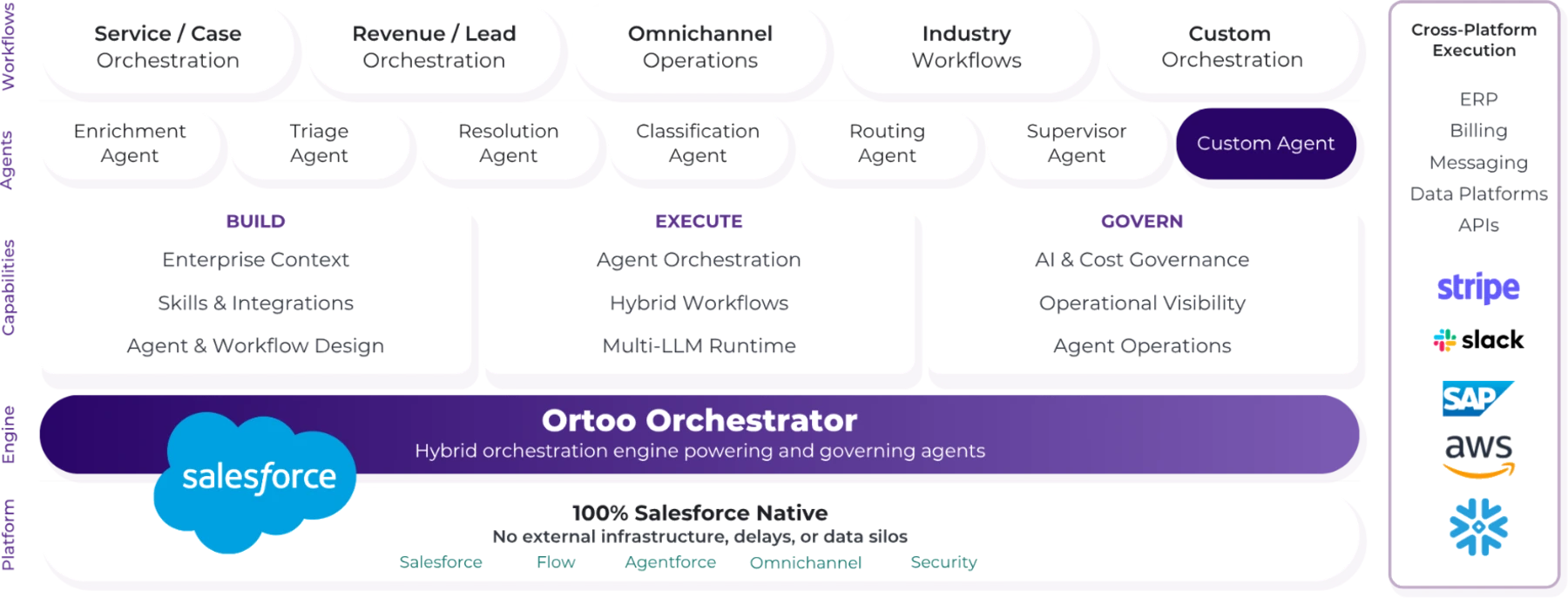
Extends Omnichannel, Flow, and Agentforce.
Works inside the platform you already run, using the capabilities you have already built.
Reaches ERP, billing, and data platforms.
Connects to the systems outside Salesforce through APIs and MCP.
Closes the loop in Slack, messaging, and email.
Closes the loop where your team actually works.
Runs on any AI model you choose.
Bring your own model, your contract, your governance.
IN PRODUCTION
Service, revenue, claims, omnichannel, and custom. Different teams, different vocabulary, one execution model. Every workflow follows the same path.
THE DIFFERENCE
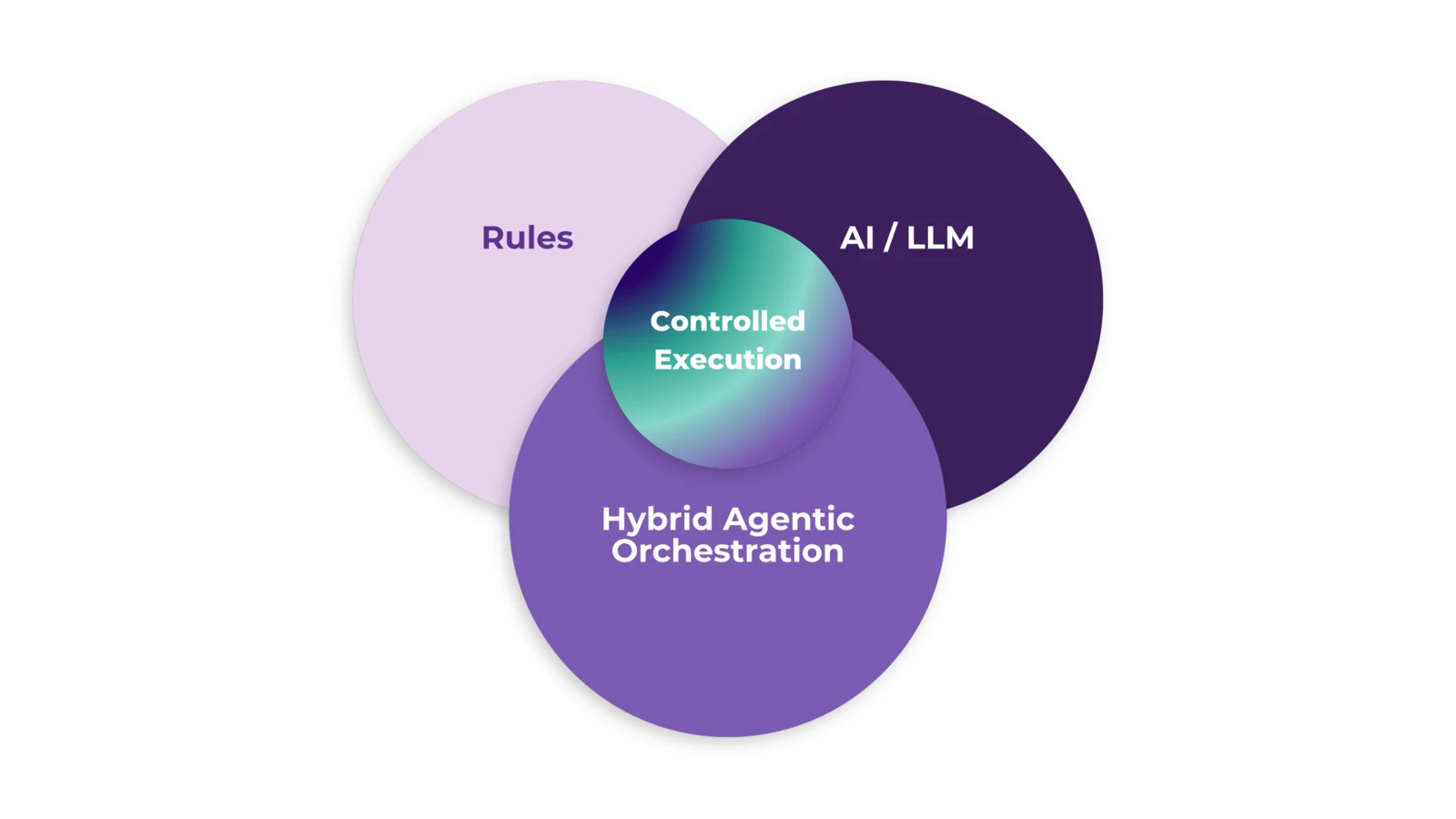
Specialist agents, hybrid execution, multi-LLM freedom, and predictable per-outcome pricing. The pieces that make agentic AI safe to run in production.
Pricing model
Most agentic platforms bill per action, so costs climb with activity. Ortoo prices per work item handled, so spend tracks outcomes.
One case resolved. One lead handled. One claim processed. One approval completed. That is what you pay for. All agents and all steps inside that work item are included.
Typical agentic pricing
You pay for:
Costs scale with activity, not outcomes.
Ortoo Orchestrator
case resolved, lead routed, request handled
You pay for:
Proof in production
These are complex workflows handling thousands of cases and records every day.
Customer reviews
Since implementing, I receive notifications whenever a Data Services ticket is created, allowing me to track progress from creation through completion.
Amon Kimutai
Overall, a good experience. It improved visibility, automated case assignment, and supported more balanced workloads.
Shaik Farooq
The process of assigning cases has become more structured and efficient, which has contributed to better coordination and visibility across the team.
Wish Wanjala
With over 1,000 cases coming in daily, we needed a structured approach to ensure cases are directed to the right teams.
Mercy Kiprono
Highly configurable and has met our complex needs for case handling. From start to end the team was heavily invested in delivering a solution.
Louisa Barrett
An incredibly helpful tool when dealing with a large volume of cases. Its ability to assign cases to the best possible agent is an asset to any support organization.
Dylan Pendexter
I was initially skeptical about relying on a third-party app for routing instead of Salesforce's out-of-the-box Omni-Channel, but the solution has exceeded my expectations. Stable, reliable, and the support team has been exceptional at every step.
Jessica Combs
The interface is user friendly and the automation features reduce manual effort while keeping tasks accurate. It has streamlined case management and made it easier to track and prioritise work.
Tarun D Chalam
I have never had a better experience with a customer success team from a third-party vendor. They proactively worked to optimise our setup while remaining receptive to our priorities and bandwidth. They listen, and they resolve.
Lisa Koeck
The Ortoo team is exceptional at responding to customer requests in a timely fashion. Anything we have asked for, they are quick to address, whether resolving an issue or adjusting the tool to fit our use case. Great team to work with.
Kevin McDaniel
Our experience with Ortoo has been outstanding. Orchestrator has worked seamlessly for our team, delivering automated assignment routing that has significantly improved our workflow. Its email capability has become an essential part of our Salesforce org with its intuitive functionality and upgraded interface.
Angela McGuire
Since implementing, I receive notifications whenever a Data Services ticket is created, allowing me to track progress from creation through completion.
Amon Kimutai
Overall, a good experience. It improved visibility, automated case assignment, and supported more balanced workloads.
Shaik Farooq
The process of assigning cases has become more structured and efficient, which has contributed to better coordination and visibility across the team.
Wish Wanjala
With over 1,000 cases coming in daily, we needed a structured approach to ensure cases are directed to the right teams.
Mercy Kiprono
Highly configurable and has met our complex needs for case handling. From start to end the team was heavily invested in delivering a solution.
Louisa Barrett
An incredibly helpful tool when dealing with a large volume of cases. Its ability to assign cases to the best possible agent is an asset to any support organization.
Dylan Pendexter
I was initially skeptical about relying on a third-party app for routing instead of Salesforce's out-of-the-box Omni-Channel, but the solution has exceeded my expectations. Stable, reliable, and the support team has been exceptional at every step.
Jessica Combs
The interface is user friendly and the automation features reduce manual effort while keeping tasks accurate. It has streamlined case management and made it easier to track and prioritise work.
Tarun D Chalam
I have never had a better experience with a customer success team from a third-party vendor. They proactively worked to optimise our setup while remaining receptive to our priorities and bandwidth. They listen, and they resolve.
Lisa Koeck
The Ortoo team is exceptional at responding to customer requests in a timely fashion. Anything we have asked for, they are quick to address, whether resolving an issue or adjusting the tool to fit our use case. Great team to work with.
Kevin McDaniel
Our experience with Ortoo has been outstanding. Orchestrator has worked seamlessly for our team, delivering automated assignment routing that has significantly improved our workflow. Its email capability has become an essential part of our Salesforce org with its intuitive functionality and upgraded interface.
Angela McGuire
Since implementing, I receive notifications whenever a Data Services ticket is created, allowing me to track progress from creation through completion.
Amon Kimutai
FAQ
No. Ortoo Orchestrator calls existing Flows and routing rules as steps in orchestrated workflows. Your team's investment in Flow stays valuable. Most customers extend what they have rather than replace it.
Most teams stabilise their first workflow in weeks, not months. Implementation timelines depend on the complexity of the workflow and the readiness of the surrounding data. We do not propose multi-quarter rollouts.
No. Rule changes and routing updates happen in Salesforce setup, by the people closest to the work. Adding a new skill, lifting a capacity limit, or rerouting a region does not require a release cycle, an admin queue, or a developer ticket.
Yes. Ortoo Orchestrator and Agentforce work together. Agentforce handles conversational interfaces. Ortoo Orchestrator handles multi-step operational workflows.
You set confidence thresholds per agent. Above the threshold, the agent acts. Below it, the workflow drafts for human review or asks for input. Deterministic logic runs alongside AI for the steps where certainty matters more than interpretation.
Omnichannel handles channel-driven routing. Ortoo Orchestrator handles multi-factor routing with capacity, skills, SLA, and language awareness. The two can run together, channel routing on one side, capacity-aware assignment on the other.
Ortoo Orchestrator calls LLMs through your own API keys, under your contract with the AI provider. No customer data is retained by Ortoo . Your choice of LLM provider processes your data under the contract you hold with them. You control which providers are allowed per workflow. If your security policy excludes a provider, that provider does not get called. Data residency follows your provider's data handling arrangements. You can build and operate Ortoo Orchestrator workflows without any AI, fully deterministic.
Most teams stabilise their first workflow in weeks. Start with one workflow to stop the manual fixes. Expand use cases from there.
No 9-month rollout. No platform overhaul.
Walk through intake, routing, agent steps, human checkpoints, and outcome reporting in a single execution model with shared context.
Read the guideSee how scoped agents handle classification, drafting, lookups, and approvals while humans stay in control of judgement calls.
Meet the agentsWhat you trade when you wire LLMs, queues, and dashboards yourself, and where a managed orchestration layer pays back.
See the comparison