A Practical Model for Salesforce Workflows in Healthcare Operations

Many healthcare organisations configure their Salesforce systems under a flawed assumption – that patient intake can be managed like a simple, linear queue. This approach treats every incoming request as if it arrives neatly packaged and ready for sequential processing. It is a model that seems logical on a whiteboard but fails in practice.
The reality of UK healthcare intake is a mix of formats and urgencies. GP referrals land via NHS Mail alongside faxes from clinics patient portal messages and direct phone calls. A linear queue cannot interpret this varied stream of information. It creates an immediate bottleneck because it lacks the logic to dynamically classify and prioritise. This initial failure in the patient intake process automation means that from the very start the system is working against the operational teams. A new mental model is needed one that replaces the single-file queue with a dynamic orchestration system.
The Misconception of Linear Intake Processes
The belief that healthcare intake can be managed like a simple queue is a common but costly mistake. Many organisations set up their Salesforce systems as if patient requests will arrive in an orderly line ready to be handled one by one. This thinking is fundamentally unsuited to the complex realities of UK healthcare.
Intake sources are incredibly varied. A single workstream can include GP referrals from NHS Mail faxes from outpatient clinics secure messages from patient portals and notes from direct phone calls. Each source delivers information in a different format and with a different level of urgency. The core problem is not just the volume of requests but their variability. A linear queue creates an immediate bottleneck because it cannot dynamically interpret and prioritise this mix of incoming information. This represents a critical failure in the initial stages of the patient intake process automation.
This flawed model forces manual workarounds from day one. Staff must constantly monitor the queue to pull out urgent cases or piece together related information that the system failed to connect. We need a new approach that replaces the single-file queue with a dynamic orchestration system capable of managing multiple concurrent information streams from the start.
The Operational Cost of Inefficient Triage

The consequences of a poorly designed intake process extend far beyond administrative inconvenience. When the initial triage model is flawed it creates tangible risks and costs that ripple through the entire organisation.
First and foremost is the impact on clinical risk. An urgent referral for a high-risk condition sitting in a generic queue behind a routine administrative query can directly lead to delayed treatment and poorer patient outcomes. The system’s inability to distinguish urgency puts patients at avoidable risk. This is followed by significant administrative waste. When initial triage fails cases require manual re-routing and correction. This consumes the valuable time of skilled administrative and clinical staff pulling them away from patient-facing duties and increasing operational overhead.
There is also a human cost. Forcing operations teams to constantly manage workflow exceptions and manually fix system errors is a major source of frustration and a key contributor to staff burnout. This is not a training issue – it is a system design failure. Finally inefficient intake processes create governance and compliance vulnerabilities. Inconsistent handling of patient data during a chaotic intake process can lead to breaches of UK data protection standards and healthcare information governance.
An Orchestration Model for Salesforce Workflows for Healthcare
To solve the intake problem we must move from a simple queue to an intelligent system for healthcare operations orchestration. A repeatable three-stage model provides a practical framework for building effective Salesforce workflows for healthcare. This model ensures every case is understood before it reaches a person.
Stage 1: Automated Classification
The first stage uses Salesforce automation to parse every incoming request regardless of its source. The system applies rules to automatically categorise items based on keywords like ‘chest pain’ the referral source such as an ‘A&E department’ or the document type. This initial step ensures every case is correctly labelled with essential metadata before a human ever sees it. It turns a chaotic inbox into a structured dataset.
Stage 2: Dynamic Triage
Once a case is classified business logic is applied to assess its urgency and complexity. This workflow can automatically prioritise high-risk cases or flag those meeting specific clinical criteria for immediate review by a specialist. As Salesforce notes connecting systems is key to organising data in a meaningful way. This is precisely what this stage achieves by creating a unified view for better decision-making. You can see how platforms like Health Cloud are designed to enable this level of data integration.
Stage 3: Intelligent Assignment
After triage the model routes the case to the most appropriate team or individual. This logic should be sophisticated considering factors like team capacity clinical specialty and continuity of care for existing patients. This is where the principles of effective case assignment in Salesforce become critical for operational efficiency. The goal is to deliver the case to the right person who has the skills and availability to handle it correctly the first time.
This model does not replace clinical judgment. It is built on a human-in-the-loop principle. The system delivers a fully classified triaged and context-rich case to the right expert for a final informed decision.
The Critical Signal of a Broken Workflow

There is one clear metric that indicates a failing intake process – the rate of case re-assignment. If cases are frequently passed between teams after the initial assignment it is a direct symptom of poor classification and triage. It proves the system is not capturing the right information upfront to make an accurate routing decision.
This is not a user error. It is a workflow failure. Operations managers can monitor this within Salesforce by creating a simple report or dashboard that tracks case ownership changes or status updates indicating a re-route. This makes the invisible problem of workflow friction visible and provides a clear data point for improvement.
This metric should be used as a diagnostic tool not a way to measure staff performance. A high re-assignment rate is a signal to review and refine the automation rules in the classification and triage stages. It helps improve the system for everyone by identifying where the logic needs to be more precise.
Closing the Loop on Intake Orchestration
Effective healthcare intake management requires a fundamental shift from a linear queue to a dynamic orchestration model that automates classification triage and assignment. The goal of such Salesforce workflows for healthcare is not to remove people but to augment their expertise. This model ensures skilled professionals get the right case with the right context at the right time. For a broader view on improving business processes you can explore more at our website.
Ask an Expert any question about designing Salesforce workflows for healthcare operations by emailing sales@ortooapps.com.
Related insights
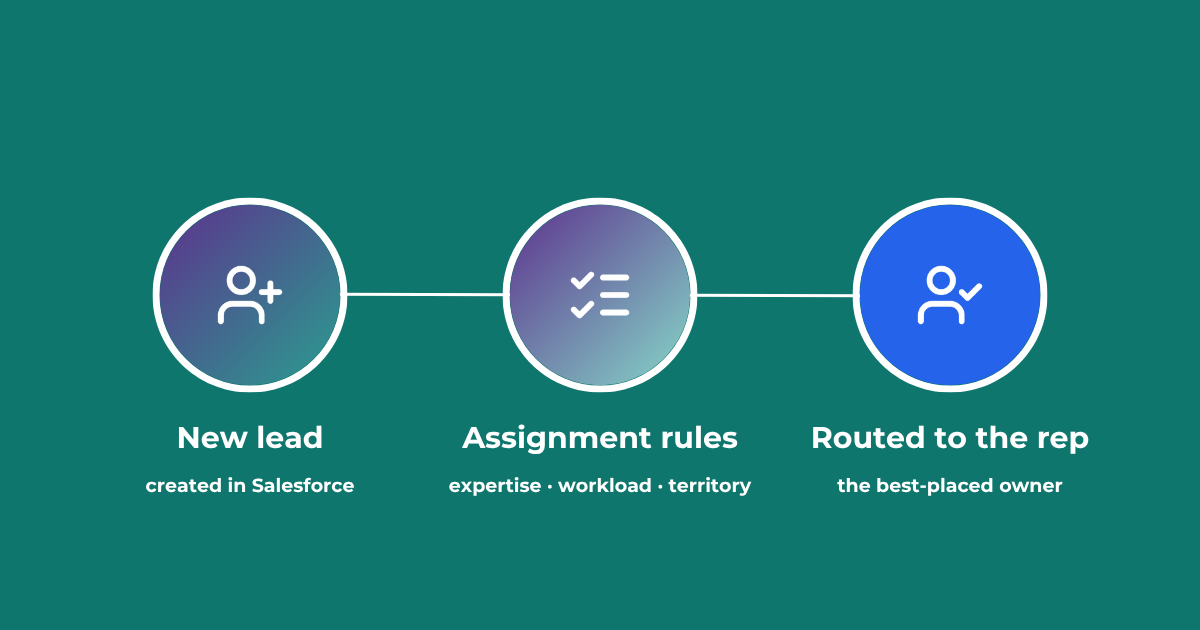
Lead Assignment Rules in Salesforce: Automate with Q-assign
This comprehensive guide to optimizing lead assignment rules in Salesforce will stand you in good stead for maximizing your sales reps’ productivity and performance. Understand the benefits of highly effective lead assignment, explore Salesforce best practices and stay ahead of the competition – with added insights into AI-driven revenue orchestration
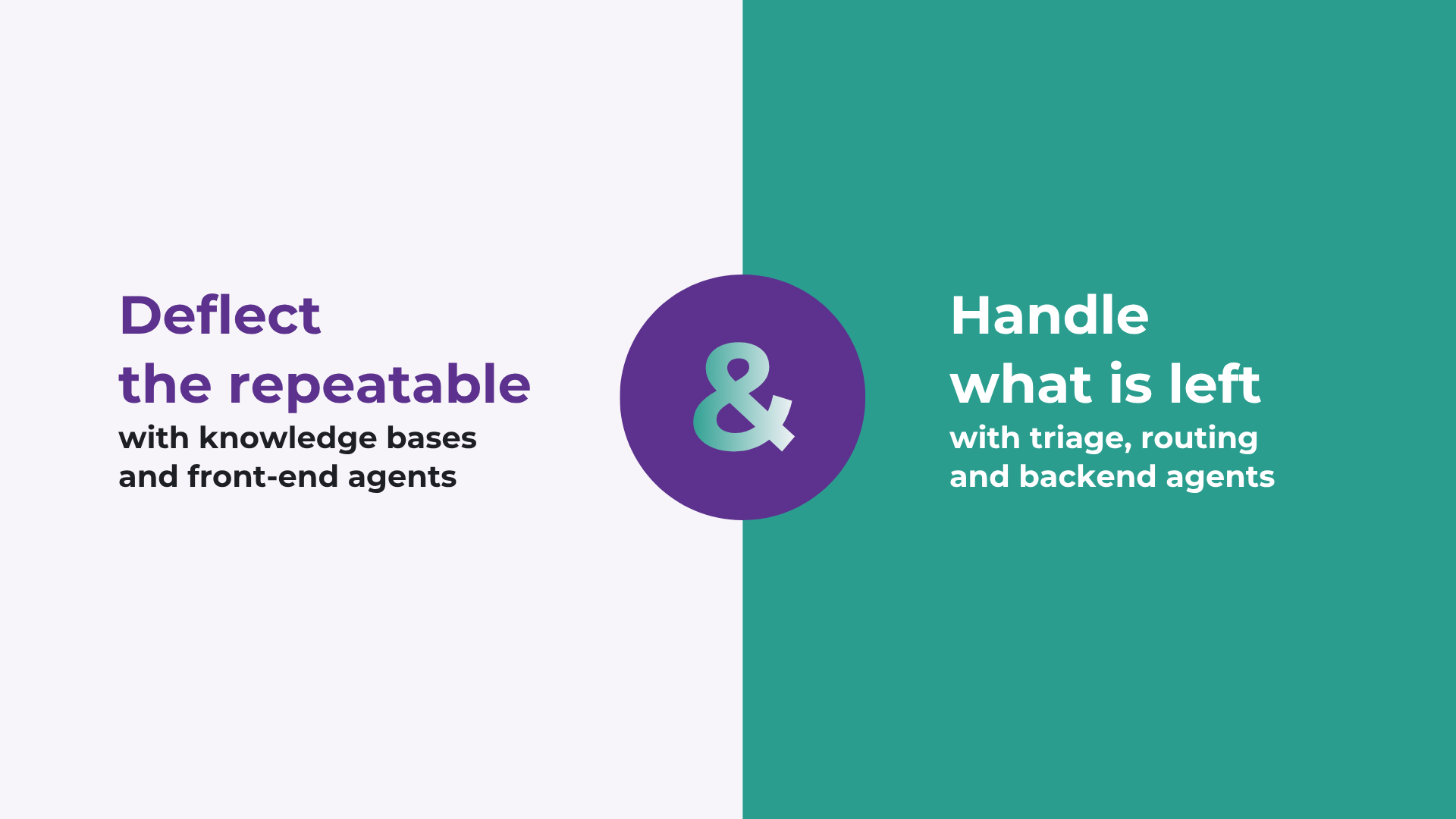
How to improve Salesforce case deflection rates
Deflection only solves half the problem. The cases that do not deflect are the ones that breach SLA. How to improve deflection rates, and how to handle what is left.

Calling Salesforce is easy. Defining what happens next is the hard part.
Salesforce workflows don’t break because of missing automation. They break because no single system defines what should happen. Here’s what actually fixes it.
READY TO SEE IT IN ACTION
Map your workflows with our team.
30 minutes, no prep needed. We will map one workflow you handle today and identify where orchestration would change the outcome.