Why Skills Based Routing in Salesforce Fails Without Lifecycle Ownership

The Set-and-Forget Routing Fallacy
Many Salesforce implementations begin with the promise of efficiency yet service metrics often fail to improve. The reason is frequently found not in the technology itself but in how it is managed over time. Teams implement skills-based routing in Salesforce as a strategic method for aligning work with agent expertise language or other specific criteria. The goal is clear – better resolutions and smoother operations.
The problem is that teams often treat routing as a one-time setup. This ‘set-and-forget’ approach is the most common reason for failure. The initial logic is configured and then left untouched while the business changes around it. New products launch agent skills evolve and customer needs shift but the routing rules remain frozen in time.
This is where lifecycle ownership becomes essential. This concept is distinct from simple maintenance. It is the continuous and active governance of the routing model. It involves assigning clear responsibility for monitoring performance refining rules and adapting to business changes. This is a dedicated role not just an occasional task. It requires someone to be accountable for the health and accuracy of the system.
Without this dedicated ownership the logic behind skills-based routing in Salesforce inevitably misaligns with operational reality. This gap between the system’s rules and the team’s actual needs renders the tool ineffective. In the worst cases it creates more manual work than it saves as managers and agents are forced to constantly correct its mistakes.
The Hidden Costs of Static Routing
A decaying routing model creates tangible consequences that go far beyond simple inconvenience. The operational costs appear in metrics that every service leader watches closely. You see a steady rise in case handle times a decline in first-contact resolution rates and the inevitable drop in customer satisfaction scores. The system that was meant to create efficiency is now actively creating friction.
These failures manifest in daily work. Consider a UK financial services team. A case arrives concerning a new regulation but it is sent to an agent whose skill profile is six months out of date. Or a new product launches and related cases have no matching rule causing them to stall in a general queue until a manager manually intervenes. As Salesforce documentation highlights the entire purpose of skills-based routing is to match work items to agents with the right skills. A static model makes this impossible.
The impact on agent experience is just as damaging. When agents are consistently assigned work they are not equipped to handle it causes immense frustration and burnout. They begin to see the system as a hindrance not a help. This sentiment is corrosive to team morale and performance. We have all seen that moment when a skilled agent sighs at their screen knowing they have been given another case that should have gone elsewhere.
Finally there is the risk of systemic bottlenecks. When routing logic fails work piles up in the wrong places. This leads to breached SLAs and forces team leaders to spend their days on low-value manual re-assignment. Their time is consumed by firefighting instead of coaching and strategic management. The hidden cost is not just the misrouted case but the lost opportunity for improvement.
A Repeatable Model for Routing Governance

Establishing lifecycle ownership requires a practical repeatable pattern. It is not about adding bureaucracy but about creating accountability. The first step is to formally assign an owner. This person – whether a senior Salesforce admin an operations lead or a small governance committee – becomes accountable for the routing model’s performance.
The core activities of this governance function should include:
- Scheduled Audits: Conduct quarterly reviews of all routing rules against current business processes and performance data. Are the rules still relevant? Do they reflect new products or service tiers?
- Performance Monitoring: Track key metrics like case re-assignment rates handle times by skill and queue backlogs. These numbers are the earliest indicators of system degradation.
- Feedback Mechanism: Create a simple process for agents and managers to report routing errors or suggest updates to skill definitions. This closes the loop between the system’s logic and the frontline’s reality.
With governance in place you can design more scalable Salesforce routing models. It is important to move beyond simple static skill tags. Consider using dynamic attributes for routing decisions such as an agent’s recent case history completed training modules or even their current workload. While complex needs might require Apex-based logic the underlying principle remains the same – the logic itself still requires rigorous governance to stay effective.
For more details on specific strategies you can explore insights we have shared on effective case assignment. The framework below provides a clear starting point for implementation.
| Activity | Recommended Owner | Frequency | Success Metric |
|---|---|---|---|
| Rule Audit | Operations Lead / Senior Admin | Quarterly | Reduction in misrouted cases |
| Skill Profile Update | Team Manager / Agent | On change / Monthly review | Accurate agent skill mapping |
| Performance Review | Governance Committee | Monthly | Stable or improving handle times |
| Feedback Triage | Routing Owner | Weekly | Time-to-resolve for reported issues |
Note: This framework provides a starting point. The specific owners and frequencies should be adapted to the scale and complexity of your organisation’s service operations.
The goal is not a perfect rigid system but a resilient one that can be adapted with minimal friction. Proper case assignment is about making the routing model a living part of the operation.
From Static Rules to a Living System
The success of skills-based routing in Salesforce is fundamentally a governance and process challenge not a technological one. Its value is realised only through active ongoing lifecycle ownership. Without it the most sophisticated setup will eventually become a source of inefficiency.
There is one clear signal that teams should monitor above all others – a rising rate of case re-assignments. When agents or automated systems frequently need to transfer work it is a strong indicator that the initial routing logic is no longer fit for purpose. It is the system’s way of telling you it is out of sync with reality.
An effective routing model should be treated as a living system that evolves with the organisation. It requires stewardship to remain effective and deliver on its promise of connecting customers to the right expertise efficiently. To learn more about building robust operational systems you can visit ortooapps.com.
Ask an Expert any question about skills-based routing in Salesforce by emailing sales@ortooapps.com.
Related insights
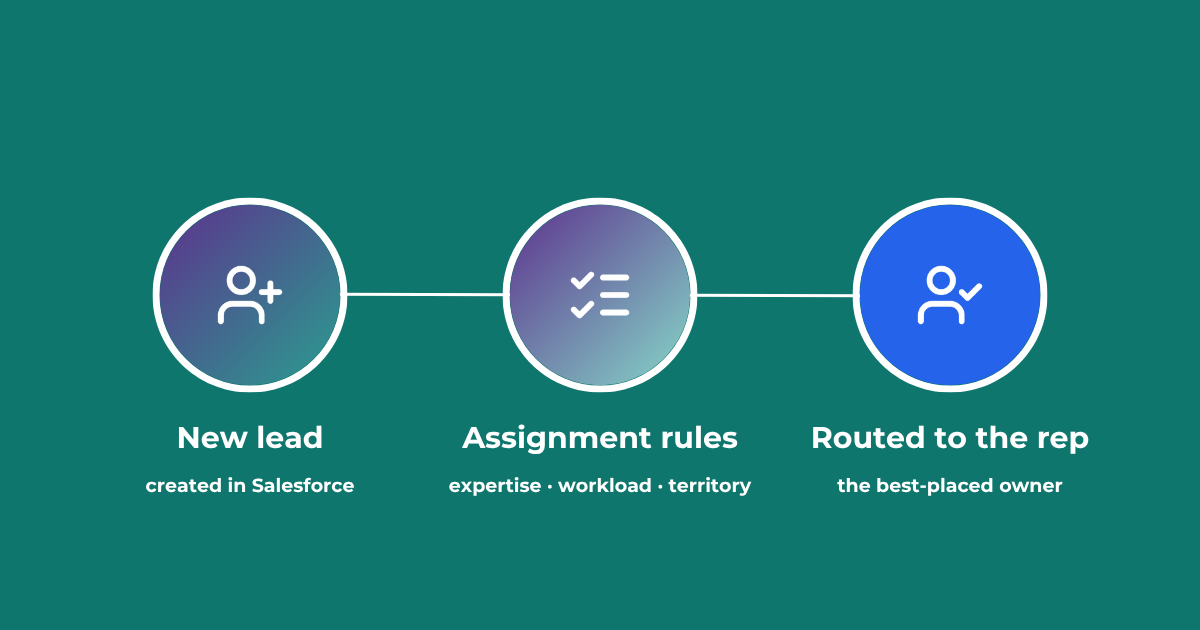
Lead Assignment Rules in Salesforce: Automate with Q-assign
This comprehensive guide to optimizing lead assignment rules in Salesforce will stand you in good stead for maximizing your sales reps’ productivity and performance. Understand the benefits of highly effective lead assignment, explore Salesforce best practices and stay ahead of the competition – with added insights into AI-driven revenue orchestration

Lead to Account Matching: Seamlessly Connect Leads to Accounts in Salesforce
Lead to account matching connects every inbound lead to the right account in Salesforce. Here is how it works, where it breaks, and how to automate it without manual data entry.
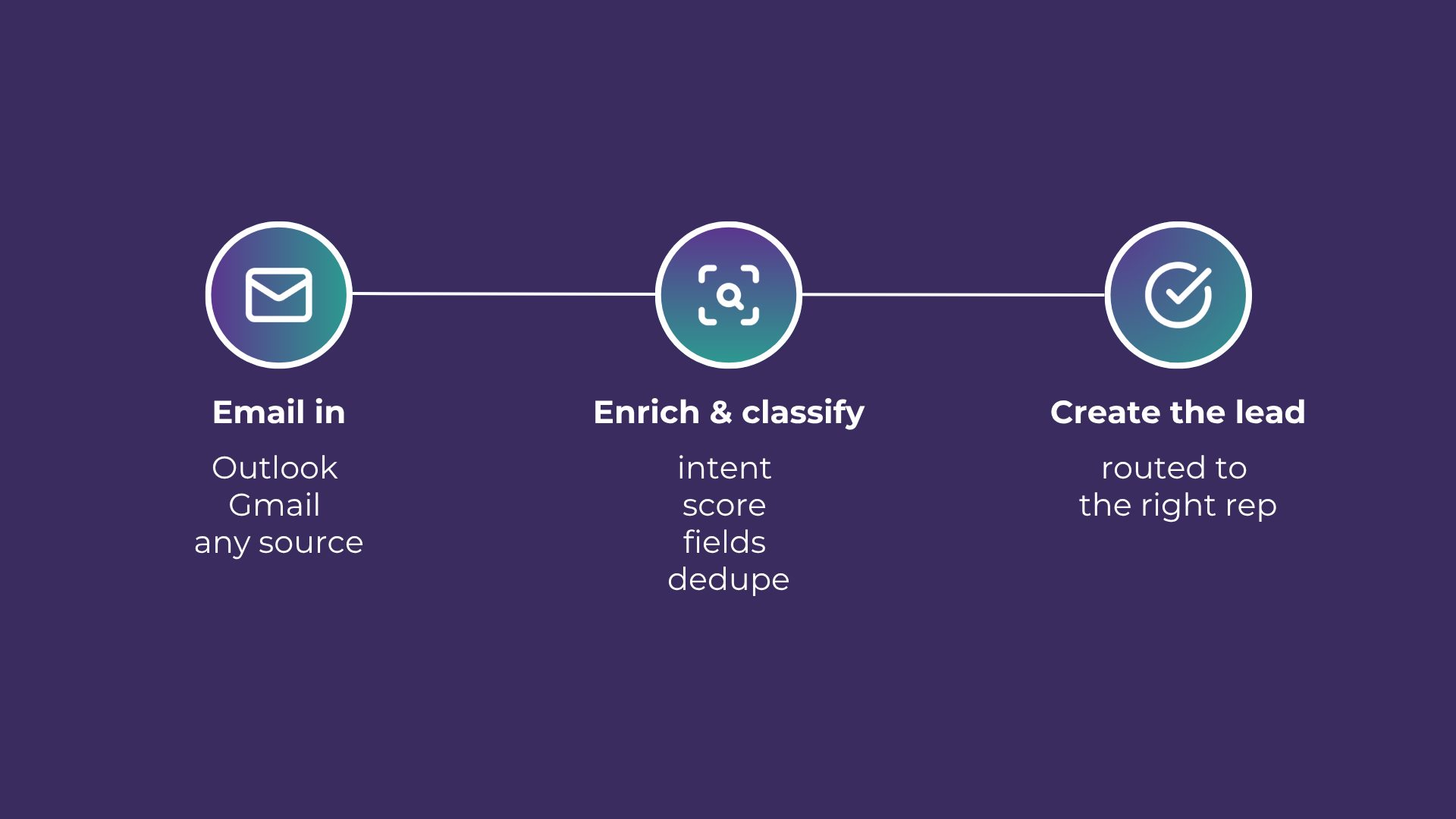
Email-to-Lead: Salesforce Lead Management with AI
Lead management is the lifeblood of any successful sales operation. At a time where customer expectations are higher than ever, ensuring that potential leads are captured and nurtured effectively can make all the difference. Introducing Email-to-Lead – AI Edition.
READY TO SEE IT IN ACTION
Map your workflows with our team.
30 minutes, no prep needed. We will map one workflow you handle today and identify where orchestration would change the outcome.