Why Skills Based Routing Breaks at Scale and How to Fix It

The Promise and Peril of Routing by Skill
The logic behind Salesforce skills based routing is compelling. It promises to connect each piece of work to the most qualified person available, moving beyond the simple ‘next available’ agent model. The goal is to improve first-contact resolution and deliver expert service. For experienced teams, this represents a clear step up from basic queuing.
Yet in high-volume environments – like a financial services claims department or a logistics dispatch centre – this pursuit of the perfect agent often creates operational chaos. The very system designed for precision becomes a source of bottlenecks, unfair workloads and breached service level agreements. A task requiring a niche skill might wait indefinitely for a specialist who is already overloaded, while other capable agents sit idle.
This happens when routing models are too rigid to handle the natural variance of daily operations. This article diagnoses why static skills-based routing models fail under pressure and outlines a more resilient, dynamic orchestration model for Salesforce. It is about designing a system that bends without breaking.
Common Failure Points in High-Volume Queues

The challenges of skills based routing at scale are not theoretical. They are observable daily in operations centres struggling with rigid rule sets. The problem is not the principle of matching skill to task but the system’s inability to adapt to reality. These failures typically manifest in a few key ways:
- Staffing Mismatches
Every operations manager is familiar with the ‘shrink factor’ – the gap between scheduled staff and the number of agents actually available after accounting for sickness, training and breaks. A static routing model that expects a certain number of specialists to be online cannot cope with these daily fluctuations. This leads to queues building for skills that have no one available to service them, leaving work stranded. - Inaccurate Forecasting
Work rarely arrives in perfectly predictable patterns. When a surge of policy endorsement requests arrives instead of the expected claims notifications, skill-specific queues either overflow or sit empty. Flawed forecasts are a primary point of failure, causing a mismatch between the work that needs doing and the skills of the agents who are free to do it. As industry analysis from sources like ICMI has long identified, this is a persistent problem in contact centres. - Flawed Routing Assumptions
The most fundamental design flaw is assuming a ‘perfect’ agent is always available and the best option. This assumption leads to dead-end queues where work gets stuck waiting for an expert who is busy or unavailable. The pursuit of perfection directly undermines the goal of timely service, increasing customer wait times and putting SLAs at risk.
These are not isolated incidents but systemic flaws. They reveal a core weakness in any static approach – an inability to adapt to the normal, everyday variance of a high-volume operation.
Achieving Fairness with Dynamic Skill Relaxation
To prevent queue gridlock, teams need a mechanism that introduces flexibility. The first practical strategy is ‘skill relaxation’. This involves a set of automated, time-based rules that systematically broaden the required skill set for a task the longer it waits in a queue. It is a controlled method for balancing fairness and efficiency in queues.
The primary benefit is fairness. Skill relaxation rules ensure no task is left indefinitely in a dead-end queue. After a predefined time – say, 15 minutes – a task requiring a ‘Level 3’ specialist could be opened to ‘Level 2’ specialists. This allows work to be handled by a ‘good enough’ agent rather than waiting for a perfect match who is unavailable, directly mitigating SLA risk.
Of course, there is a trade-off. While this approach improves throughput, over-aggressive relaxation can dilute the very expertise that skills-based routing is meant to provide. Have you considered where that balance lies for your team? The key is to view skill relaxation not as a system failure but as a necessary, controlled compromise. It is a deliberate policy choice managed through configurable thresholds in Salesforce. It acknowledges that in a high-volume environment, consistent service is often more valuable than perfect service.
| Factor | Static Skills-Based Routing | Dynamic Routing with Skill Relaxation |
|---|---|---|
| Queue Health | Prone to dead-ends and bottlenecks | Maintains flow by re-routing aged items |
| Agent Workload | Uneven distribution; specialists overloaded | More balanced distribution across teams |
| SLA Adherence | High risk of breaches for specific skills | Lower risk by ensuring all work is actioned |
| First-Contact Resolution | High (when perfect agent is available) | Potentially lower (if relaxed to less-skilled agent) |
This table contrasts the operational outcomes of a rigid, static routing model against a dynamic one that incorporates skill relaxation. The data illustrates the trade-offs between perfect matching and operational throughput.
Using AI for Intelligent Task Matching

Beyond time-based rules, the next evolution is using artificial intelligence to make smarter routing decisions in real time. While rule-based relaxation acts as a safety net, AI for skills based routing can proactively optimise assignments by learning from what actually works. It analyses historical Salesforce data – such as successful case resolutions, handling times and customer satisfaction scores – to identify the true skills and agent attributes that lead to efficient outcomes.
This enables a ‘closest-match’ algorithm for dynamic task assignment Salesforce. Unlike rigid rules, this approach weighs multiple factors simultaneously – agent proficiency, current availability, existing workload and queue length – to make a more intelligent assignment. For example, in financial services, an AI model might route a complex mortgage application not just to a generic ‘mortgage specialist’ but to the specific agent who has the highest success rate with that application type and is currently available. This level of dynamic assignment requires a robust engine for managing what we see as complex case assignment.
The efficiency gains are significant. By identifying the best available agent, not just the theoretically perfect one, organisations can improve throughput and reduce handling times. For instance, a Sprinklr case study showed a major North American bank reduced average handling time by 22% after deploying AI-augmented skill matching. It is crucial to stress that these are human-in-the-loop models. Leaders set the policies and retain oversight, ensuring the AI serves the business process responsibly and transparently.
A Resilient Model for Salesforce Skills Based Routing
Moving from a fragile, static system to a resilient one requires a layered approach. A modern model for Salesforce skills based routing combines a solid foundation with intelligent automation, allowing operations to scale without the associated chaos. The model consists of three core components:
- A Robust Skill Taxonomy
The foundation is an accurately maintained and governed map of agent skills, proficiencies and certifications. Without a clear understanding of the capabilities available, no routing system can be effective. - Automated Skill Relaxation
The safety net is a layer of automated, queue-level skill relaxation thresholds. This ensures fairness, prevents work from getting stuck and guarantees that every task is eventually actioned. - An AI-Driven ‘Closest-Match’ Engine
The intelligence layer learns from performance data to optimise for efficiency and throughput. It finds the best available agent in real time, balancing expertise with operational reality.
For operators, the signal to watch is real-time queue health. A consistently long wait time for a specific skill is a clear indicator that the balance between skill supply and demand is off, requiring an adjustment to the model’s configuration. By shifting from static rules to this dynamic orchestration model, organisations can finally achieve the promise of skills-based routing at scale. For those looking to build more resilient Salesforce operations, our insights on improving operations offer further resources.
Ask an Expert any question about skills-based routing by emailing sales@ortooapps.com.
Related insights
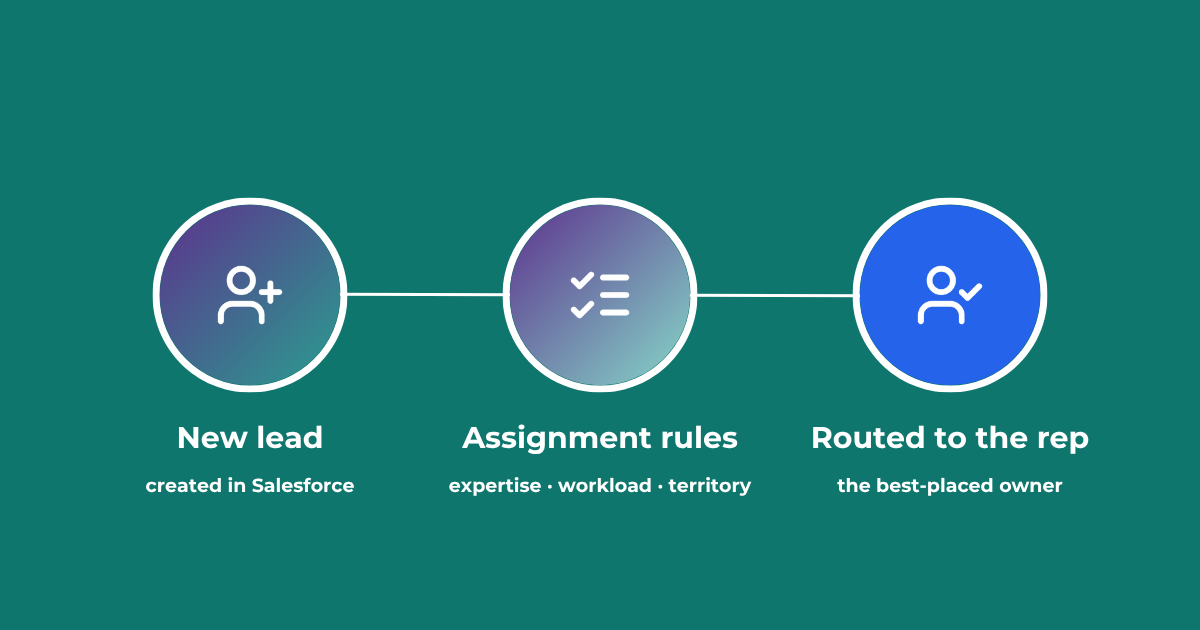
Lead Assignment Rules in Salesforce: Automate with Q-assign
This comprehensive guide to optimizing lead assignment rules in Salesforce will stand you in good stead for maximizing your sales reps’ productivity and performance. Understand the benefits of highly effective lead assignment, explore Salesforce best practices and stay ahead of the competition – with added insights into AI-driven revenue orchestration
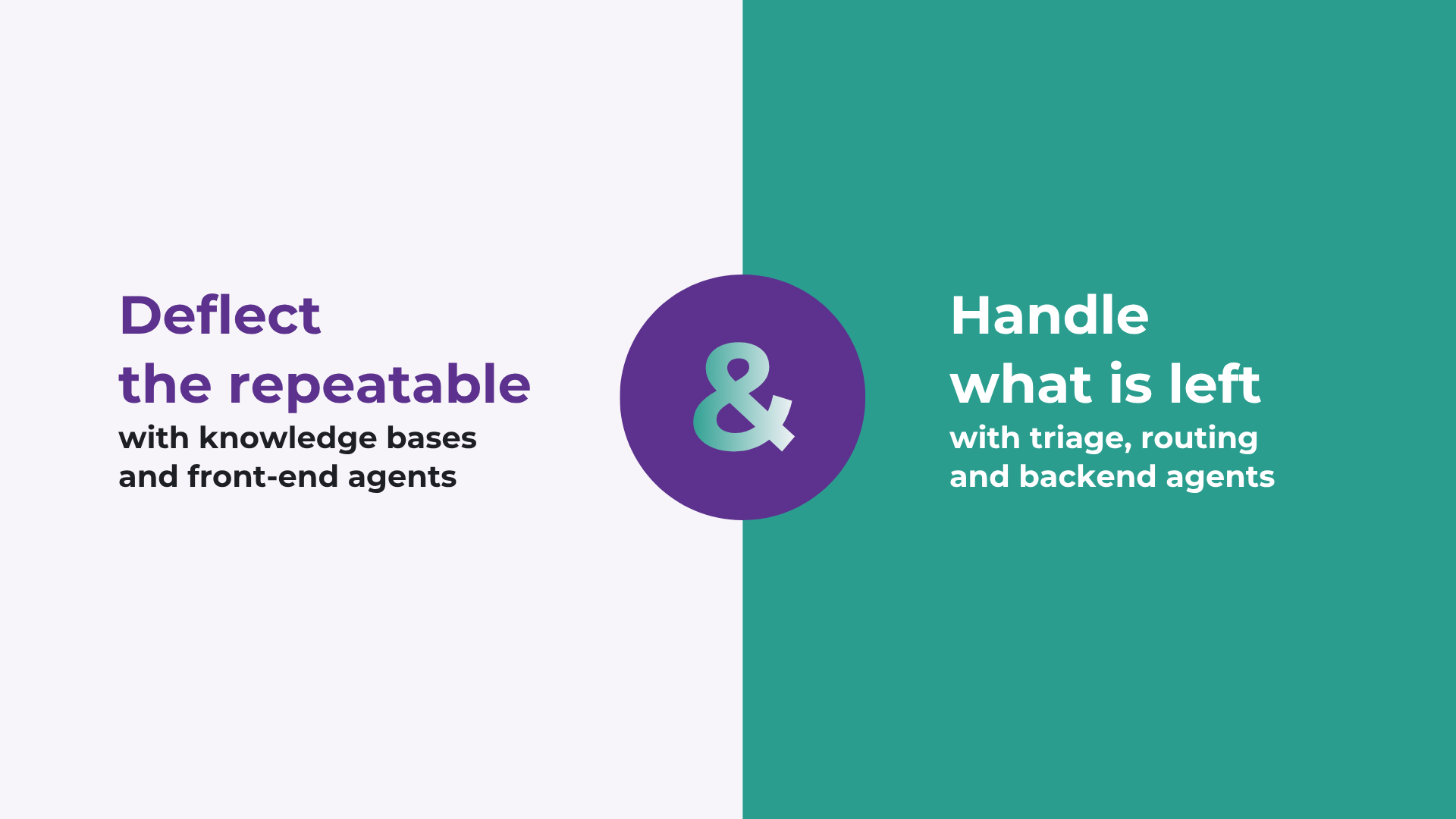
How to improve Salesforce case deflection rates
Deflection only solves half the problem. The cases that do not deflect are the ones that breach SLA. How to improve deflection rates, and how to handle what is left.

Calling Salesforce is easy. Defining what happens next is the hard part.
Salesforce workflows don’t break because of missing automation. They break because no single system defines what should happen. Here’s what actually fixes it.
READY TO SEE IT IN ACTION
Map your workflows with our team.
30 minutes, no prep needed. We will map one workflow you handle today and identify where orchestration would change the outcome.