Why Round Robin Routing Burns Out Your Best People

The Flawed Assumption of Fairness in Work Distribution
The belief that round robin routing ensures fairness in Salesforce is a fundamental misunderstanding of workload. Its appeal is obvious – the simple, sequential logic removes the need for manual triage and guarantees every team member gets an equal number of assignments over time. Many operations teams default to this model because it feels impartial and easy to implement. It promises a neat, orderly queue where everyone takes their turn.
The central problem, however, is that this model treats all work as identical. A high-value, complex case is weighted the same as a low-effort administrative query. A strategic opportunity in Salesforce lead assignment is handled with the same priority as a routine follow-up. This is where the illusion of fairness breaks down. When a system cannot distinguish between a five-minute task and a five-hour investigation, it creates hidden imbalances that quietly disrupt team performance.
Measuring fairness by count alone is a flawed metric. It ignores the critical context of effort, complexity and value that defines real-world work. While appearing equitable on a dashboard, this approach systematically fails to distribute the actual workload in a balanced way. This flawed premise is the root cause of significant operational drag and employee frustration, setting the stage for burnout among your most valuable people.
The Hidden Cost of Overloading Your Top Performers
Building on that flawed assumption of equality, round robin routing disproportionately harms your most effective team members. Because top performers resolve work faster and more efficiently, they return to the assignment queue sooner than their colleagues. The system, designed for simple rotation, sees them as available and immediately assigns them the next item in line, regardless of their active workload. This creates a paradox where your best people are penalised for their own efficiency, constantly operating at or near their capacity limits while others may have bandwidth to spare.
This imbalance directly impacts revenue and customer satisfaction. For example, in a financial services context, a senior underwriter might be assigned a simple policy update request – a task a junior could handle. Moments later, that same junior team member could be assigned a complex commercial insurance application far beyond their expertise. The result is a bottleneck. The senior underwriter is distracted by low-value work and the complex application stalls, creating a poor customer experience. As a guide from HappyFox on help desk routing notes, this kind of mismatch is a common outcome of simple sequential assignment and a direct contributor to employee burnout. The hidden costs accumulate quickly:
- Increased burnout and frustration among your most capable and motivated staff.
- Higher staff turnover as your best people leave for environments that value their expertise.
- Reduced overall team throughput as work gets stuck with overloaded individuals.
- Inconsistent customer experience due to mismatched skills and delayed resolutions.
The operational and human cost of this model is far greater than the simplicity it offers. It actively works against the goal of a high-performing team by creating friction where there should be flow.
A Better Pattern: Building Capacity-Aware Workflows

A more effective orchestration pattern begins with capacity-aware routing. This model distributes work based on an individual’s real-time workload – not just their turn in a sequence. It moves beyond a simple count of assigned items and considers the volume of active work each person is currently handling. The mechanics in a Salesforce environment are straightforward: each team member is given a workload cap, which could be defined by the number of open cases or a total of estimated effort points across their assignments.
Once an individual reaches their defined cap, the system temporarily pauses them from the assignment pool. They only become eligible for new work once their active load drops below the threshold. This simple rule prevents your most efficient people from becoming perpetual bottlenecks. It ensures a more balanced distribution of active work across the entire team, allowing everyone to operate at a sustainable pace. This approach is a foundational step toward building a more resilient and effective operating model for service teams. By managing flow based on reality, you protect your people and improve throughput. For teams looking to implement this, our thinking on intelligent case assignment provides a deeper view.
| Factor | Pure Round Robin | Capacity-Aware Routing |
|---|---|---|
| Distribution Logic | Sequential, based on a fixed list | Dynamic, based on current workload |
| Impact on Top Performers | Consistently overloaded, leading to burnout | Workload is capped, protecting from overload |
| Team Throughput | Becomes bottlenecked by overloaded individuals | More balanced, improving overall flow |
| Flexibility | Rigid; treats everyone as having infinite capacity | Adapts to individual availability and speed |
This table illustrates the fundamental difference in how work is distributed. Capacity-aware models prioritise sustainable throughput over a simple, arbitrary count.
Matching Work to Expertise with Skill-Based Assignment
While capacity-awareness solves for workload volume, the next layer of a mature orchestration pattern addresses complexity. Skill based routing is a model that matches incoming work to the person with the specific expertise required for the task. This moves beyond simply finding someone who is available and instead finds the person who is most qualified. The operational logic involves creating a matrix of skills – such as product knowledge, language fluency, technical certification or industry specialisation – and tagging both team members and incoming work items accordingly. When a new case or lead arrives, the system analyses its requirements and routes it to the best available match.
This approach is fundamentally different from managing capacity. It focuses on the type of work, not just the quantity. The impact on performance is immediate and measurable. By getting work to the right expert on the first attempt, teams see a significant improvement in first-contact resolution rates, a reduction in escalations and shorter overall handling times. It proves that effective distribution is far more valuable than equal distribution. If you are wondering whether your current model is failing, there is often a clear signal. A high number of re-assignments or escalations for specific types of cases is a strong indicator that your assignment logic is broken and a skill based routing approach is necessary.
Evolving Your Model: From Weighted Distribution to Governed AI
Once capacity and skills are managed, teams can introduce more sophisticated models. Weighted round robin, for instance, allows you to assign a larger share of work to more senior or experienced reps. As platforms like Privyr have noted, this is a common practice for directing high-value leads more effectively to those best equipped to handle them. It acknowledges that not all team members have the same capacity or capability, allowing for a more nuanced distribution.
Further along this path is the use of governed AI. An AI-driven routing engine can score and prioritise incoming work based on a multitude of factors – such as urgency, customer value or conversion probability – and then assign it to the person best positioned to succeed. This is not about replacing human judgment but augmenting it. These systems require clear governance and human oversight to ensure they operate transparently and align with business goals. The objective is to create a smarter, more responsive operating model, not a ‘black box’ that makes decisions without accountability. The ultimate measure of fairness is not an arbitrary count of tasks but the outcome delivered for the customer and the business.
Designing for Impact Not Just Equality
In a high-volume Salesforce environment, true operational fairness is not about giving everyone the same number of tasks. It is about assigning the right task to the right person at the right time. Evolving from simple round robin routing to intelligent models that account for capacity and skill is essential for protecting your best people and improving overall performance. This shift from equality of count to equality of opportunity ensures that expertise is respected, burnout is reduced and work flows efficiently through your organisation. For more on building scalable systems of work in Salesforce, you can find further system-level thinking at https://ortooapps.com/.
Ask an Expert any question about how to improve your work distribution models by emailing sales@ortooapps.com.
Related insights
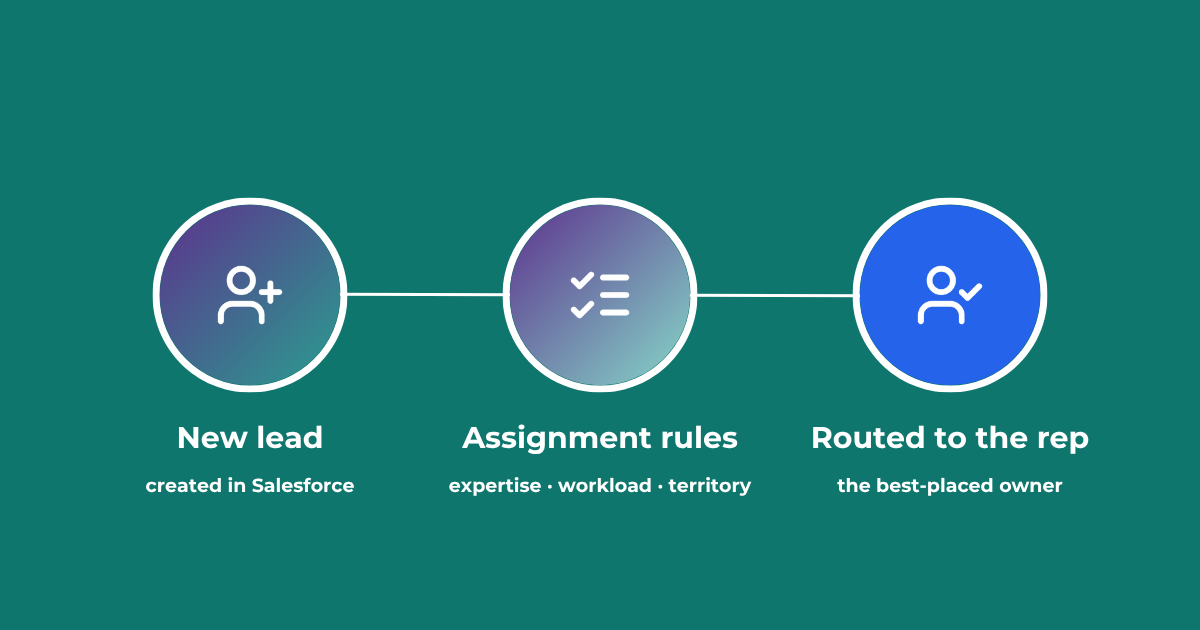
Lead Assignment Rules in Salesforce: Automate with Q-assign
This comprehensive guide to optimizing lead assignment rules in Salesforce will stand you in good stead for maximizing your sales reps’ productivity and performance. Understand the benefits of highly effective lead assignment, explore Salesforce best practices and stay ahead of the competition – with added insights into AI-driven revenue orchestration
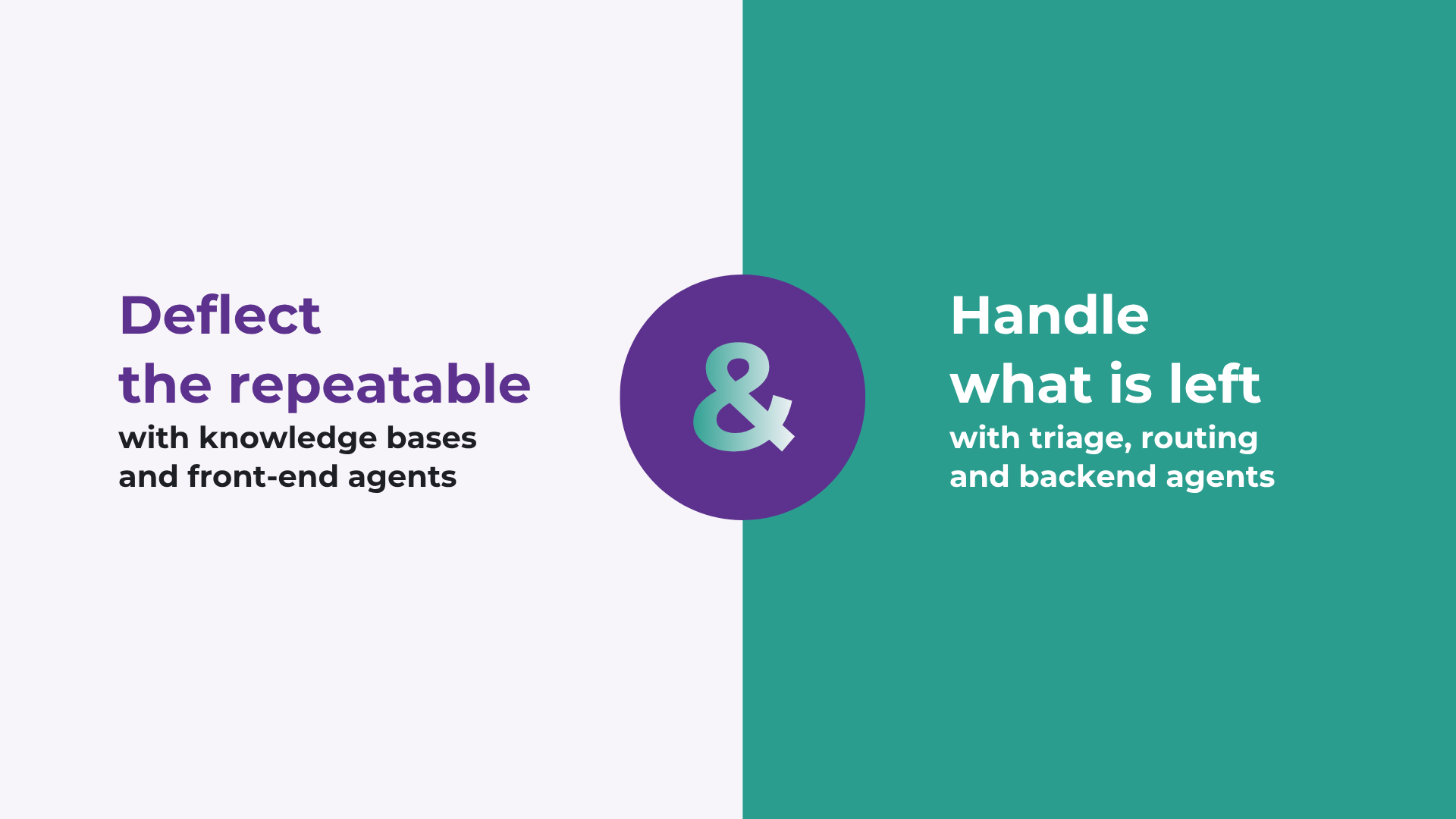
How to improve Salesforce case deflection rates
Deflection only solves half the problem. The cases that do not deflect are the ones that breach SLA. How to improve deflection rates, and how to handle what is left.

Calling Salesforce is easy. Defining what happens next is the hard part.
Salesforce workflows don’t break because of missing automation. They break because no single system defines what should happen. Here’s what actually fixes it.
READY TO SEE IT IN ACTION
Map your workflows with our team.
30 minutes, no prep needed. We will map one workflow you handle today and identify where orchestration would change the outcome.