Why Basic Salesforce Routing Rules Fail at Scale

The Deceptive Simplicity of Standard Case Routing
Most organisations begin their service automation journey with standard Salesforce routing rules and queues. This approach is straightforward and often the first model taught in official training, such as Trailhead’s module on creating case queues. It works by matching fields on a case record to a predefined queue. For a business with low or predictable case volumes, this method is simple to configure and appears effective.
That initial simplicity, however, becomes a significant liability as operations grow. When case volumes climb into the tens or hundreds of thousands, the static logic of basic assignment rules creates operational friction and technical debt. We have all seen it: what was once a clean set of five rules balloons into a hundred convoluted entries, each with its own exceptions and dependencies. The system becomes brittle and difficult to manage.
The core issue is that this traditional model was not designed for the complexity of modern service operations. Its rigidity cannot adapt to fluctuating demand, diverse case types or the need for nuanced agent skill matching. A rule that sends all ‘billing enquiries’ to one queue fails to distinguish between a simple query and a complex dispute requiring a senior agent. This inflexibility is the root cause of the hidden costs that accumulate as a business scales, setting the stage for performance issues and service failures.
The True Operational Cost of Inefficient Salesforce Routing Rules

The friction caused by outdated Salesforce routing rules translates into tangible operational costs that are often overlooked until they become critical. These costs manifest across platform performance, administrative workload and ultimately, the quality of customer service.
Platform Performance Degradation
Every assignment rule adds processing overhead. At scale, hundreds of complex rules can consume significant platform resources and push an organisation closer to its governor limits. This slows down the entire Salesforce instance, not just case creation. As highlighted in a Salesforce engineering article on Hyperforce optimisation, inefficient traffic routing can have a multi-million-dollar impact on operating expenses. A slow platform is not just an inconvenience; it is a direct tax on every single user and automated process.
Hidden Administrative Labour
The human cost is equally steep. Administrators find themselves spending countless hours maintaining convoluted rule chains, troubleshooting assignment failures and manually reassigning incorrectly routed cases. It becomes a constant cycle of reactive firefighting. One financial services firm we observed was spending an estimated 1,200 admin hours annually on this exact problem before moving to a more dynamic model. That is time that could have been invested in strategic improvements but was instead lost to manual upkeep.
Service Quality Failures
Most importantly, poor routing directly harms the customer experience. Latency in rule processing leads to slower first-response times and a higher risk of breaching service level agreements. When cases are misrouted, they sit idle in the wrong queue or get ‘cherry-picked’ by agents, leaving complex issues to stagnate. This inefficiency has real-world consequences. In one field-service study, nearly half of all appointments were missed due to static scheduling logic that failed to account for real-time conditions. Improving these service workflows is not just about efficiency but about meeting fundamental customer expectations.
| Cost Category | Specific Impact | Consequence at Scale |
|---|---|---|
| Platform Performance | Increased rule processing time | Degraded performance across the org |
| Hitting governor limits | Service disruptions and transaction failures | |
| Administrative Labour | Manual rule maintenance and updates | Thousands of admin hours wasted annually |
| Troubleshooting assignment failures | Reactive firefighting instead of strategic work | |
| Service Quality | Delayed first response times | Increased risk of SLA breaches and penalties |
| Agent idle time and cherry-picking | Lower team productivity and morale |
Advanced Patterns for Scalable Case Orchestration
Moving beyond static rules does not mean abandoning governance. It means adopting advanced routing strategies that are built for scale and complexity. These patterns replace brittle rule chains with intelligent, data-driven orchestration.
- AI-Driven Assignment: This approach uses predictive models to analyse case data in real time and route it to the best-suited agent. It moves beyond simple keyword matching to predict the highest probability of a fast, successful resolution. As detailed in guides on using Salesforce Einstein for service, this involves analysing historical data to understand which agents excel at which case types. A major telecom provider used this method to reduce average handling time by 32%, demonstrating a direct link between intelligent assignment and operational efficiency.
- Dynamic, Workload-Based Routing: Instead of sending cases to static queues, this pattern automatically adjusts assignments based on live agent availability and current workload. It ensures that peak volumes are handled efficiently without manual intervention from team leads. A hospital network applied this logic to patient follow-ups, ensuring no single coordinator was overloaded and dramatically reducing the risk of missed appointments.
- Architectural Rule Consolidation: Perhaps the most impactful pattern is replacing hundreds of legacy rules with a single, intelligent routing engine. This drastically reduces technical debt and administrative maintenance. A global bank that consolidated its complex rule architecture cut its rule maintenance effort by 68%, freeing up its Salesforce team to focus on innovation rather than upkeep.
These strategies also have a profound human impact. The same telecom provider noted higher agent satisfaction and lower turnover, as agents received work that matched their skills and were no longer frustrated by poorly assigned cases.
The Critical Signal That Your Routing Is at Its Limit
There is one clear signal that your Salesforce case routing system is failing: a consistently growing case backlog even when your service team is fully staffed. This is the key indicator that the bottleneck is the system’s inability to assign work efficiently – not a lack of agent capacity. The team is ready to work, but the work is not reaching them quickly or accurately.
The common misdiagnosis is to treat this as a headcount problem. Many organisations react by hiring more agents, which adds significant cost without solving the underlying inefficiency. In fact, adding more people to a broken process can sometimes worsen the bottleneck by increasing system complexity and the potential for misassignment.
Before implementing advanced patterns, however, there is a critical dependency: data quality. AI models and data-driven engines are only as good as the information they are fed. Inaccurate or incomplete case fields will lead to misclassification and undermine the entire system. Disciplined governance is non-negotiable. Systematically auditing old rules, enforcing data standards and continuously monitoring assignment accuracy are essential practices for building a scalable architecture for Salesforce case assignment.
Moving Beyond Static Rule Chains
The hidden operational costs of basic Salesforce routing rules – in platform performance, administrative labour and service failures – inevitably outweigh their initial simplicity. Modern service operations demand a more dynamic and intelligent approach to work distribution. By adopting advanced orchestration patterns, organisations can eliminate technical debt and build a resilient service model that scales with their business. To learn more about these strategies, explore the insights we have shared at ortooapps.com.
Related insights
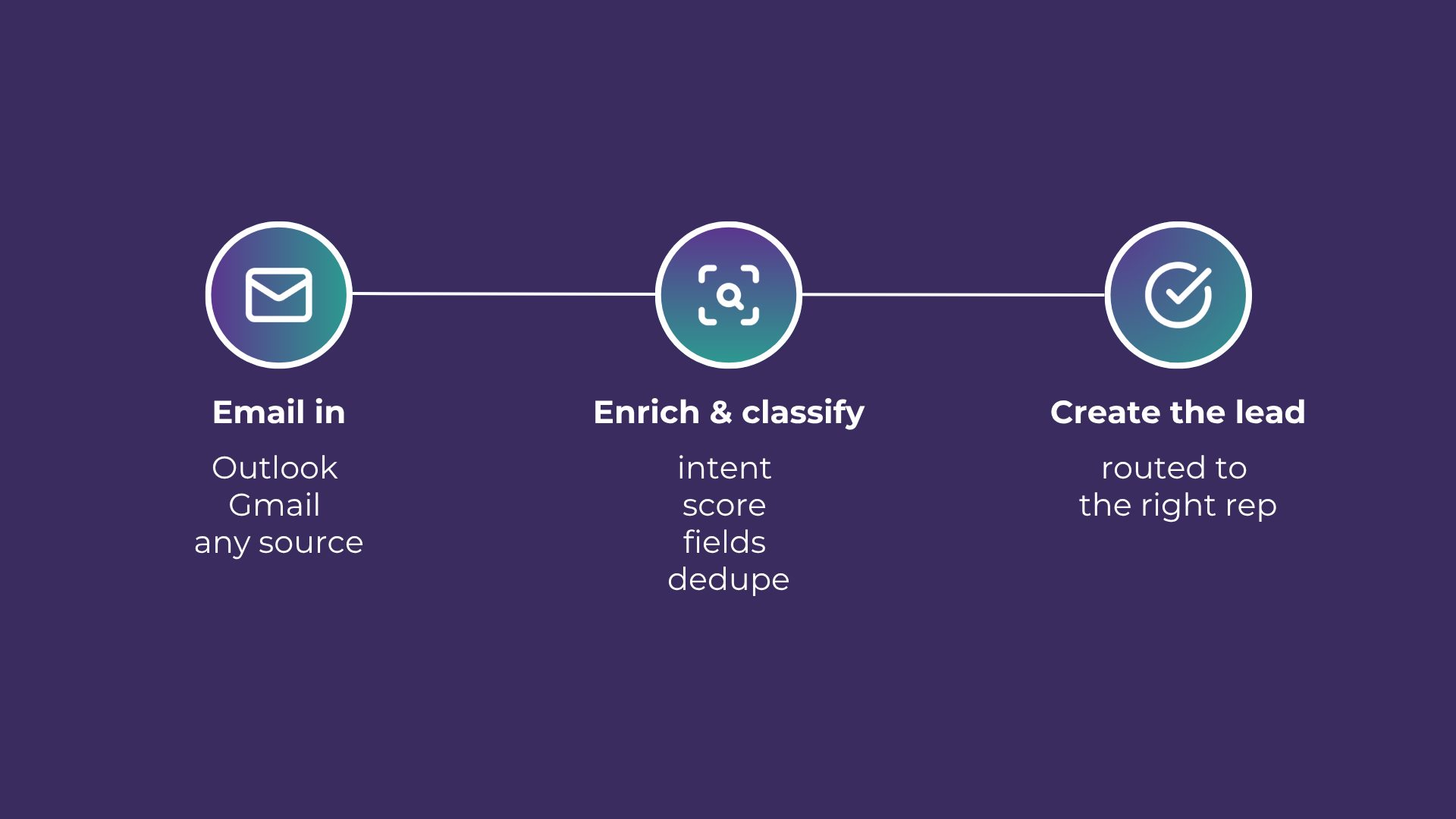
Email-to-Lead: Salesforce Lead Management with AI
Lead management is the lifeblood of any successful sales operation. At a time where customer expectations are higher than ever, ensuring that potential leads are captured and nurtured effectively can make all the difference. Introducing Email-to-Lead – AI Edition.
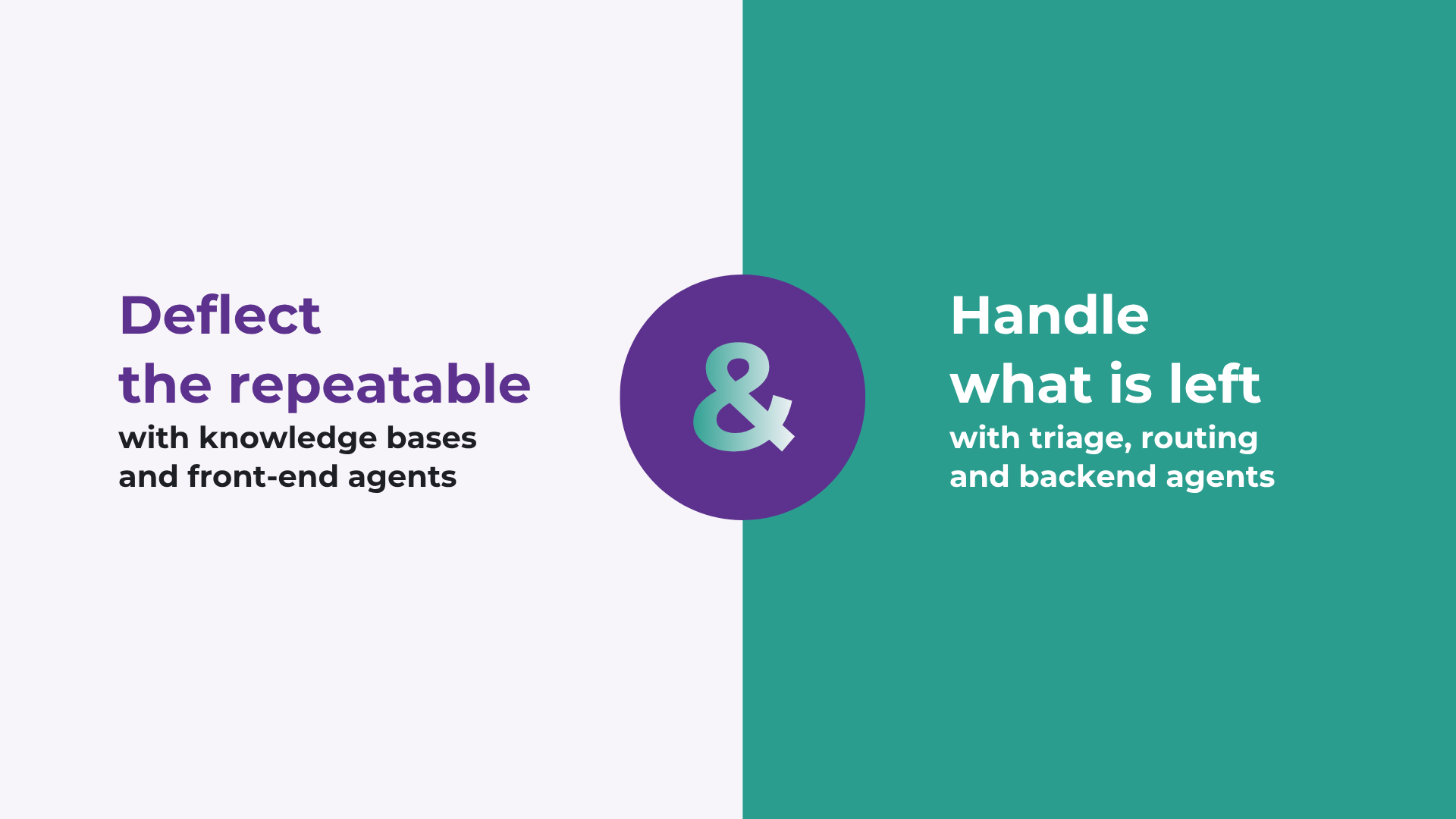
How to improve Salesforce case deflection rates
Deflection only solves half the problem. The cases that do not deflect are the ones that breach SLA. How to improve deflection rates, and how to handle what is left.

Stopping SLA Breaches in High Volume Salesforce Workflows
Learn how to move from reactive reporting to proactive management for better service level agreement adherence.
READY TO SEE IT IN ACTION
Map your workflows with our team.
30 minutes, no prep needed. We will map one workflow you handle today and identify where orchestration would change the outcome.