The Principles of Dynamic Work Routing in Salesforce

Beyond Static Rules and Queues
Most high-volume operations eventually learn a hard lesson: first-in-first-out is a recipe for backlogs and missed SLAs. The problem is rarely the team’s effort. It is the static system directing their work. The standard Salesforce setup often relies on basic assignment rules that push new leads or cases into shared queues. This approach works when volume is low and complexity is minimal but it breaks down under pressure.
At scale, these static queues become unmanaged pools of work. Agents begin to ‘cherry-pick’ tasks they feel most comfortable with, leaving complex or undesirable items to stagnate. This behaviour leads to inconsistent service levels and neglected work that quietly breaches its deadline. The underlying Salesforce assignment logic is too rigid. It makes a one-time decision based on fixed criteria, failing to account for an agent’s real-time availability, current workload or specific skills.
The core issue is that these methods are static. They cannot adapt to a fluid operational environment where demand fluctuates and people are not always available. This is where dynamic work routing provides an adaptive model. In computer networking, dynamic routing intelligently directs data packets based on real-time traffic conditions to find the most efficient path. The same principle applies here – it continuously directs work to the most appropriate destination without manual intervention, ensuring the system remains efficient under load.
What Dynamic Work Routing Means for Operations

In a Salesforce context, dynamic work routing is a system that matches an incoming work item to the best-suited and available person. It embodies the principle of getting the right work to the right person at the right time by continuously evaluating a wide range of operational variables. It is a significant step beyond simple task distribution.
An effective dynamic routing engine is fuelled by several key data inputs. These typically include:
- Agent availability – such as presence status from an omnichannel tool or calendar integration.
- Current workload – measured by the number of open cases, tasks or their estimated effort.
- Specific skills – including language fluency, technical certifications, product knowledge or territory alignment.
- The priority or value of the work itself – defined by its SLA, potential revenue or customer tier.
This model is fundamentally different from basic automated work assignment configured with Salesforce Flow or a simple round-robin distributor. Dynamic routing is not a single, fire-and-forget trigger. It is a persistent process. It can re-evaluate and re-route work if an assigned agent becomes unavailable or a more urgent task enters the system. The primary business benefit is not just fairness but improved operational throughput and resilience. The goal is to maximise the team’s collective capacity and ensure the system can absorb unexpected events like staff absences or sudden demand spikes.
The Foundations of an Effective Routing Model
A dynamic system is only as effective as the data that informs it. Accurate, up-to-date information on agent skills, availability and workload is non-negotiable. Without a reliable source of truth, the routing engine will make suboptimal decisions, assigning work to the wrong people or overwhelming your best performers. The first step is ensuring this foundational data is clean and maintained.
The next is translating business priorities into configurable routing logic. This requires making conscious trade-offs. Should a high-value case prioritise a busy expert over a free novice? As Cisco highlights in the context of computer networks, as systems grow to support mission-critical workloads, dynamic routing becomes essential for managing thousands of possible paths efficiently. The same principle applies to dynamic work routing in Salesforce when handling thousands of work items across a large team. Each choice has consequences for performance.
| Priority Focus | Routing Logic Example | Primary Benefit | Potential Trade-Off |
|---|---|---|---|
| Speed to First Touch | Assign to the first available agent, regardless of skill level. | Minimises customer wait times and improves initial response SLAs. | May result in lower first-contact resolution if the agent is not an expert. |
| Best-Fit Expertise | Prioritise agents with specific skills, even if they have a higher current workload. | Increases first-contact resolution and customer satisfaction for complex issues. | Can create bottlenecks if experts are scarce, increasing wait times for some items. |
| Workload Balancing | Distribute work evenly based on the number of open items per agent. | Prevents agent burnout and promotes fairness. | May assign high-priority work to less-experienced agents simply because they are free. |
This table illustrates the strategic choices leaders must make. An effective model often blends these priorities – for example, by routing high-value cases to experts while distributing lower-priority work for speed. An effective system must also manage capacity, respecting workload limits to prevent burnout while still prioritising urgent items. Finally, a robust model must plan for exceptions. It needs a clear pathway for when no suitable agent is found, such as escalating to a supervisor or moving to an overflow team to prevent work from being dropped.
Avoiding Common Dynamic Routing Pitfalls

One of the most common mistakes is designing an overly complex routing matrix from the start. When the rules become too convoluted with dozens of conditions and exceptions, the system turns into a ‘black box’. It becomes impossible for anyone to manage, troubleshoot or explain its behaviour. The better approach is to start with a simple, robust ruleset and iterate based on observed performance. Focus on the 20% of rules that will handle 80% of the workload correctly.
This connects to the principle of ‘good enough’ routing. The system’s goal should be to find the best available match quickly, not to search indefinitely for a theoretically perfect match that may not exist. Prioritising speed and throughput often delivers more business value than perfect but slow assignment. Another risk is ignoring the human element. If agents do not understand why they receive certain tasks or feel the distribution is unfair, it can erode trust and motivation. The logic must be explainable.
Transparency and supervisor oversight are the solution. Dashboards that provide a clear view of routing decisions, queue health and agent workloads are essential for building confidence and identifying problems. A key signal to watch is a rising number of manual reassignments. If supervisors are constantly moving work around after the system has assigned it, it is a clear sign the Salesforce assignment logic needs refinement. Reviewing your approach to case assignment can help identify where the model is breaking down and how to adjust it.
From System of Record to System of Work
Implementing dynamic work routing evolves Salesforce from a passive database into an active operational hub. It transforms a system of record into a system of work that intelligently orchestrates tasks, cases and leads across the organisation. While static rules and queues are adequate for simple processes, scaling high-volume, high-stakes operations demands a more sophisticated and resilient approach.
Dynamic routing provides the efficiency needed to ensure work flows to the right person at the right time, improving performance and strengthening the entire operating model. It is a foundational element for any team serious about managing work at scale. To learn more about building a resilient operational framework, we invite you to explore our thinking on work orchestration. Ask an Expert any question about dynamic work routing in Salesforce by emailing sales@ortooapps.com.
Related insights
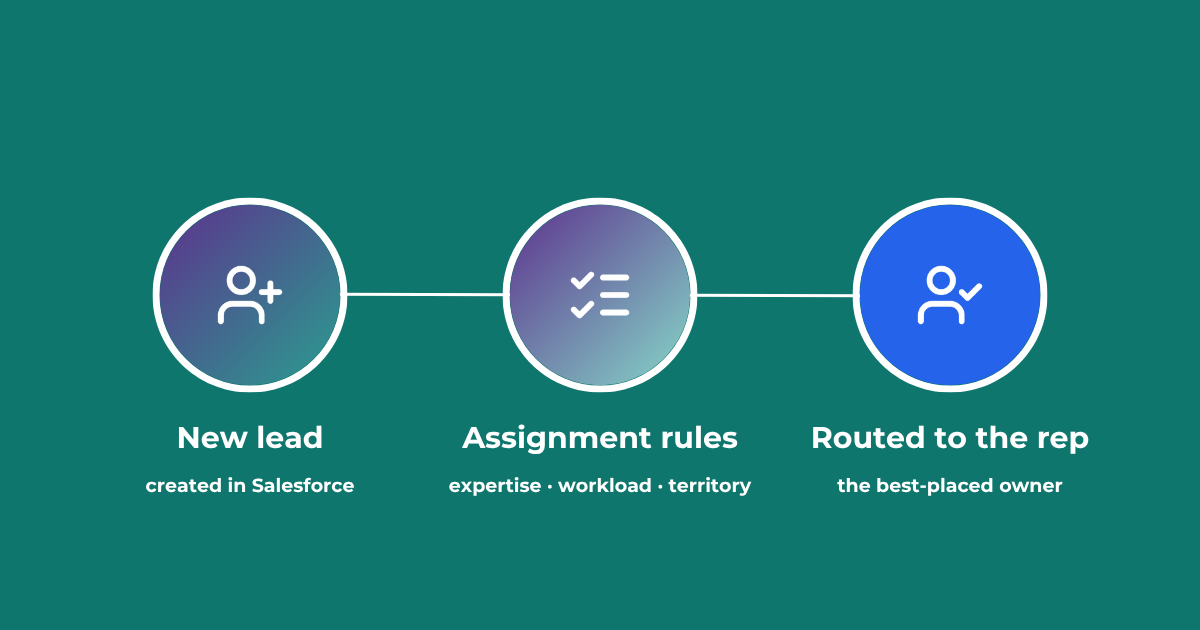
Lead Assignment Rules in Salesforce: Automate with Q-assign
This comprehensive guide to optimizing lead assignment rules in Salesforce will stand you in good stead for maximizing your sales reps’ productivity and performance. Understand the benefits of highly effective lead assignment, explore Salesforce best practices and stay ahead of the competition – with added insights into AI-driven revenue orchestration
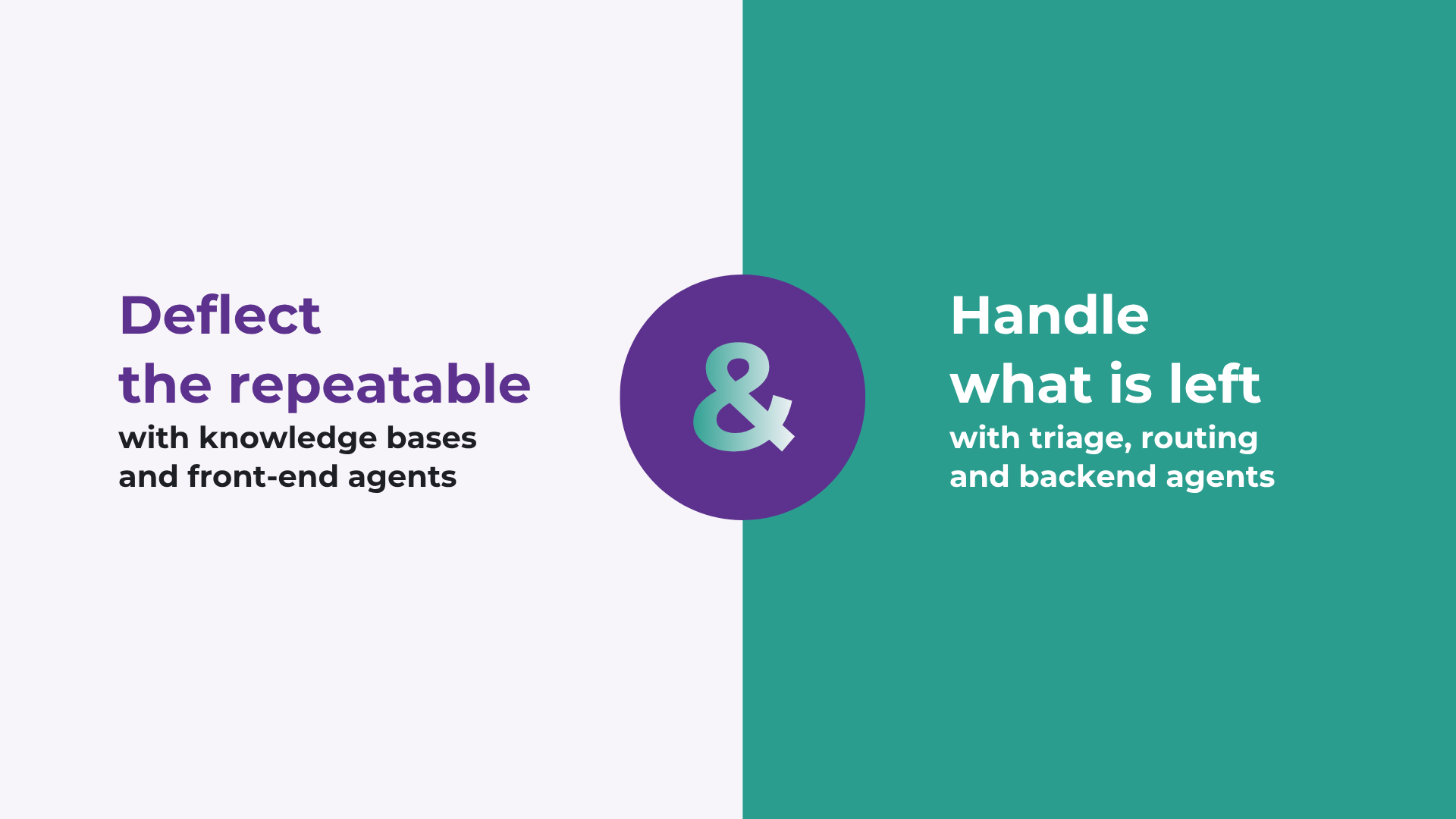
How to improve Salesforce case deflection rates
Deflection only solves half the problem. The cases that do not deflect are the ones that breach SLA. How to improve deflection rates, and how to handle what is left.

Calling Salesforce is easy. Defining what happens next is the hard part.
Salesforce workflows don’t break because of missing automation. They break because no single system defines what should happen. Here’s what actually fixes it.
READY TO SEE IT IN ACTION
Map your workflows with our team.
30 minutes, no prep needed. We will map one workflow you handle today and identify where orchestration would change the outcome.