Smarter Lead Routing in Salesforce with AI and Round Robin

Every sales team wants a fast, fair way to distribute leads. That’s why round robin lead routing is so popular. It eliminates manual assignments, prevents cherry-picking and ensures equal distribution among reps.
But fairness doesn’t always mean effectiveness.
Many companies use round robin without questioning its impact on conversions. While it prevents lead hoarding and simplifies assignments, it doesn’t necessarily maximize revenue. The best sales teams don’t just distribute leads equally – they distribute them intelligently.
This guide breaks down how round robin lead routing works, where it falls short and how high-performing companies optimize lead distribution for better results. We’ll also explore how Ortoo’s advanced lead routing app, Q-assign, enhances traditional round robin for a smarter, higher-converting sales process.
How Round Robin Lead Routing Works
Round robin lead routing assigns leads sequentially. When a new lead arrives, it goes to the next available rep in a pre-set order. Once all reps receive a lead, the cycle restarts.
Example:
- Lead 1 → Rep A
- Lead 2 → Rep B
- Lead 3 → Rep C
- Lead 4 → Rep A (cycle restarts)
This method ensures even distribution and prevents any one rep from monopolizing top leads.
Why Sales Teams Use Round Robin Lead Routing:
- Fairness , No single rep controls the best leads.
- Automation , Leads are assigned instantly, reducing delays.
- Simplicity , Easy to set up and manage in most CRMs.
- Scalability , Works well for small and mid-sized teams.
However, round robin is often too simplistic for high-growth sales teams.
Where Round Robin Falls Short
Despite its efficiency, round robin lead routing has limitations that can impact sales performance:
1. No Lead Prioritization
Not all leads are equal. A high-value enterprise deal might go to a junior rep, while a low-intent lead lands with a top closer. Basic round robin treats every lead the same.
Missed opportunity: High-value leads should be routed strategically, not randomly.
2. No Performance Consideration
Some reps convert leads at higher rates, yet round robin assumes all reps are equally skilled. This results in lost deals when high-priority leads aren’t matched with top performers.
Impact: More deals fall through because the best reps don’t get the best opportunities.
3. Ignoring Rep Availability
Round robin continues assigning leads even when reps are in meetings, on PTO or slow to respond. A lead sitting too long without contact often goes cold.
Outcome: Slow response times lead to lower conversion rates.
4. No Context-Based Routing
Round robin doesn’t account for: Lead urgency (e.g., demo request vs. casual inquiry)
Time zones or geographical mismatches
Account-based selling strategies (e.g., named accounts)
Problem: Leads are distributed equally, not intelligently.
Smarter Lead Routing: How Top Sales Teams Optimize Distribution
High-performing sales teams don’t just assign leads fairly – they assign them strategically. They enhance round robin with intelligent routing systems that balance fairness with efficiency.
Here’s how the best teams optimize lead distribution – and how Ortoo’s Q-assign helps execute these strategies seamlessly:
1. Priority-Based Lead Routing
Leads should be routed based on intent, revenue potential or firmographics.
- High-value leads go to senior reps or specialists.
- Lower-priority leads follow standard round robin distribution.
Example: A software company assigns enterprise demo requests to its senior sales team, while free trial sign-ups go to SDRs.
How Q-assign Helps: Ortoo’s system can dynamically assign leads based on deal size, industry and engagement – ensuring top reps handle the highest-value leads.
2. Skill-Based Lead Routing
Different leads require different expertise. Skill-based routing ensures leads are assigned based on a rep’s capabilities and strengths.
- Matches leads with reps who have relevant industry or product expertise.
- Complex leads go to experienced reps, while simpler leads are handled by newer reps.
- Improves customer experience by ensuring knowledgeable reps handle specific inquiries.
Example: A cybersecurity firm routes highly technical inquiries to reps with engineering backgrounds, while standard sales inquiries go to general sales reps.
How Q-assign Helps: Ortoo’s system can enable businesses to categorize reps by skill set and dynamically assign leads based on expertise – ensuring the best rep for the job handles each lead.
3. Performance-Based Lead Routing
Instead of distributing leads equally, top teams allocate more high-value leads to top-performing reps.
- CRM data tracks conversion rates per rep.
- High performers receive a greater share of valuable leads.
- Junior reps still receive leads but at a balanced rate.
Example: A B2B SaaS company notices two reps convert at 40% while others convert at 20%. More enterprise leads go to the top closers.
How Q-assign Helps: Ortoo can integrates with CRM analytics to optimize lead distribution based on performance history – without manual adjustments.
4. Availability-Based Lead Routing
Leads should only be assigned to reps ready to act immediately.
- Bypasses reps in meetings, on PTO or offline.
- If a rep doesn’t respond within a set timeframe, the lead is reassigned.
- Real-time tracking ensures active reps receive leads.
Example: A sales team sets a rule that unresponsive reps lose leads after 10 minutes.
How Q-assign Helps: Ortoo’s system checks rep availability in real time and dynamically reassigns leads – preventing wasted opportunities.
5. AI-Enhanced Lead Distribution
AI-enhanced routing leverages AI actions and/or agents to further optimize the lead routing process. AI enhancements could include:
- Automated enrichment
- Automated scoring and prioritization
- AI-powered lead triage
- Automated lead qualification
- Personalized responses
AI could also continuously adapt, ensuring the smartest lead assignments possible.
Example: A global company uses AI to route leads by language, time zone and deal size, ensuring the best-fit rep handles each opportunity.
How Q-assign Helps: Ortoo’s AI-driven lead distribution optimizes assignments based on any given criteria – outpacing standard round robin routing comprehensively.
Smarter Lead Routing = More Revenue
Round robin lead routing is a solid starting point, but the best sales teams go further. By enhancing their routing system, they:
- Prioritize high-value leads for maximum impact.
- Match leads with the reps most likely to close them.
- Ensure fast response times by routing leads to available reps.
- Use AI to optimize assignments for higher conversions.
If your company still relies on basic round robin, you’re leaving revenue on the table.
Related insights
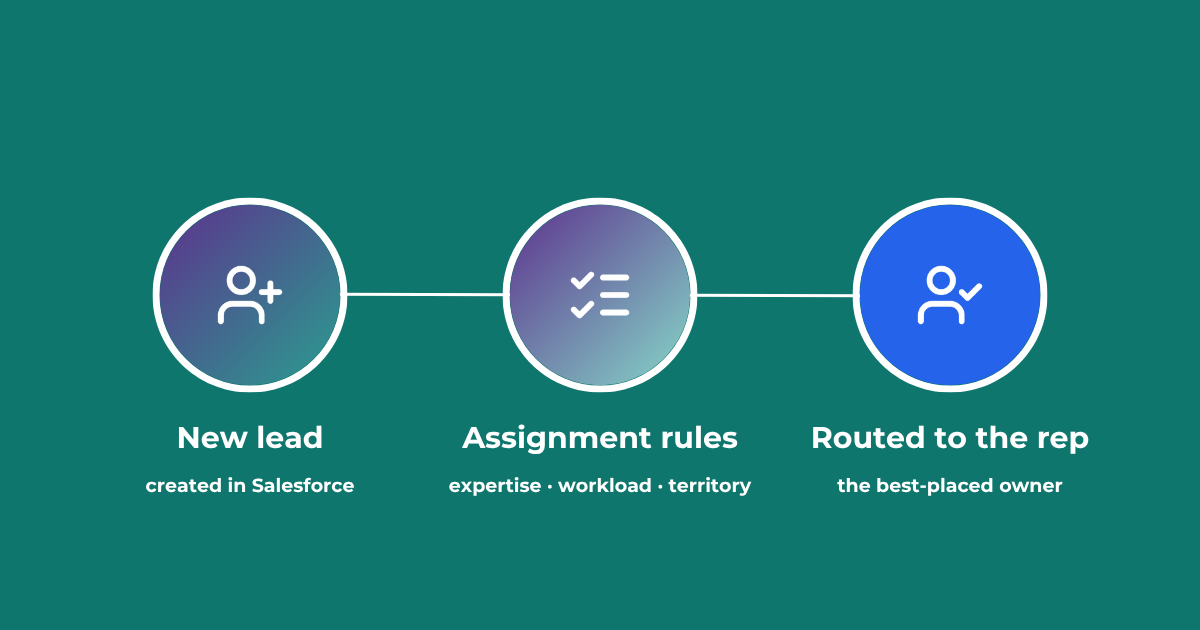
Lead Assignment Rules in Salesforce: Automate with Q-assign
This comprehensive guide to optimizing lead assignment rules in Salesforce will stand you in good stead for maximizing your sales reps’ productivity and performance. Understand the benefits of highly effective lead assignment, explore Salesforce best practices and stay ahead of the competition – with added insights into AI-driven revenue orchestration
Lead to Account Matching: Seamlessly Connect Leads to Accounts in Salesforce
Lead to account matching connects every inbound lead to the right account in Salesforce. Here is how it works, where it breaks, and how to automate it without manual data entry.
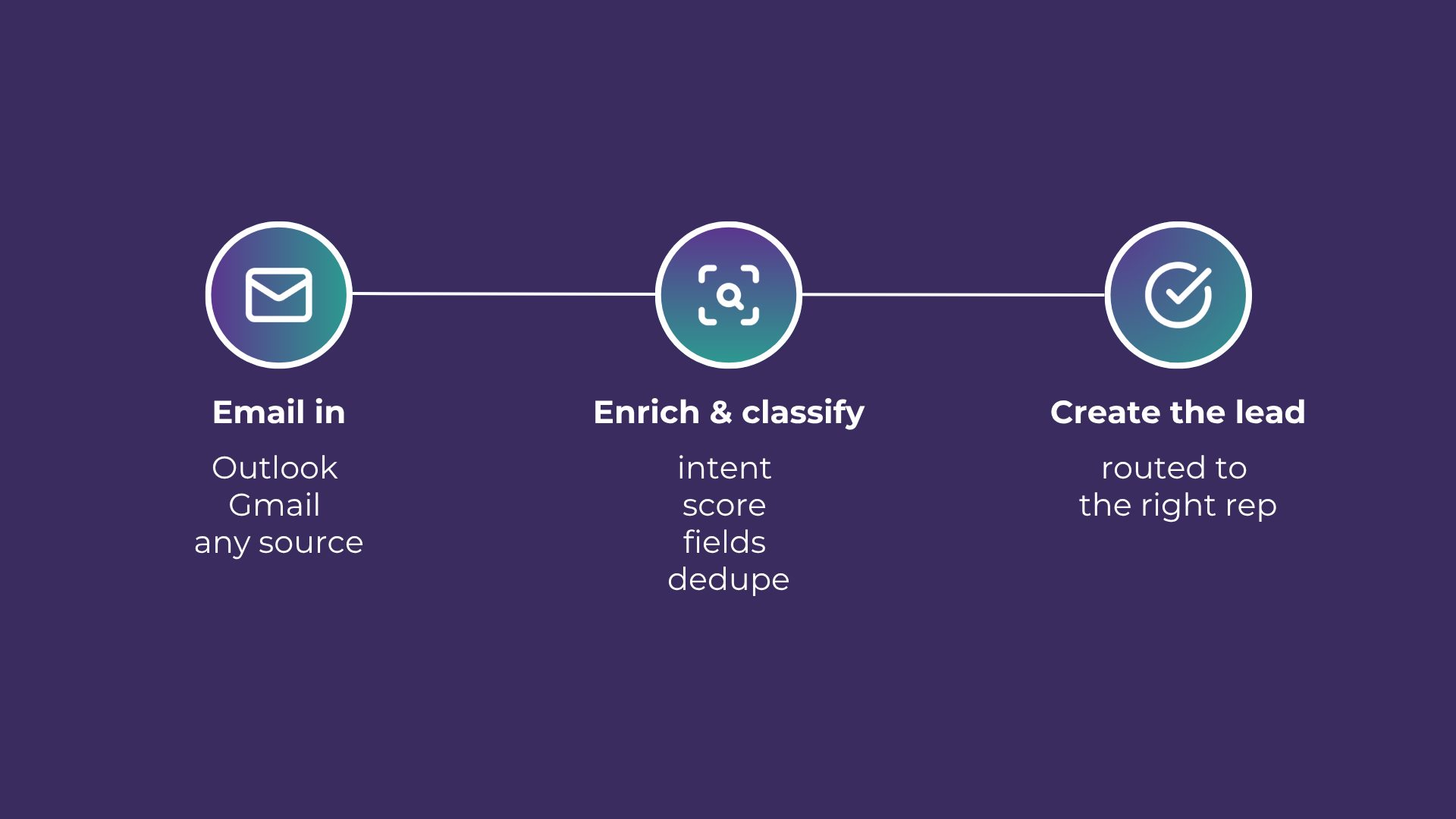
Email-to-Lead: Salesforce Lead Management with AI
Lead management is the lifeblood of any successful sales operation. At a time where customer expectations are higher than ever, ensuring that potential leads are captured and nurtured effectively can make all the difference. Introducing Email-to-Lead – AI Edition.
READY TO SEE IT IN ACTION
Map your workflows with our team.
30 minutes, no prep needed. We will map one workflow you handle today and identify where orchestration would change the outcome.