Rethinking Salesforce High Volume Case Handling Beyond Queues

Many service operations default to Salesforce queues when case volumes grow. It feels like a logical step – a simple way to pool work for a team. Yet this approach often creates the very bottlenecks it is meant to prevent. For any organisation managing Salesforce high-volume case handling, relying on standard queues is like using a single-lane road for rush-hour traffic. Congestion is inevitable.
The Bottleneck of Real-Time Queue Processing
The fundamental issue lies in the design of a queue. Its first-in-first-out logic is too rigid for the unpredictable nature of large-scale service environments. Cases arrive faster than agents can manually pick them from a list and the queue swells. We have all seen it – that ever-growing number in the list view that signals a backlog is forming before work even reaches an agent. This is not a failure of the queue feature itself. It is a strategic misapplication of a tool that was never designed for complex workload distribution.
These Salesforce queue limitations become apparent when volume exceeds an operation’s immediate processing capacity. As noted in analysis by industry experts from Salesforce Ben, once cases start piling up, the system loses its ability to respond effectively. The goal of real-time responsiveness is undermined by the very tool chosen to achieve it. Instead of a smooth flow of work, you get a stagnant pool of cases where priority and urgency are lost. The problem is not that queues are broken but that they are being asked to perform a task – sophisticated workload management – that is far beyond their simple purpose.
The True Cost of Queue Failure: Throughput and Fairness

When queues become bottlenecks, the consequences extend far beyond a messy list view. The operational costs manifest in two critical areas: diminished throughput and compromised fairness. With the system clogged, the overall rate of case resolution drops. This leads directly to expanding backlogs and a cascade of missed service level agreements. The team is busy but not productive because work is not flowing efficiently.
At the same time, fairness is eroded. A static queue cannot dynamically prioritise work. This means an urgent, high-impact case can sit waiting behind dozens of low-priority requests. This lack of intelligent distribution also encourages agents to ‘cherry-pick’ the easiest cases first, leaving complex or difficult issues to stagnate for even longer. The impact on morale is significant. Some agents become overwhelmed by a constant flood of work while others may be underutilised, creating an environment of frustration and inefficiency. This is not just an operational headache – it directly undermines the health of the entire service operation we work to build.
The combination of poor throughput, unfair work distribution and inefficient resource use creates significant business risk. Customer experience suffers and operational costs climb. The table below summarises these tangible impacts.
| Symptom | Direct Impact | Business Cost |
|---|---|---|
| Growing Backlog | Cases age without being actioned | Missed SLAs and customer dissatisfaction |
| Agent ‘Cherry-Picking’ | Complex cases are repeatedly ignored | Poor resolution times for high-value issues |
| Uneven Workload | Some agents are overwhelmed while others are idle | Reduced team productivity and agent burnout |
| Lack of Prioritisation | Urgent cases wait behind non-critical ones | Failure to meet customer expectations on critical issues |
A Pattern for Scalable Salesforce Case Orchestration
The solution is to move beyond simple routing and adopt a robust Salesforce case orchestration model. This approach treats case handling not as a single assignment event but as a managed, multi-step process. The core of this pattern is a step-based asynchronous framework. Instead of pushing everything into one real-time queue, you break the case lifecycle into smaller, independent steps that can be processed without the pressure of immediate assignment. Think of it as the difference between a single craftsman’s bench – where work piles up waiting for one person – and a modern assembly line where tasks are handled in a coordinated sequence.
As Salesforce architects themselves advocate in their guidance on building scalable applications, using a step-based asynchronous framework is key to resilience. This architectural pattern offers several distinct advantages for high-volume operations:
- Scalability: The system can absorb sudden surges in case volume without failing because work is buffered and processed in manageable stages.
- Resilience: A failure in one processing step – like a data enrichment callout – does not halt the entire case journey. The system can safely retry the step without losing the case.
- Visibility: Operations leaders gain a clear view of where every case is in its lifecycle, not just a vague status of ‘in the queue’. You can see bottlenecks forming at specific stages and address them.
This represents a fundamental shift in thinking. The question is no longer, “Who gets the next case?” Instead, it becomes, “What is the next right action for this case?” By orchestrating the journey, you regain control over the entire process from creation to resolution.
Implementing Dynamic Workload Management
This orchestration pattern is not just a theoretical concept. It can be implemented using Salesforce tools, with Omni-Channel at the core. Moving from a static queue to a dynamic workload management system allows you to translate the architectural pattern into practical, automated actions. This is where you address the fairness and efficiency problems head-on.
The key is to use Omni-Channel’s features to build the intelligent distribution logic that queues lack. This involves several specific capabilities:
- Priority-Based Routing: This directly solves the fairness issue. You can configure the system to ensure that high-priority cases are always pushed to the front, regardless of when they arrived.
- Skills-Based Routing: This improves efficiency and first-contact resolution by matching cases to the agent with the right expertise. This is the core of the intelligent case assignment models we design, ensuring the right work goes to the right person every time.
- Interruptible Capacity: This is an advanced but powerful feature. It allows a high-priority case to be pushed to an agent even if they are at their stated capacity for lower-priority work, ensuring critical issues get immediate attention.
The signal that this shift is working is a change in your metrics. You stop watching ‘queue length’ – a reactive measure of failure – and start tracking proactive indicators like ‘agent utilisation’, ‘case age by priority’ and ‘overall throughput’. These metrics tell you that your system is actively managing the workload, not just storing it.
Moving from Queue Management to Systemic Orchestration
Effective Salesforce high-volume case handling requires a move away from the constraints of static queues. It demands a systemic approach built on a resilient, asynchronous architecture and intelligent workload management. By combining a step-based pattern with the dynamic capabilities of tools like Omni-Channel, you create a system that is scalable, fair and efficient. This ensures service levels are not just maintained but improved, even as case volumes grow. For organisations ready to build a more resilient service operation, this shift from queue management to true orchestration is the necessary next step.
Ask an Expert any question about Salesforce high-volume case handling by emailing sales@ortooapps.com.
Related insights
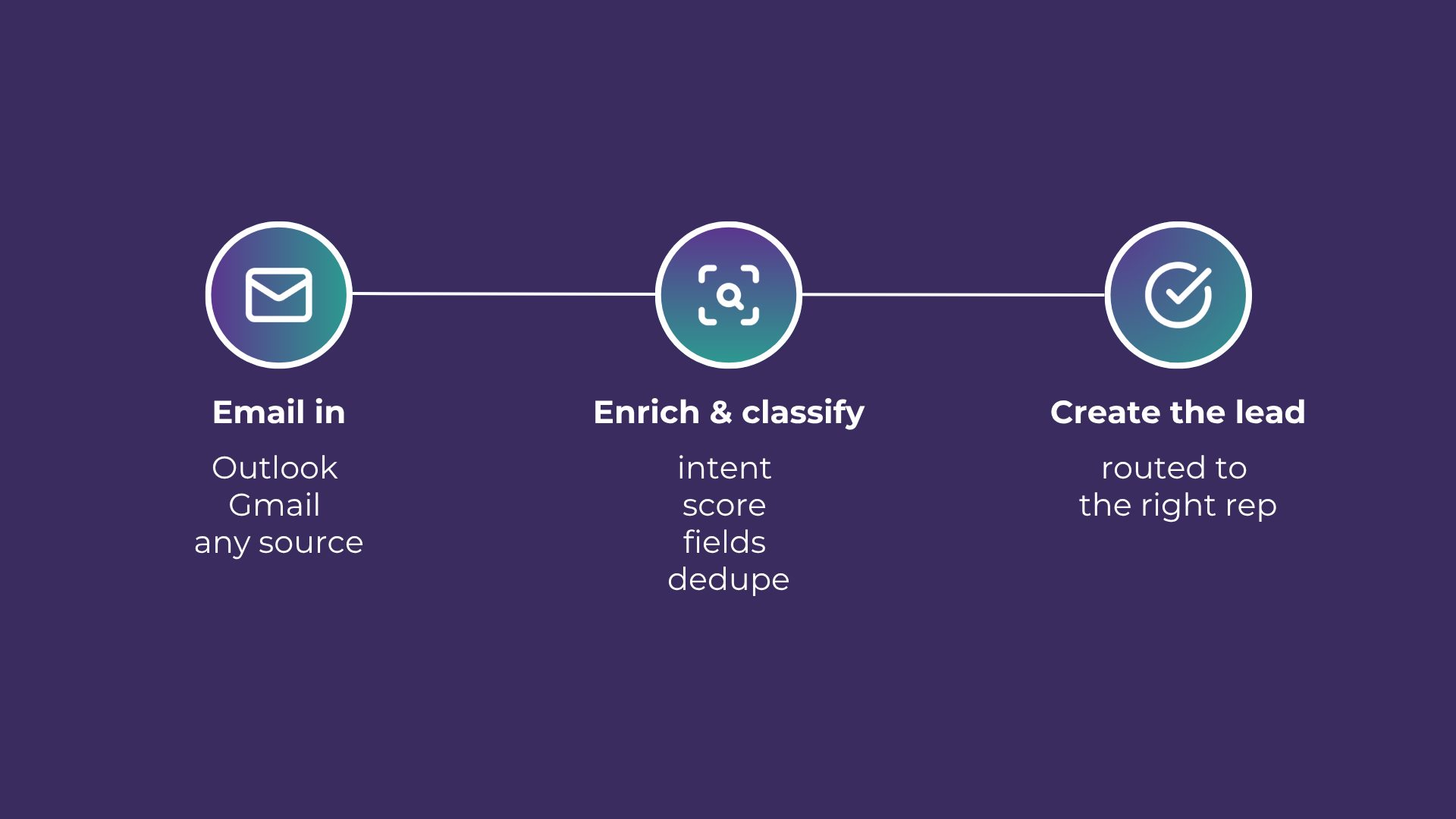
Email-to-Lead: Salesforce Lead Management with AI
Lead management is the lifeblood of any successful sales operation. At a time where customer expectations are higher than ever, ensuring that potential leads are captured and nurtured effectively can make all the difference. Introducing Email-to-Lead – AI Edition.
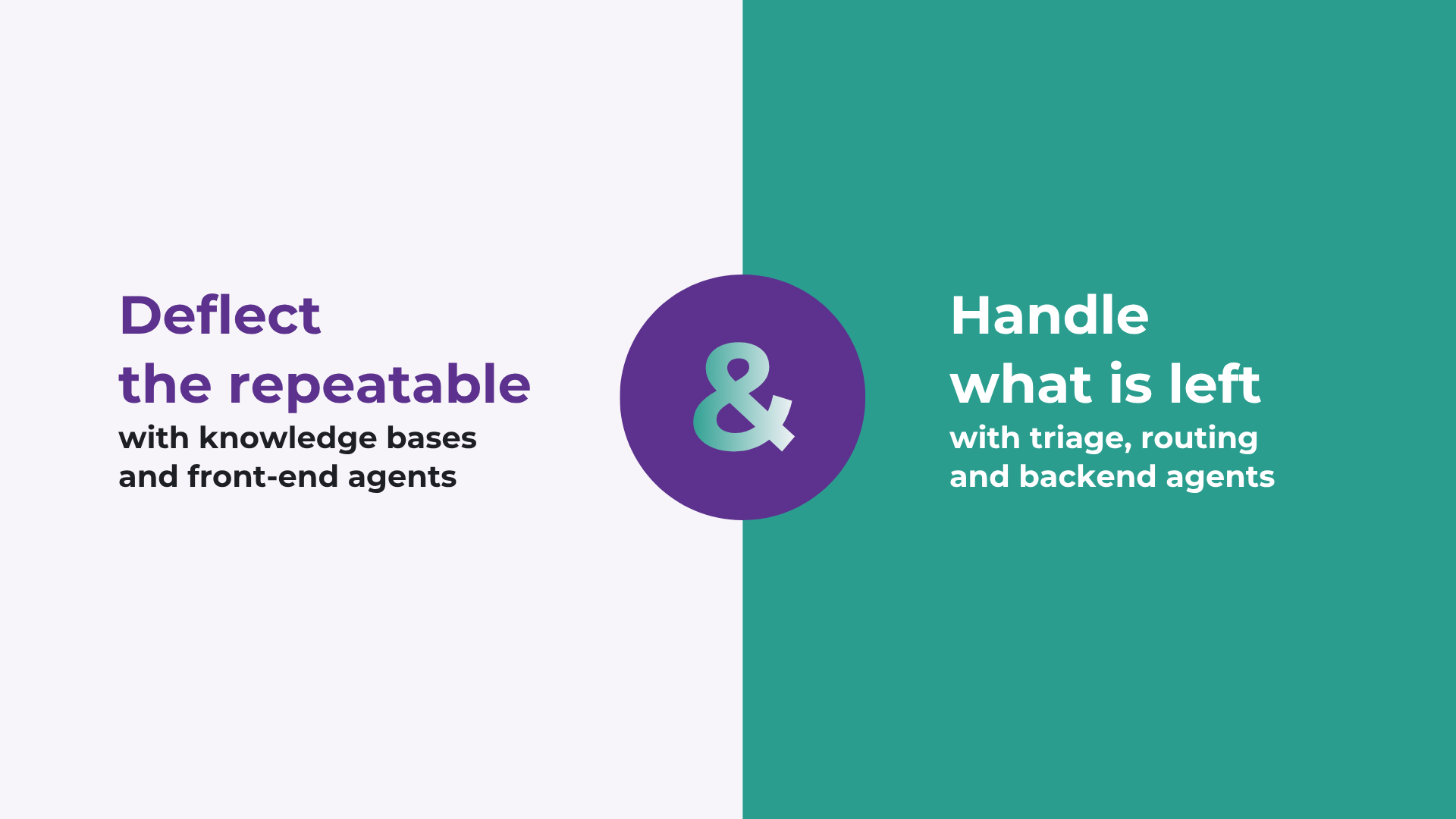
How to improve Salesforce case deflection rates
Deflection only solves half the problem. The cases that do not deflect are the ones that breach SLA. How to improve deflection rates, and how to handle what is left.

Stopping SLA Breaches in High Volume Salesforce Workflows
Learn how to move from reactive reporting to proactive management for better service level agreement adherence.
READY TO SEE IT IN ACTION
Map your workflows with our team.
30 minutes, no prep needed. We will map one workflow you handle today and identify where orchestration would change the outcome.