Rethinking Patient Workflows with Dynamic Assignment Models

The assumption that standard case routing is sufficient for clinical settings is a common misstep. Generic service models designed for uniform customer queries begin to fail when applied to the specialised and high-stakes field of healthcare. Unlike a simple IT ticket, a patient case is layered with complexity.
The Limits of Static Routing in Clinical Settings
In clinical operations, patient needs are not uniform. A case involves variables like clinical urgency, required specialisms – a mental health nurse versus a diabetes specialist for instance – and the need for continuity of care. Static ‘first-in, first-out’ rules simply cannot process this level of nuance. This frequently leads to a mismatch between a patient’s immediate need and the assigned clinician’s specific skill set.
Rigid automation also overlooks the human element of the clinical team. It fails to account for real-time staff capacity, current workload or even individual stress levels. This is how burnout becomes embedded in a workflow. The system assigns work to the ‘next available’ clinician who may not be the ‘best available’ or even truly available to handle a complex case. This gap between a technical workflow and the unpredictable reality of patient care creates significant operational risk. A simple queue-based system for patient case routing UK cannot effectively prioritise a deteriorating patient over a routine check-in, exposing a fundamental flaw in its design.
The Scalability Risks of Poor Assignment Logic

Using an inadequate assignment model creates compounding problems as a healthcare organisation grows. The most immediate risk is a degradation in patient outcomes and safety. When a case is routed to an overloaded or incorrectly skilled clinician, response times for critical needs slow down. These delays directly impact care quality and can quickly damage the trust a patient has in a provider.
Beyond the clinical impact, there are spiralling operational costs. We have all seen teams burdened by high rates of manual case reassignment. Time spent by senior clinicians redirecting work and the duplicated effort of re-reading case notes are small frictions that become major financial drains at scale. What starts as a minor inefficiency becomes a significant operational overhead.
Finally, there is the compliance and regulatory exposure. Adherence to data protection standards like HIPAA and UK-specific frameworks from bodies such as the Care Quality Commission (CQC) is non-negotiable. Poorly managed workflows can create data handling vulnerabilities or fail to provide a clear audit trail for how patient cases are managed. As highlighted in guidance on Salesforce and HIPAA, maintaining security requires meticulous policy management. Building HIPAA compliant workflows is essential for any system handling sensitive patient information. For any organisation using Salesforce for healthcare teams, compliance cannot be an afterthought – it must be a core design requirement.
A Pattern for Dynamic Work Assignment
An effective system requires a repeatable pattern for building dynamic work assignment models in Salesforce. This approach moves beyond simple queues to create a more intelligent and responsive workflow. The model is built on four distinct but connected layers.
1. Multi-Factor Routing Matrix: This is the foundation. Instead of a single rule, assignment decisions are based on a combination of data points. This ensures a holistic view of both the patient’s need and the organisation’s capacity. As we have shared in our thinking on effective case assignment, this nuanced approach is a cornerstone of efficient operations.
| Factor | Description | Data Source in Salesforce | Impact on Assignment |
|---|---|---|---|
| Clinician Skills | Certifications, specialisms, languages spoken | Custom fields on User object or a related Skills object | Ensures case is matched to a clinician with the right expertise. |
| Real-Time Availability | Presence status, calendar integration, scheduled shifts | Omni-Channel presence status, integrated calendar data | Prevents routing work to clinicians who are offline, in meetings or on leave. |
| Current Workload | Number of open cases, weighted by priority | Roll-up summary fields or custom reports on open Cases per User | Distributes work evenly and avoids overloading top performers. |
| Patient Context | Care history, location, continuity requirements | Related records on the Account or Contact object | Prioritises continuity of care by routing to a familiar clinician. |
2. Intelligent Triage Workflows: This layer uses Salesforce automation for clinical triage automation. It scores and prioritises incoming cases based on predefined clinical rules – not just the time they arrived. For example, specific keywords like ‘chest pain’ or ‘shortness of breath’ in a patient submission could automatically elevate a case’s priority and trigger an immediate alert.
3. Human-in-the-Loop Governance: Automation must assist, not replace, clinical judgment. The model must include clear escalation paths for complex or ambiguous cases. It should also enable senior clinicians to manually override automated assignments when their expertise indicates a different course of action is needed.
4. Compliance by Design: The entire system must be built on a foundation of compliance. This means configuring Salesforce to protect patient data at every step and logging all assignment actions to create a robust and transparent audit trail. Building HIPAA compliant workflows from the ground up ensures the system is both efficient and safe.
Signals Your Assignment Model Is Failing
Even with a system in place, it is vital to watch for signals that your assignment model is underperforming. These indicators are often hiding in plain sight within your Salesforce data and team feedback.
- A high case reassignment rate. This is the primary metric to watch. If cases are frequently being passed from one clinician to another, it means the initial assignment is consistently wrong. You can track this by creating Salesforce reports that analyse case history for owner changes.
- Workload distribution imbalance. Are certain clinicians consistently overloaded while others are underutilised? Salesforce reports grouping open cases by user can reveal these imbalances. This often points to flaws in the model’s ability to accurately track real-time capacity.
- Slow ‘time-to-first-contact’ for priority cases. If your most urgent cases are experiencing delays, the triage logic is not working correctly. This metric directly connects your workflow’s performance to the patient experience and is a critical indicator of clinical risk.
- Qualitative team feedback. Data alone is not enough. If your clinical teams complain about receiving irrelevant cases or feeling perpetually overwhelmed, the model needs review. This feedback is a crucial signal for any team managing Salesforce for healthcare teams at scale.
From Static Queues to Dynamic Care Coordination
Moving from static routing to dynamic work assignment is not just a technical upgrade – it is a fundamental shift in how patient care is managed at scale. Success requires a thoughtful approach that aligns technology with the human realities of clinical work. The goal is not simply efficiency but safer, more responsive patient coordination that supports care teams and improves outcomes. By adopting these patterns, organisations can build systems that truly enhance their capacity to deliver excellent care. For a deeper discussion on optimising your operational workflows, you can explore further resources at our website.
Ask an Expert any question about building dynamic work assignment models for healthcare by emailing sales@ortooapps.com.
Related insights
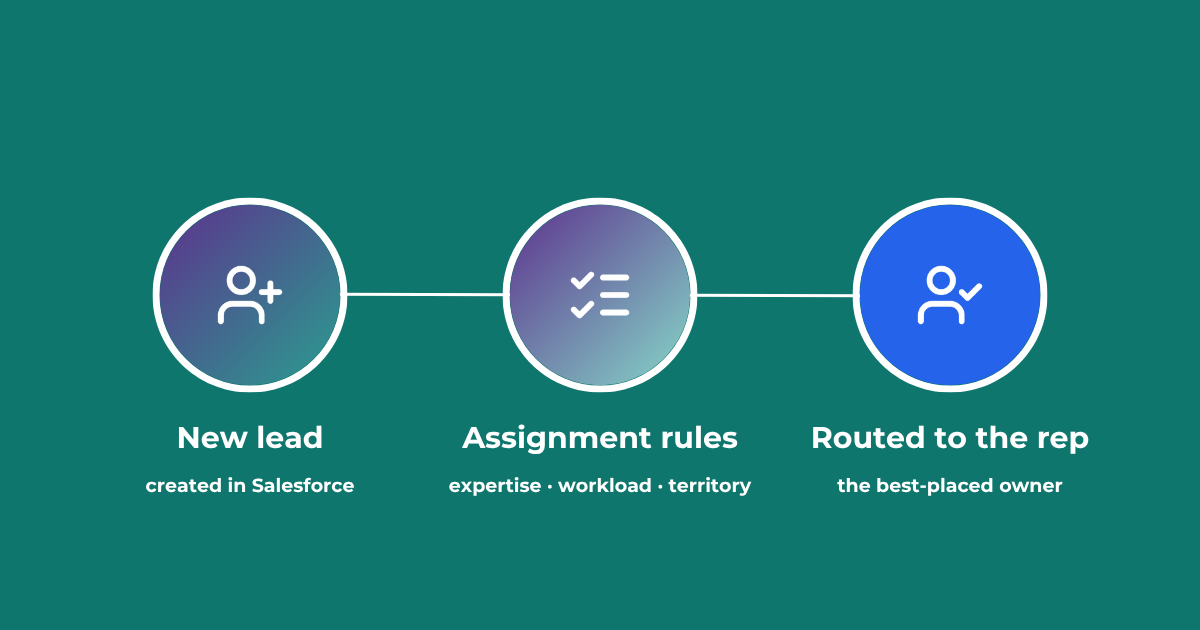
Lead Assignment Rules in Salesforce: Automate with Q-assign
This comprehensive guide to optimizing lead assignment rules in Salesforce will stand you in good stead for maximizing your sales reps’ productivity and performance. Understand the benefits of highly effective lead assignment, explore Salesforce best practices and stay ahead of the competition – with added insights into AI-driven revenue orchestration
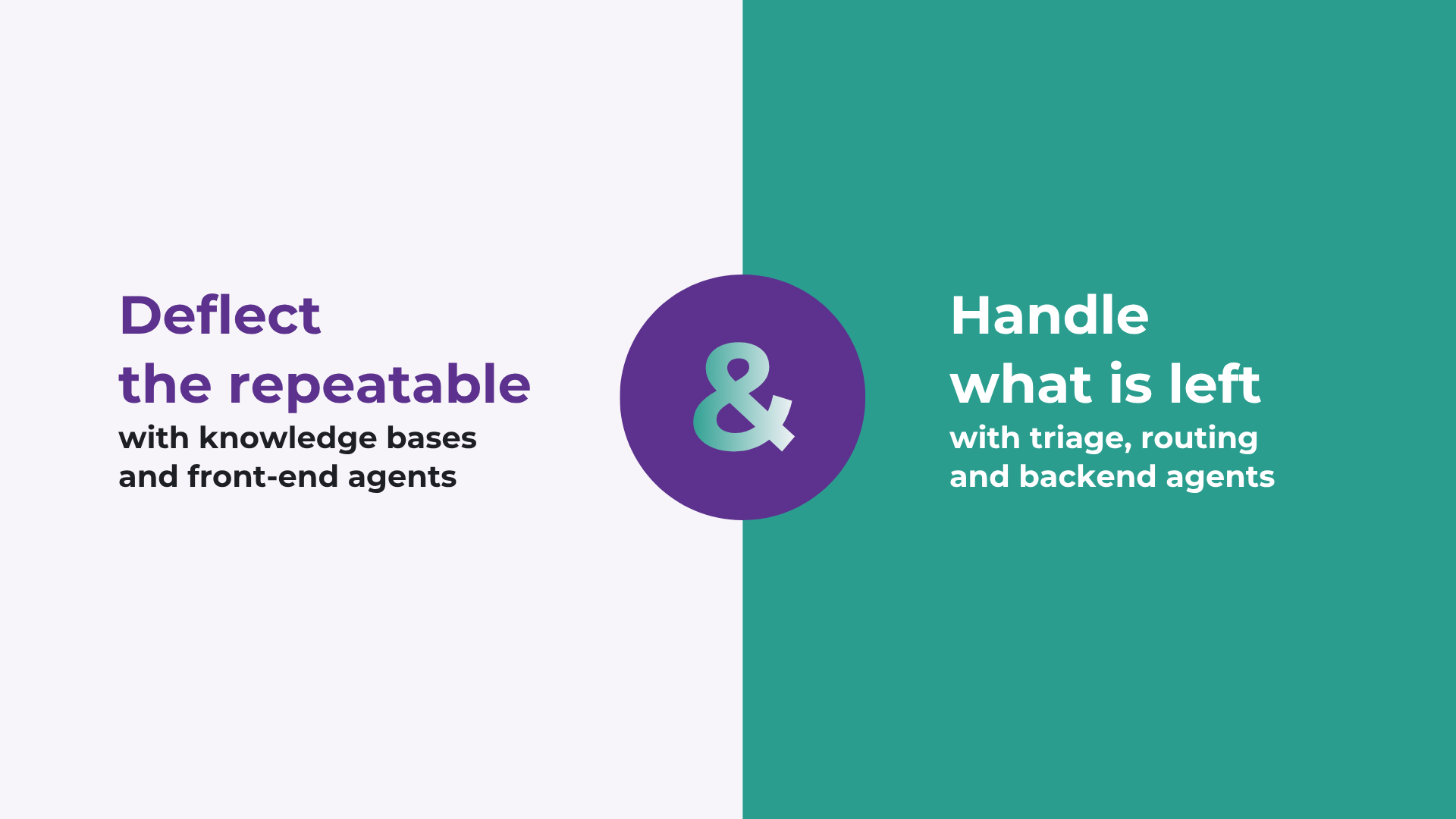
How to improve Salesforce case deflection rates
Deflection only solves half the problem. The cases that do not deflect are the ones that breach SLA. How to improve deflection rates, and how to handle what is left.

Calling Salesforce is easy. Defining what happens next is the hard part.
Salesforce workflows don’t break because of missing automation. They break because no single system defines what should happen. Here’s what actually fixes it.
READY TO SEE IT IN ACTION
Map your workflows with our team.
30 minutes, no prep needed. We will map one workflow you handle today and identify where orchestration would change the outcome.