How to Design a Reliable Email to Record System in Salesforce

The Misconception of Email to Record as a Simple Task
Many Salesforce teams view email-to-record as a solved problem. They enable a standard tool like Email-to-Case and consider the job done. This is a significant misjudgment. At scale, this perspective creates serious operational friction. In high-volume environments – think of case management in the UK public sector or client onboarding in financial services – the weaknesses of basic email parsing become painfully clear. The challenge is not simply creating a record. It is about ensuring data integrity correct ownership and governance from the very first touch.
The truth is that a reliable email to record system is not a feature to be switched on. It is a complete operational system that must be designed with intent. Effective Salesforce email management demands a shift in mindset. Instead of just capturing an email, the system must understand its context and content to create a clean actionable record every time. Anything less introduces chaos directly into your Salesforce org and undermines the platform’s value as a single source of truth.
The Operational Cost of Unreliable Email Intake

When email intake fails, the consequences cascade through the organisation. The immediate effect is operational drag. Teams are forced into a cycle of manual clean-up, correcting records with missing data and re-routing items that landed in the wrong queue. Parent-child relationships break, demanding painstaking manual repair. This constant fire-fighting pollutes the org and damages Salesforce data integrity. Staff start hunting for context in Outlook threads instead of trusting the system of record.
This is more than an efficiency problem – it is a governance gap. Bodies like The UK National Archives stress the importance of capturing and classifying records correctly from the outset. A failure at the intake stage means audit trails are incomplete and compliance is compromised. Over time, this unreliability erodes user trust in the platform itself. People create workarounds, managing critical tasks outside of Salesforce and making the problem of fragmented data even worse. The hidden costs accumulate, turning a supposedly helpful automation into a source of organisational debt.
| Symptom | Immediate Operational Cost | Long-Term Business Risk |
|---|---|---|
| Incorrect Record Creation | Manual data correction and re-classification | Skewed reporting and poor business intelligence |
| Lost Email Context | Time spent searching inboxes for attachments or thread history | Incomplete audit trails and compliance gaps |
| Duplicate Records | Wasted effort working on redundant items | Fragmented customer view and poor service experience |
| Manual Re-routing | Delayed response times and SLA breaches | Erosion of user trust in automation and systems |
A Systemic Pattern for Reliable Email to Record Conversion
Moving beyond the limits of standard Salesforce functionality requires a more systemic approach. A resilient model for email orchestration treats intake not as a single event but as a multi-stage process. This pattern for automated record creation ensures that what enters Salesforce is complete correct and ready for action. According to The UK National Archives, the first step in any email preservation workflow is to properly select and capture the information, which this model directly addresses.
A robust system can be designed around three core stages:
1. Intelligent Intake and Classification
The process begins the moment an email arrives. The system should validate the sender and use content analysis – not just rigid text rules – to determine the record type priority and business context. It should understand the difference between a new client request a follow-up on an existing case and an internal notification. This initial classification is critical for everything that follows.
2. Data Enrichment and Validation
Once classified, the system uses data from the email body subject and sender to look up and associate related Salesforce records. It should automatically link a new case to the correct Account and Contact or connect an inbound lead to an existing Opportunity. This step ensures data consistency and provides the service agent or sales representative with a complete picture without manual searching.
3. Governed Assignment and Ownership
Finally, the complete enriched record is routed to the right person or team. Instead of dropping into a generic queue, assignment logic should consider team availability skills workload and even language. This ensures immediate accountability and faster resolution. A well-designed system can handle any object, a core principle you can learn more about with a solution designed for creating any record from an email.
The Critical Signal of a Failing Intake Process

How can you tell if your email intake process is truly working? Raw volume metrics are misleading. A better indicator is the Manual Re-assignment Rate. This is the percentage of email-generated records that a user must manually re-route re-classify or re-assign to another user or queue. This single metric reveals the health of your entire intake system with brutal honesty.
A high re-assignment rate is a direct measure of failed intelligence. It means your classification is wrong your enrichment is incomplete or your routing logic is too simple. Every manual touch represents a process failure an unnecessary delay and an added cost. It signals that your automation is creating work instead of reducing it. Following email to record best practices means treating this metric as a primary key performance indicator.
The actionable advice is clear. Establish a baseline for your Manual Re-assignment Rate today. Set aggressive targets to reduce it. Analyse every single re-assignment to understand the root cause. Was the keyword logic too brittle? Did the system fail to identify the correct contact? Each manual correction is a lesson in how to make your intake process smarter and more resilient. Reducing this rate directly improves resolution times and lowers the risk of breaching service level agreements.
Ensuring Consistency and Governance Across Teams
A common failure pattern is siloed intake processes. The Sales team builds its own rules for lead capture while the Service team creates conflicting logic for cases. This creates an inconsistent experience and makes platform governance impossible. A truly reliable email to record system requires a centralised framework owned and maintained across the business.
Establishing a Centre of Excellence or a similar governance body is essential. This group should define and enforce standards for classification enrichment and assignment logic for all teams. Technology is an enabler not a complete solution. Success depends on shared accountability between business owners – who define what a record is and who owns it – and the technical teams who build the system to execute those rules.
Ultimately, achieving order from the chaos of the shared inbox requires designing email intake as a core governed operational system. To explore these orchestration concepts further, you can find more resources at https://www.ortooapps.com. Ask an Expert any question about how to design a reliable email to record system in Salesforce by emailing sales@ortooapps.com.
Related insights
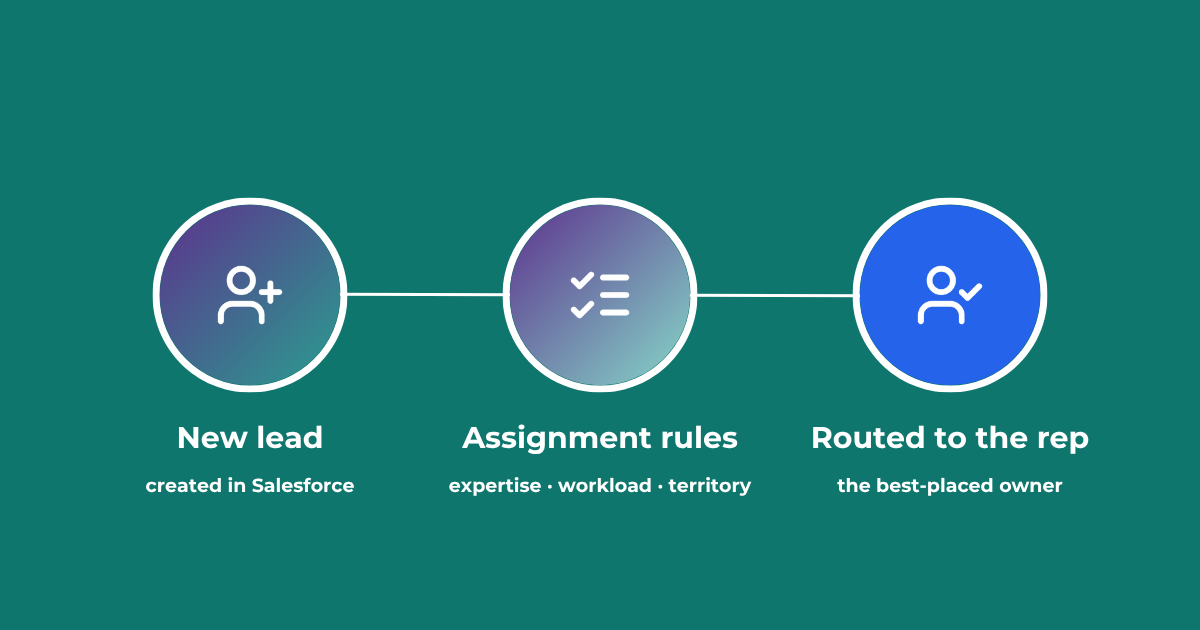
Lead Assignment Rules in Salesforce: Automate with Q-assign
This comprehensive guide to optimizing lead assignment rules in Salesforce will stand you in good stead for maximizing your sales reps’ productivity and performance. Understand the benefits of highly effective lead assignment, explore Salesforce best practices and stay ahead of the competition – with added insights into AI-driven revenue orchestration
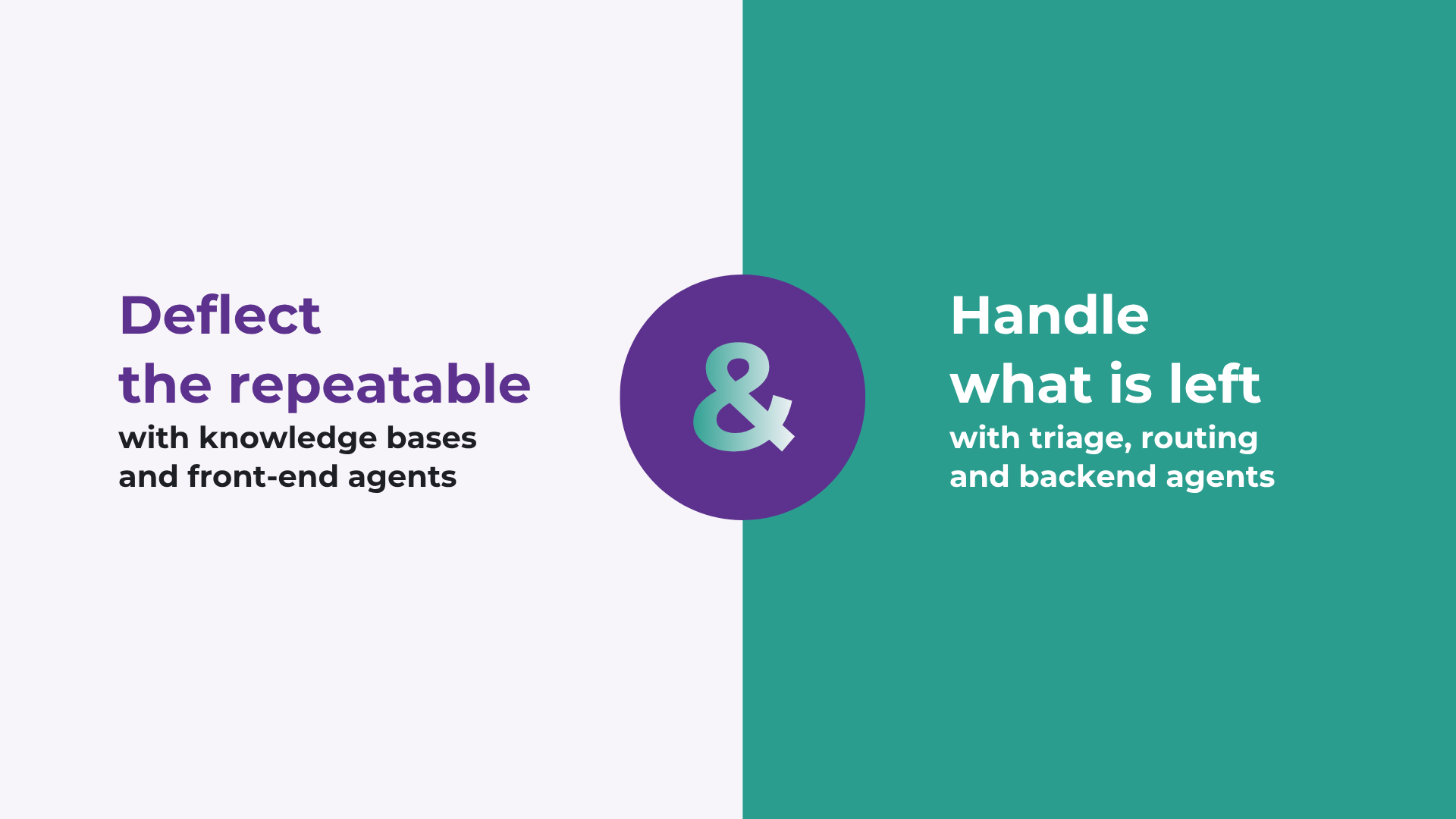
How to improve Salesforce case deflection rates
Deflection only solves half the problem. The cases that do not deflect are the ones that breach SLA. How to improve deflection rates, and how to handle what is left.

Calling Salesforce is easy. Defining what happens next is the hard part.
Salesforce workflows don’t break because of missing automation. They break because no single system defines what should happen. Here’s what actually fixes it.
READY TO SEE IT IN ACTION
Map your workflows with our team.
30 minutes, no prep needed. We will map one workflow you handle today and identify where orchestration would change the outcome.