Beyond The Queue: How To Build Resilient Assignment Models in Salesforce

Most operational models are designed for a predictable flow of work. This is an assumption that rarely holds true in high-stakes service and support environments. Traditional Salesforce queues – which rely on static assignment rules or simple round-robin policies – are fundamentally brittle because they are built on this flawed premise. Their inflexibility is the root cause of many downstream problems and a clear example of Salesforce queue limitations.
The Inflexibility of Standard Salesforce Queues
The primary limitation of a standard queue is its inability to adapt to real-time conditions. We can all picture the scene: a sudden surge of high-priority cases arrives just as a key team member goes offline unexpectedly. A static queue cannot intelligently react. It continues to follow its fixed rules, creating an immediate operational bottleneck. Work piles up, service levels are threatened and the rest of the team remains unaware of the mounting pressure in one corner of the system.
This rigidity directly impacts fairness and efficiency. Static distribution models often create invisible workload imbalances. One agent might be struggling under a mountain of complex cases while another, having cleared a series of simple tasks, sits idle. This isn’t just inefficient – it is demoralising. When team members feel the system distributes work unfairly, it erodes trust and reduces the entire team’s throughput. The system itself becomes a source of friction rather than a tool for collaboration.
Basic queues struggle with anything beyond the most straightforward workflows. As noted in a guide on Salesforce assignment best practices, core tools are designed for simple scenarios and require significant customisation to handle dynamic workloads. The core problem is that these systems lack context. They do not know if a case requires a specialist, if an agent is nearing capacity or if a seemingly low-priority task is about to breach its SLA. Without this awareness, they can only distribute work – not orchestrate it.
Designing for Adaptability and Fairness

Moving beyond these limitations requires a shift in mindset from static routing to dynamic orchestration. The goal is not just to assign work but to do so intelligently based on a complete picture of your operational reality. A resilient system continuously asks “Who is best equipped to handle this work right now?” instead of just “Whose turn is it?”. This approach is built on three core principles that define modern, resilient assignment models.
Capacity-Aware Routing
A truly resilient system must understand each agent’s real capacity. This goes far beyond a simple ‘available’ or ‘busy’ status. It involves considering their current active workload, the complexity of their assigned tasks and even non-case activities like training or meetings. By routing work based on actual capacity, the system prevents individual burnout and ensures work flows to where it can be handled most effectively. This is a foundational element of the intelligent work distribution patterns found in our advanced case assignment models.
Dynamic Prioritisation
In high-stakes environments, not all work is created equal. A resilient model must be able to identify and escalate urgent work automatically without waiting for manual intervention. This involves using real-time data triggers – such as proximity to an SLA deadline, specific keywords in a customer email or a high-value customer flag – to move critical cases to the front of the line. This ensures your most important work always receives immediate attention.
Real-Time Workload Balancing
Fairness is not a one-time setting. It requires continuous adjustment. A resilient system constantly monitors work distribution across the team and makes small, frequent micro-adjustments to prevent imbalances from forming. This principle of adaptive workload distribution ensures that work is shared equitably over time, which improves team morale and maximises collective efficiency. It turns assignment from a rigid, top-down process into a responsive, self-correcting system.
| Factor | Static Queue Model | Resilient Assignment Model |
|---|---|---|
| Work Distribution Logic | Fixed rules (e.g., round-robin, first-in-first-out) | Dynamic logic based on real-time data |
| Adaptability | Low – cannot react to workload spikes or agent absence | High – adjusts assignments based on capacity and priority |
| Fairness | Often uneven, leading to burnout and underutilisation | Continuously balanced to ensure equitable workloads |
| Operational Outcome | Bottlenecks, SLA breaches and reduced throughput | Improved efficiency, consistent service levels and higher morale |
This table summarises the fundamental differences between a traditional static queue and a modern resilient assignment model. The data points reflect common operational patterns observed in service and support teams.
Practical Steps for Building Resilient Assignment Models
Translating these design principles into a working system within Salesforce is achievable. It involves a strategic combination of platform tools and a focus on real-world operational data. Building resilient assignment models is less about finding a single magic button and more about layering intelligence onto your existing processes. Here are four practical steps to begin.
- Use Salesforce Flow as your foundation. Standard assignment rules are too limited for complex logic. Salesforce Flow, however, allows you to build sophisticated decision trees that can evaluate multiple criteria before routing a case. You can use it to check an agent’s skill set, language and current workload before making an assignment decision.
- Integrate data to measure true capacity. A resilient model needs rich data inputs. This can be achieved by tracking active case counts on the user record or by creating a custom object to represent an agent’s available ‘workload slots’. The key is to move beyond binary availability and create a nuanced score that reflects an agent’s true ability to take on new work.
- Introduce AI with a focus on governance. AI can enhance assignment logic by predicting workload surges or identifying the optimal agent for a complex case. However, it must operate within a human-in-the-loop framework. As Salesforce Engineering highlights in its work on scaling agent work with AI, the technology is most effective when it augments human teams, not when it operates without oversight. Use AI to suggest assignments that a human can approve or override.
- Start small and iterate. You do not need to build the entire model at once. Identify the single biggest bottleneck in your current process – perhaps it is cherry-picking or a specific type of case that always gets stuck. Apply one principle, such as capacity-aware routing, to solve that specific problem. Learn from the results and expand from there.
Evolving Beyond Simple Work Distribution

For any organisation managing high-stakes workflows, the inherent Salesforce queue limitations present a significant operational risk. The static, one-size-fits-all nature of traditional queues is simply not fit for the volatility of modern service demands. Moving towards resilient assignment models is not an optimisation – it is a necessity for maintaining service levels, ensuring fairness and operating efficiently at scale.
The solution lies in building systems that are adaptive, fair and context-aware. By prioritising capacity awareness, dynamic prioritisation and real-time balancing, you create a system that serves the team rather than constraining it. Teams that successfully implement these patterns can handle greater uncertainty and ensure their most critical work always gets the attention it deserves, improving both performance and morale.
This evolution is a strategic advantage. For those considering how to implement these patterns, a good first step is to explore how they fit within a broader vision for operational excellence. Evaluate your current assignment logic against real-world workload data to find your starting point. Ask an Expert any question about building resilient assignment models in Salesforce by emailing sales@ortooapps.com.
Related insights
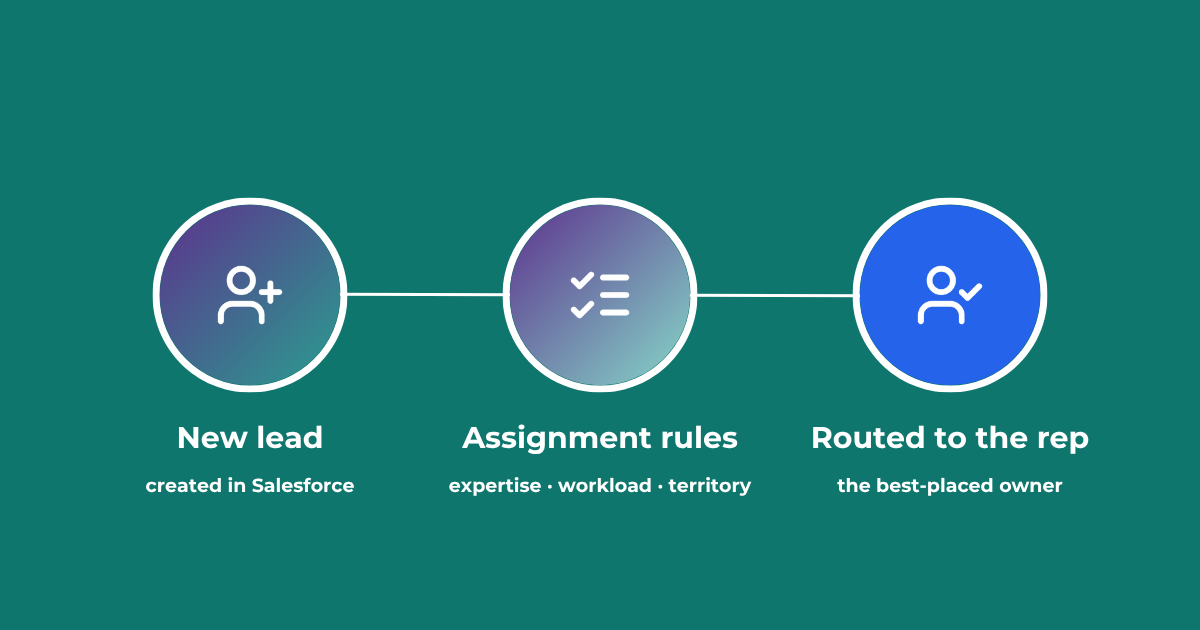
Lead Assignment Rules in Salesforce: Automate with Q-assign
This comprehensive guide to optimizing lead assignment rules in Salesforce will stand you in good stead for maximizing your sales reps’ productivity and performance. Understand the benefits of highly effective lead assignment, explore Salesforce best practices and stay ahead of the competition – with added insights into AI-driven revenue orchestration
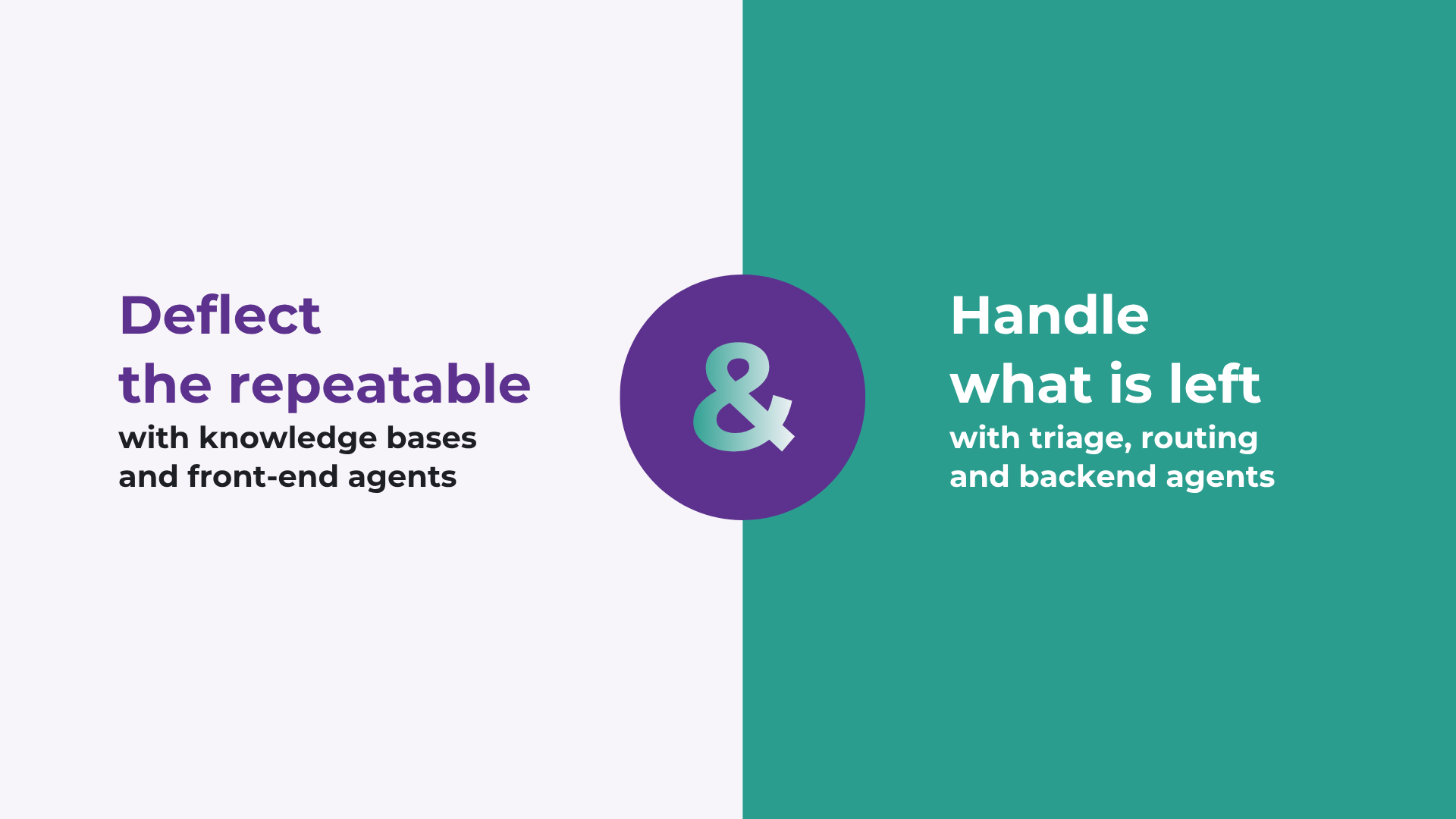
How to improve Salesforce case deflection rates
Deflection only solves half the problem. The cases that do not deflect are the ones that breach SLA. How to improve deflection rates, and how to handle what is left.

Calling Salesforce is easy. Defining what happens next is the hard part.
Salesforce workflows don’t break because of missing automation. They break because no single system defines what should happen. Here’s what actually fixes it.
READY TO SEE IT IN ACTION
Map your workflows with our team.
30 minutes, no prep needed. We will map one workflow you handle today and identify where orchestration would change the outcome.