Why Your Salesforce Lead Assignment Rules Are Breaking

Most sales operations teams believe their lead assignment processes are robust. They are built on standard Salesforce rules that appear logical and orderly on the surface. Yet this confidence often masks a significant vulnerability. The problem is not the sales team or their managers – it is the static logic underpinning the entire system.
The Flaw in Static Assignment Logic
Traditional Salesforce lead assignment rules are inherently brittle. They are designed for a world that no longer exists – one where teams, territories and customer needs are fixed. The most common models fail because they cannot adapt to normal business dynamics.
Consider territory-based assignment. A system that routes leads by postcode or county seems straightforward until a sales territory is redrawn or a key team member goes on holiday. The rules break instantly. Leads pile up in unattended queues or get misdirected, forcing operations managers to spend hours on manual clean-up instead of strategic work.
Simple round-robin models present a different but equally damaging problem. They distribute leads without any consideration for complexity or an agent’s current workload. This creates a culture of unfairness. Proactive reps who close deals quickly are rewarded with more work, leading to burnout. Meanwhile, other team members may be underutilised, creating a quiet resentment that erodes team cohesion and performance. The system inadvertently punishes efficiency.
This is not a failure of people but of design. These rigid assignment models assume a static operational environment. When faced with the reality of a dynamic business, they fracture, creating friction where there should be flow.
The Hidden Costs of Poor Lead Distribution

The flawed logic described previously does more than just create administrative headaches. It quietly drains revenue and corrodes team morale. The most immediate cost is lost opportunity. When a high-value lead with specific technical questions lands with a generalist rep, the conversation is doomed from the start. Today’s buyers expect expertise on the first call, not a promise to find someone who can help later.
Beyond lost deals, there is a significant impact on your team. An uneven workload is a primary driver of disengagement. When reps feel the system is arbitrary or unfair, their motivation wanes. This directly affects the effort they invest in their pipeline and makes it incredibly difficult to improve sales productivity. You cannot coach your way out of a system that feels rigged.
Finally, there is the operational drag. Every misrouted lead is an exception that requires manual intervention. A sales manager has to stop coaching and start reassigning. An operations specialist has to diagnose a broken rule instead of optimising a workflow. In a competitive market where response time is critical, a delay of even a few hours for a manual handoff can mean the difference between a won deal and a lost prospect.
A Model for Skills-Based Routing in Salesforce
The alternative is to shift from static rules to a dynamic model built around expertise. This approach is known as skills-based routing Salesforce. It is a system that assigns work not by arbitrary data like location but by matching a lead’s needs to an agent’s specific skills, availability and current workload. It is a fundamental change in philosophy – from finding any available person to finding the best possible person for the task.
This model moves beyond simple fields like ‘Country’ or ‘Industry’ and uses a richer data set to make intelligent decisions. As Salesforce itself highlights in its guidance, skills-based routing is designed to connect customers to the agent best able to solve their issue. Key skill categories often include:
- Language fluency – ensuring a lead from France speaks with a French-speaking rep.
- Product specialisation – matching a query about a specific software module with a product expert.
- Industry expertise – connecting a prospect in financial services with a rep who understands their sector’s unique challenges.
- Seniority or experience level – assigning a complex enterprise account to a senior rep, not a junior one.
The power of this approach lies in its adaptability. When you launch a new product, you simply update agent skill profiles. You do not have to deconstruct and rebuild your entire assignment logic. It is an orchestration pattern that gets the right work to the right person efficiently, freeing up managers to focus on coaching and strategy.
| Factor | Static Assignment (Territory/Round-Robin) | Skills-Based Routing |
|---|---|---|
| Flexibility | Rigid – breaks with team or market changes | Dynamic – adapts by updating agent skills |
| Lead-to-Rep Match | Based on arbitrary data (e.g., postcode) | Based on relevant expertise (e.g., product knowledge) |
| Fairness | Prone to uneven workloads and cherry-picking | Distributes work based on capacity and suitability |
| Scalability | Requires complex rule rewrites to scale | Scales by adding new skills and agents |
| Customer Experience | Inconsistent – depends on luck of the draw | Consistent – connects buyers with experts quickly |
A Framework for Implementation

Adopting a skills-based model requires a structured approach. It is not just a technical change but a strategic one that aligns your sales process with your team’s actual capabilities. For any sales operations leader, the implementation can be broken down into five clear steps.
- Define and Catalogue Skills
Begin by collaborating with sales leadership to identify the expertise that genuinely drives conversions. Is it specific product knowledge, industry experience, language proficiency or familiarity with a certain company size? Create a definitive catalogue of these skills. This is the foundation of your entire model. - Build Agent Skill Profiles
With your skill catalogue defined, assess and tag each sales rep with their corresponding skills and proficiency levels directly within Salesforce. This creates the rich data set needed for intelligent routing. This is a living profile that must be maintained as team members gain new expertise. - Construct the Routing Logic
The next step is to configure rules that match the skill requirements of an incoming lead with the profiles of your agents. For example, a lead from a German manufacturing firm should be routed to an agent tagged with both ‘German’ and ‘Manufacturing’. Building this complex matching logic natively can be challenging, which is why many teams use a dedicated solution for lead assignment in Salesforce to automate the process. - Incorporate Agent Capacity
A truly robust model must also consider an agent’s current workload. The goal is to assign the lead to the best available agent. This prevents top performers from becoming overloaded and ensures a fair and balanced distribution of opportunities across the team. - Test and Refine
This is not a system you can set and forget. Continuously monitor performance data, such as time-to-action and conversion rates by skill. Gather regular feedback from the sales team to ensure the model remains aligned with their needs and your business goals.
Closing the Loop on Lead Management
Moving from brittle, static rules to a dynamic, skills-based system addresses the core flaws of traditional lead assignment. It tackles inefficiency, unfairness and an inability to adapt to market changes head-on. Optimising how leads are distributed is one of the most critical levers you can pull to improve sales productivity and build a more resilient and effective sales operation. It ensures your team’s most valuable asset – their expertise – is always applied where it will have the greatest impact.
For teams considering how to implement such a model, it can be helpful to see these patterns work in a live environment. If you would like to evaluate this approach, you are welcome to book a demonstration by emailing sales@ortooapps.com.
Ask an Expert any question about skills-based routing in Salesforce by emailing sales@ortooapps.com.
Related insights
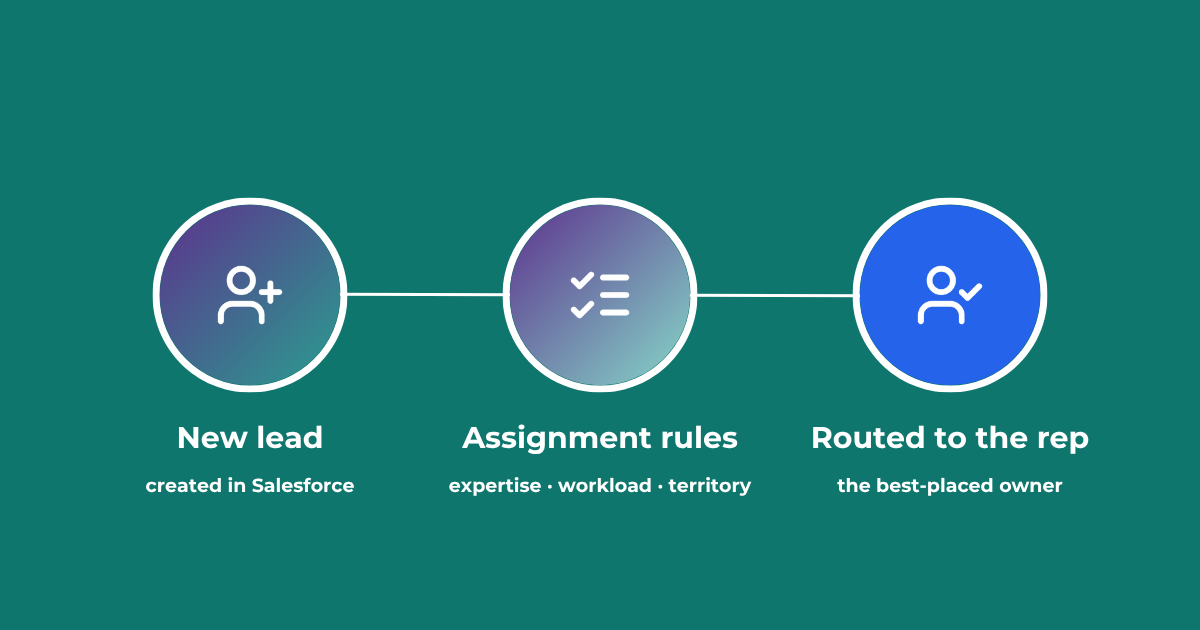
Lead Assignment Rules in Salesforce: Automate with Q-assign
This comprehensive guide to optimizing lead assignment rules in Salesforce will stand you in good stead for maximizing your sales reps’ productivity and performance. Understand the benefits of highly effective lead assignment, explore Salesforce best practices and stay ahead of the competition – with added insights into AI-driven revenue orchestration
Lead to Account Matching: Seamlessly Connect Leads to Accounts in Salesforce
Lead to account matching connects every inbound lead to the right account in Salesforce. Here is how it works, where it breaks, and how to automate it without manual data entry.
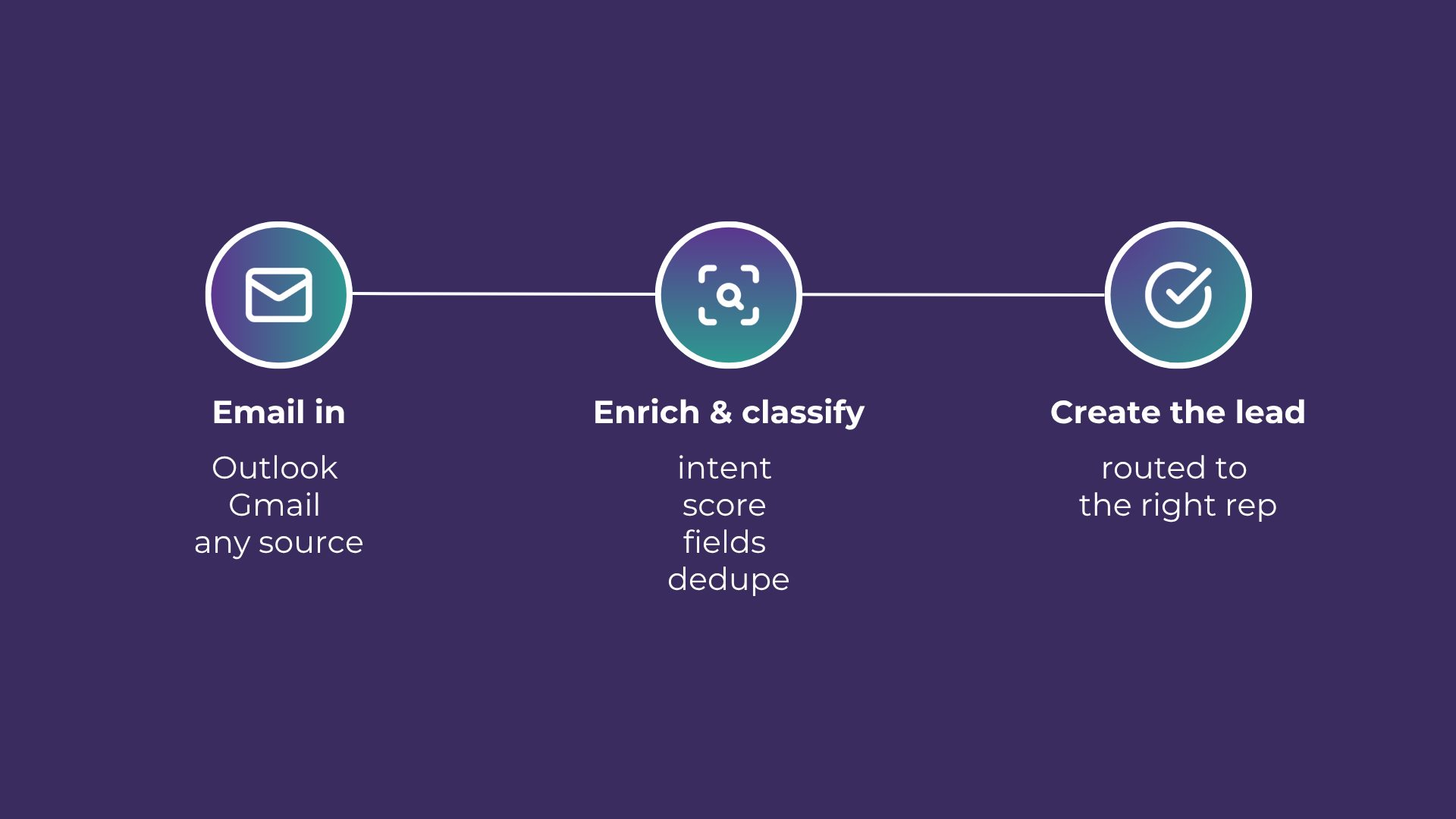
Email-to-Lead: Salesforce Lead Management with AI
Lead management is the lifeblood of any successful sales operation. At a time where customer expectations are higher than ever, ensuring that potential leads are captured and nurtured effectively can make all the difference. Introducing Email-to-Lead – AI Edition.
READY TO SEE IT IN ACTION
Map your workflows with our team.
30 minutes, no prep needed. We will map one workflow you handle today and identify where orchestration would change the outcome.