Why Salesforce Case Assignment Rules Fail at Scale

Salesforce is designed to permit only one active assignment rule per object. This architectural choice is the starting point for significant operational challenges in growing service organisations. What begins as a simple, manageable list of criteria inevitably expands into a single, monolithic rule set that becomes a bottleneck rather than a solution.
The Limits of Standard Assignment Rules
The core weakness of standard Salesforce case assignment rules lies in their sequential evaluation. The system processes entries from top to bottom, stopping at the first match. This means a general, broadly defined entry placed early in the rule can incorrectly capture a case before a more specific, appropriate entry further down the list is ever considered. We have all seen it happen – a high-priority case from a key account is mistakenly routed to a general queue because it matched a catch-all rule at the top.
This structure creates inherent rigidity. The rules are static and cannot react to real-time operational conditions. They are blind to context. A standard rule has no way of knowing an agent’s current workload, their availability status in Omni-Channel, or whether they possess a specific skill that isn’t hard-coded into the rule criteria. The logic is fixed, based only on the data present on the case record at the moment of creation.
This inflexibility means teams are constantly trying to patch a system that was not built for dynamic work distribution. The result is a brittle framework that requires constant manual adjustment and oversight. Standard rules are effective for simple logic and low volumes, but they fundamentally lack the intelligence required for complex, at-scale support operations. Many organisations eventually look beyond standard features for true case assignment automation.
The Operational Cost of Inefficient Routing
When the assignment logic is flawed, the consequences ripple through the entire service operation. Misrouted cases create immediate service bottlenecks and operational drag. Each case that lands in the wrong queue requires manual intervention. An agent or manager must identify the error, determine the correct owner, and reassign the case. This process wastes valuable time, directly slowing down first response and overall resolution speed.
This inefficiency has a significant human cost. When a system cannot balance workloads intelligently, some agents are consistently overloaded while others are underutilised. This inequity is a primary driver of agent burnout and poor morale. Talented team members become frustrated by a system that feels unfair, leading to disengagement and increased staff turnover. The problem is not the people – it is the process.
This operational friction translates directly into commercial risk. Failing to route a high-priority case to the right available agent immediately increases the likelihood of breaching Service Level Agreements (SLAs). This limitation, as analysis by NTT Data highlights, forces all logic into one place and creates a significant point of failure for high-volume environments. These are not minor inefficiencies. They are tangible threats to team stability, service quality, and commercial commitments.
Building a Governed Assignment Model

The solution is to move from static rules to a governed assignment model. This approach replaces rigid, sequential logic with more powerful and context-aware automation built using tools like Salesforce Flow or Apex. Instead of relying on a single, brittle rule, a governed model uses dynamic logic that reflects real-world operational conditions to achieve scalable case routing.
Defining the Governed Model
A governed model is an intelligent system that considers multiple factors beyond the case data itself. It is designed to be fair, efficient, and transparent. It treats case assignment not as a simple administrative task but as a critical business process that requires robust governance and oversight, just like any other piece of critical software.
Using Dynamic, Multi-Criteria Logic
This model makes decisions based on a complete view of the operational environment. It can check multiple data points in real time to find the best possible agent for any given case. Practical criteria include:
- Agent skill set – such as product knowledge, language proficiency, or certification level.
- Current case load – to ensure fair distribution and prevent cherry-picking.
- Real-time availability – based on an agent’s presence status in Omni-Channel.
- Case urgency or customer tier – to prioritise high-value work.
Implementing with Salesforce Flow and Apex
Building this logic is achievable within the Salesforce platform. For many scenarios, Salesforce Flow provides a powerful, low-code solution. A typical Flow would trigger on case creation, include steps to query agent capacity and skill data from related objects, and then use decision elements to assign the case. For organisations with very high data volumes, complex calculations, or the need for intricate integrations with external systems, Apex offers a more robust, code-based solution. The choice depends on complexity and scale, but the principle remains the same – making assignment intelligent and responsive.
| Factor | Standard Assignment Rules | Governed Assignment Model |
|---|---|---|
| Logic | Static, sequential, and hard-coded | Dynamic, multi-layered, and context-aware |
| Flexibility | Rigid; one active rule per object | Highly flexible; uses Flow or Apex for complex logic |
| Context-Awareness | Limited to case data | Considers agent workload, skills, and availability |
| Scalability | Breaks down at high volume | Designed for fairness and efficiency at scale |
This table summarises the core differences between the two approaches. The governed model is designed to handle the operational complexity that standard rules cannot.
Monitoring Fairness and Performance
A governed assignment model is not a one-time fix. It is a system that requires continuous oversight to ensure it performs as intended. The primary metric to watch is the variance in case assignments per agent over a given period. A low variance is a strong signal of fair distribution. A high variance, where some agents consistently receive more or fewer cases than their peers, indicates a problem in the assignment logic that needs review.
This is where governance becomes critical. Assignment logic should be treated like any other piece of critical software. Changes to Flows or Apex code must follow a documented process with version control. A clear audit trail is essential to understand why a specific case was assigned in a certain way, which is vital for troubleshooting and maintaining trust in the system. This disciplined approach distinguishes a governed model from a simple ‘set and forget’ rule.
Salesforce dashboards are the ideal tool for creating this transparency. Key components to build include charts showing the total number of cases assigned per agent, the average time it takes for an agent to accept a new case, and a fairness score that visualises distribution across different teams or skill sets. A governed model requires continuous monitoring to ensure it remains aligned with business goals, a core principle of effective service operations.
Moving to a Sustainable Assignment Framework
The transition from brittle, static rules to a dynamic, governed assignment model is an essential step for any organisation looking to scale its support operations on Salesforce. This approach replaces rigidity with intelligence, ensuring that fairness and efficiency are maintained as volume and complexity grow. It is about building a system that is not only powerful but also sustainable. By investing in a governed framework, you create a foundation for high-quality service delivery that can adapt to the future needs of your business.
Ask an Expert any question about why Salesforce case assignment rules fail at scale by emailing sales@ortooapps.com.
Related insights
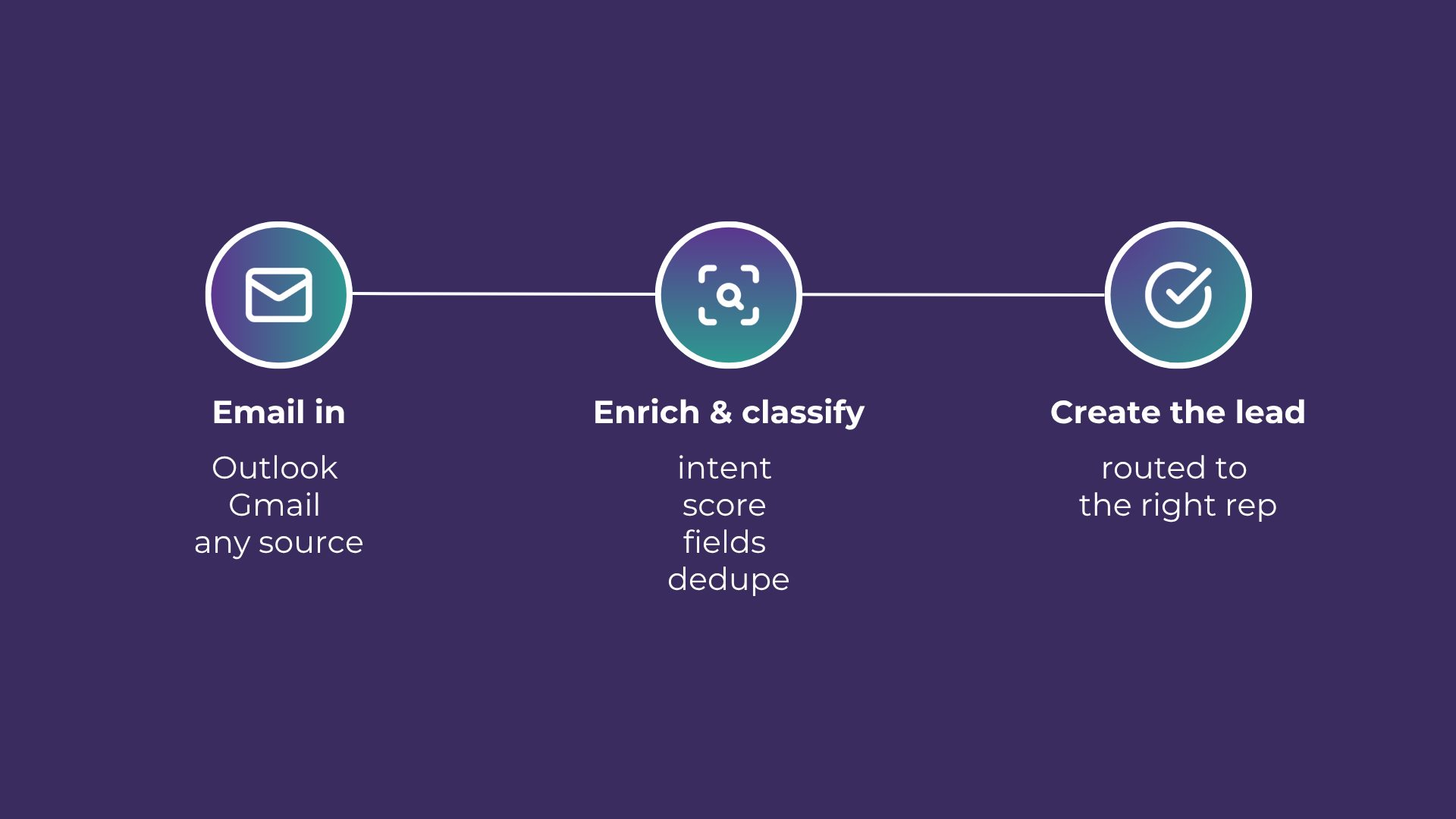
Email-to-Lead: Salesforce Lead Management with AI
Lead management is the lifeblood of any successful sales operation. At a time where customer expectations are higher than ever, ensuring that potential leads are captured and nurtured effectively can make all the difference. Introducing Email-to-Lead – AI Edition.
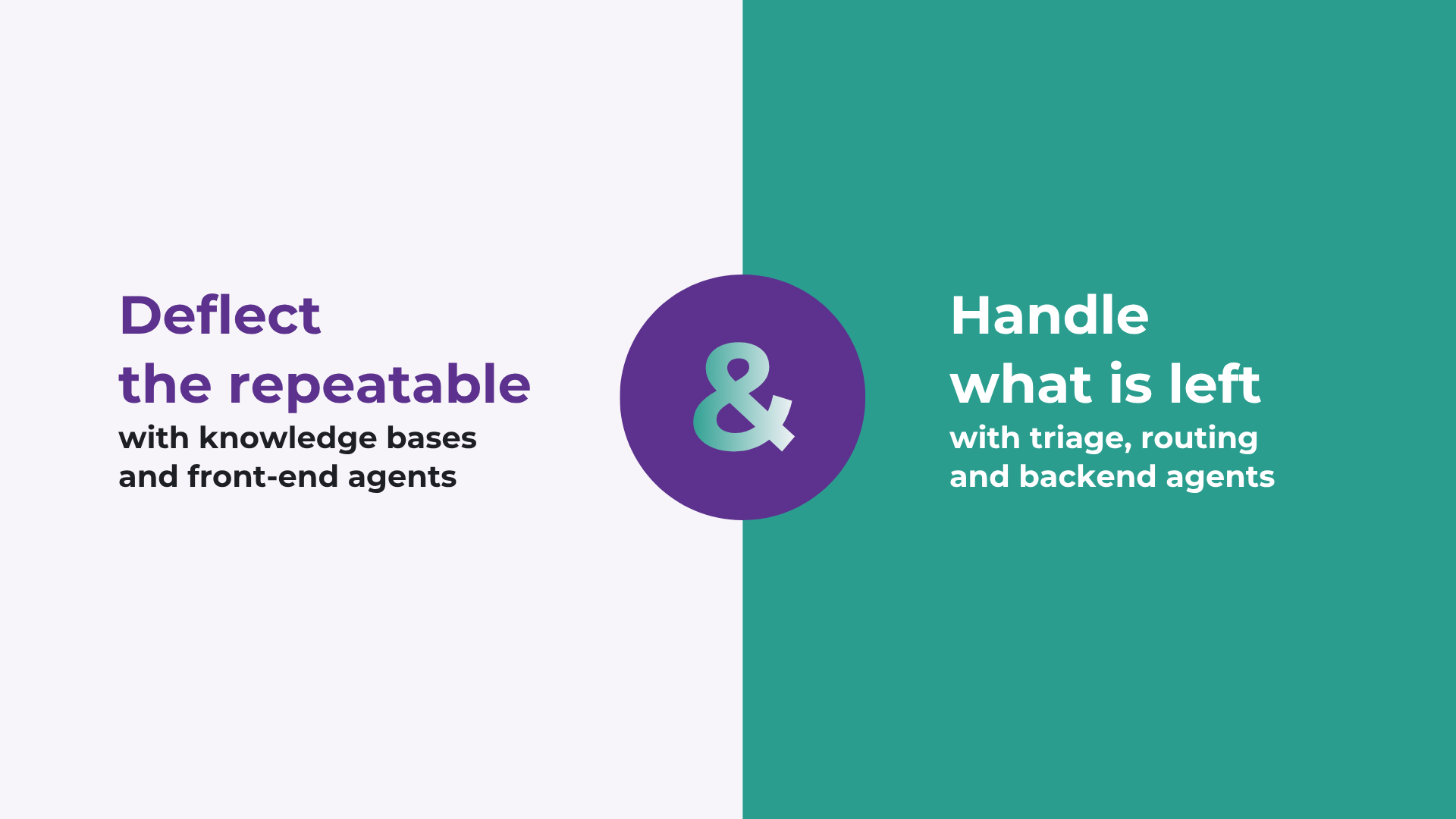
How to improve Salesforce case deflection rates
Deflection only solves half the problem. The cases that do not deflect are the ones that breach SLA. How to improve deflection rates, and how to handle what is left.

Stopping SLA Breaches in High Volume Salesforce Workflows
Learn how to move from reactive reporting to proactive management for better service level agreement adherence.
READY TO SEE IT IN ACTION
Map your workflows with our team.
30 minutes, no prep needed. We will map one workflow you handle today and identify where orchestration would change the outcome.