Why Rep Trust in Fair Lead Distribution Is a Productivity Lever

Many leaders misjudge fair lead distribution as a soft HR issue when it is a hard-edged operational lever for productivity. The common assumption is that as long as leads are assigned, the system is working. This view overlooks a critical truth: when sales representatives do not trust the assignment process, the entire revenue engine slows down. This trust is not a bonus but a prerequisite for scaling high-volume workflows without creating internal friction and attrition. The perceived fairness of Salesforce lead distribution directly impacts workflow efficiency. An untrusted system breeds resentment and wasted effort, undermining the very performance it is meant to support. This article explores the tangible costs of perceived unfairness, common failure points in distribution models and the orchestration patterns that build sales rep trust and drive performance.
The Misjudgement of Fairness in Lead Assignment
The hidden costs of an unfair system are not found in spreadsheets but in team dynamics and individual performance. Perceived unfairness in lead assignment is a surefire morale killer, acting as a primary driver of disengagement and voluntary turnover among top sales talent. When reps believe the deck is stacked against them, their motivation erodes. This is not just a feeling – it has a direct psychological impact. A 2019 study published in Frontiers in Psychology found that perceived unfairness in how tasks are allocated is a significant mediator of emotional exhaustion, a key predictor of burnout. A burnt-out representative cannot perform at their best, no matter the quality of the lead they receive.
This erosion of trust quickly infects the entire team, leading to counter-productive behaviours that sabotage operational efficiency. Instead of focusing on closing deals, reps begin to focus on gaming the system. This manifests in several ways:
- Hoarding accounts or opportunities, preventing them from going to reps who might be a better fit.
- Cherry-picking high-value leads while allowing others to go stale, creating an uneven customer experience.
- Wasting time questioning or disputing every assignment, which pulls managers into unproductive debates instead of strategic coaching.
These behaviours create bottlenecks and introduce significant drag on the sales cycle. The damage is not just to morale but to the operational integrity of the entire revenue process. It proves that an unfair system is an expensive one.
Common Failure Points in Salesforce Lead Assignment Logic

Perceived unfairness rarely stems from malicious intent. Instead, it is usually the result of mechanical flaws in the assignment logic itself. These failure points are common in organisations that have not moved beyond the standard capabilities of Salesforce lead assignment. Understanding these root causes is the first step toward designing a system that reps can actually trust.
- Opaque or ‘Black-Box’ Rules: When reps cannot see or understand the logic behind why a lead was assigned to a specific person, they naturally assume the worst. A lack of transparency is a primary source of distrust. If the system feels like a black box, any outcome that seems unfavourable will be interpreted as unfair, regardless of the underlying logic.
- Inconsistent Lead Quality: A simple round-robin system that treats all leads as equal is fundamentally flawed. It ignores the reality that lead quality varies dramatically. If one rep consistently receives poorly qualified leads or those from difficult territories, the distribution is not balanced, even if the count is equal. This creates a system of unequal opportunity.
- Human Bias: Manual overrides and poorly designed rules create openings for favouritism – whether conscious or unconscious. If managers can easily reassign the best leads to their preferred reps, any claim of an objective process is undermined. This human element can completely dismantle trust in an automated system.
- Defined Response Times: A clear and agreed-upon maximum time for a rep to acknowledge and action a new lead. This ensures prompt follow-up and prevents valuable opportunities from going cold.
- Clear Audit Trails: An immutable record of every assignment decision. This log should show who received what lead, when they received it and why the system made that choice. This transparency is essential for resolving disputes and proving the process is objective.
- Automated Escalation Paths: Rules that automatically reassign a lead if it is not actioned within the agreed SLA. This creates a safety net, ensuring no lead is ever truly lost and reinforcing that every opportunity is valued.
ol>
Designing a Transparent and Balanced Distribution Model
Building a fair system requires moving beyond simple rotation and adopting a more sophisticated orchestration pattern. A weighted, capacity-aware model provides a transparent and equitable framework that accounts for the complexities of a real-world sales environment. This approach is not about treating everyone identically – it is about providing everyone with an equal opportunity to succeed.
Beyond Simple Round-Robin
The foundation of a fair system is the acknowledgement that not all leads are created equal and not all reps have the same workload. A simple one-after-the-other rotation fails on both counts. The goal is to create a dynamic system that intelligently matches leads to the best-suited available representative.
Incorporating Weighting and Capacity
A weighted model is more equitable because it considers multiple factors. Leads can be weighted based on their potential value, source or product interest. Representatives can be weighted based on their experience, skill set, language proficiency or quota attainment. Crucially, the model must also be capacity-aware. It should track each rep’s current workload – the number of open leads or active opportunities – to prevent overloading top performers while others sit idle. This ensures a balanced distribution of both volume and value.
Balancing Rules with Strategic Exceptions
A fair system does not have to be rigid. It can and should accommodate strategic business needs. Rule-based exceptions can be built in for high-value accounts, specific territories or leads that require a named account owner. As long as these exceptions are defined within the system and transparent to the team, they do not compromise the integrity of the overall process. This allows for agility without sacrificing trust.
| Factor | Simple Round-Robin | Weighted, Capacity-Aware Model |
|---|---|---|
| Fairness Perception | Low – perceived as unfair if lead quality varies | High – seen as equitable and merit-based |
| Lead Quality Matching | None – leads are assigned regardless of fit | High – matches leads to rep skill, experience or specialism |
| Rep Workload | Unbalanced – can overload some reps while others are idle | Balanced – distributes work based on current capacity |
| Efficiency at Scale | Low – creates bottlenecks and rep frustration | High – optimises throughput and prevents burnout |
Note: This comparison is based on common operational patterns observed in high-volume sales environments. The weighted, capacity-aware model is designed to address the systemic flaws of simpler rotation methods.
Using Governance to Reinforce Trust

A well-designed algorithm is not enough on its own. To build and maintain sales rep trust over the long term, the system must be supported by clear governance. This means formalising expectations and making the process accountable. Lead Assignment Service Level Agreements (SLAs) are the key tool for achieving this. They transform abstract goals into concrete, measurable commitments that prove the organisation is serious about fairness and efficiency.
A robust lead assignment SLA includes several core components:
The Measurable Uplift from an Equitable Workflow
The shift to a fair and transparent system delivers a measurable uplift in performance. The impact is not theoretical. As LeanData reports, media-tech firm Brandwatch doubled its conversion rates after deploying an intelligent round-robin engine that eliminated uneven lead exposure and restored confidence among the sales team. When reps trust the system, they can focus their energy on selling rather than worrying about the quality of their next lead.
This principle is universal across high-volume sectors. In financial services, equitable distribution of loan applications prevents bottlenecks and ensures consistent service levels. In healthcare, fair assignment of patient intake forms or support cases reduces staff burnout and improves the quality of care. While specific public case studies can be scarce due to commercial sensitivities, the operational pattern is consistent: a balanced workload leads to better outcomes.
For leaders, one of the most important signals to watch for is an increase in rep complaints about lead quality or quantity. This ‘noise’ is not just background chatter – it is a leading indicator of a broken process and eroding trust. It signals an urgent need to examine your assignment model before the hidden costs begin to mount.
From System of Record to System of Work
Building a fair and transparent lead distribution system is a foundational step in evolving Salesforce from a simple database into a true system of work. The sales rep trust it generates is not a byproduct but the essential fuel for a high-performance revenue operation. When reps believe they have an equal opportunity to succeed, they invest their full effort, driving efficiency and growth. To explore these work orchestration concepts further, visit https://ortooapps.com/. Ask an Expert any question about fair lead distribution by emailing sales@ortooapps.com.
Related insights
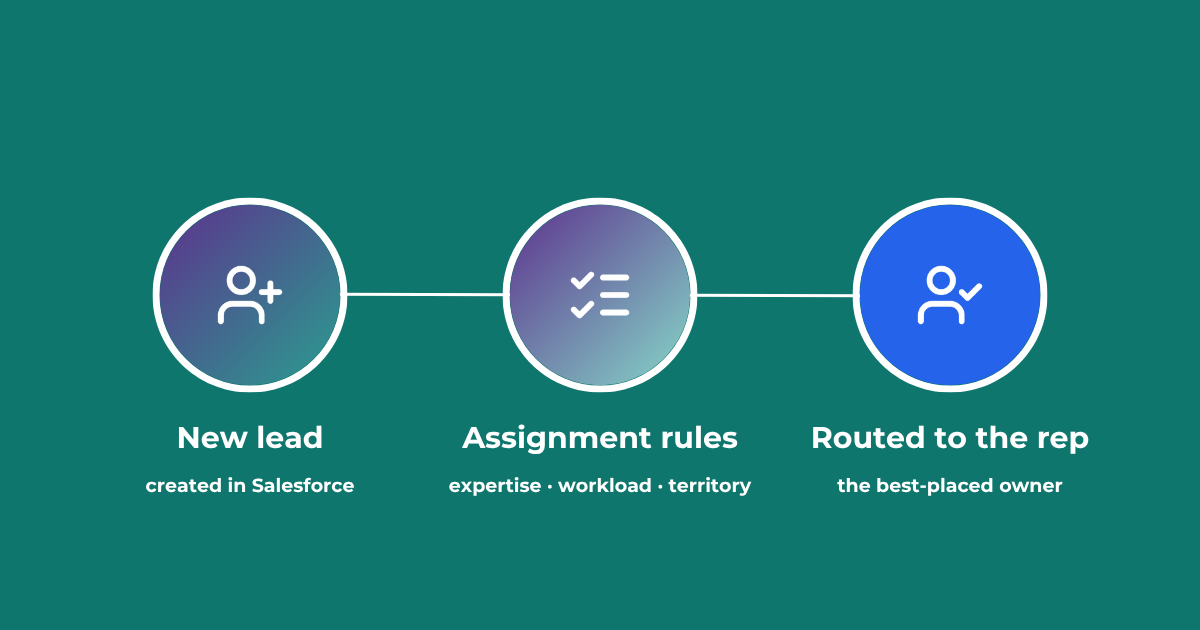
Lead Assignment Rules in Salesforce: Automate with Q-assign
This comprehensive guide to optimizing lead assignment rules in Salesforce will stand you in good stead for maximizing your sales reps’ productivity and performance. Understand the benefits of highly effective lead assignment, explore Salesforce best practices and stay ahead of the competition – with added insights into AI-driven revenue orchestration
Lead to Account Matching: Seamlessly Connect Leads to Accounts in Salesforce
Lead to account matching connects every inbound lead to the right account in Salesforce. Here is how it works, where it breaks, and how to automate it without manual data entry.
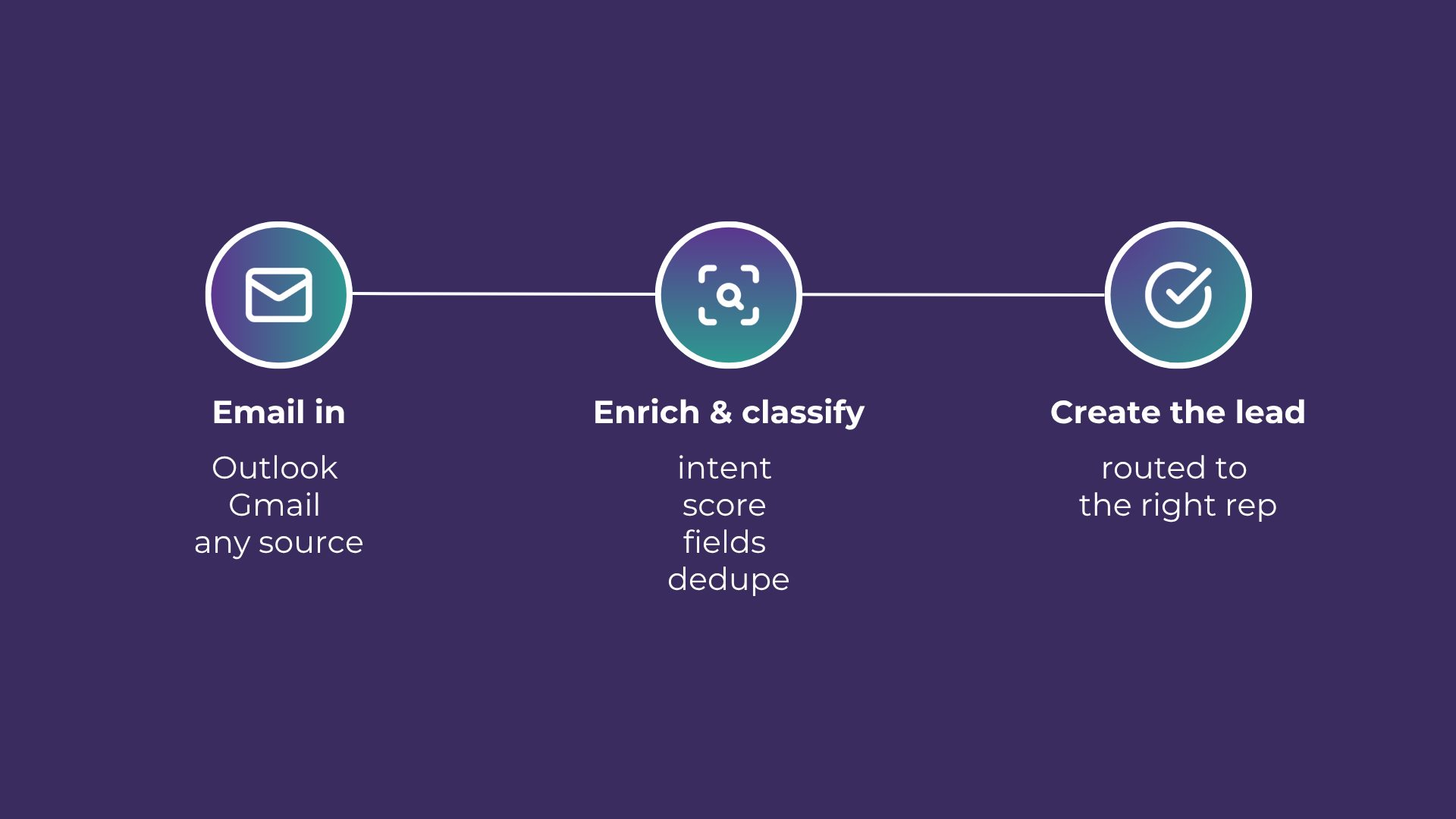
Email-to-Lead: Salesforce Lead Management with AI
Lead management is the lifeblood of any successful sales operation. At a time where customer expectations are higher than ever, ensuring that potential leads are captured and nurtured effectively can make all the difference. Introducing Email-to-Lead – AI Edition.
READY TO SEE IT IN ACTION
Map your workflows with our team.
30 minutes, no prep needed. We will map one workflow you handle today and identify where orchestration would change the outcome.