Why Modern Case Intake Puts Classification First

The Systemic Shift from Queues to Classification
In high-stakes operations, the traditional ‘first-in-first-out’ queue is a model built for a simpler time. The most critical decision point in any modern workflow is now the moment of intake because this initial classification determines the entire downstream journey of a case. This shift is a direct response to rising operational volume and complexity. A generic queue is inefficient by design – it treats an urgent system outage and a simple information request with equal initial priority, creating a bottleneck before work even begins.
A classification-first model, by contrast, immediately assesses and categorises work based on predefined criteria. This is not a new idea but an established discipline borrowed from environments where the cost of delay is absolute. The World Health Organization’s triage tool for emergencies mandates immediate evaluation to route resources correctly. Similarly, NHS England’s digitally enabled triage guidance reinforces the same principle, urging front-line staff to “evaluate why help has been sought and triage the patient to the right services” before any clinical action is taken, as detailed in their official publications.
This approach acknowledges a fundamental truth of scaled operations: not all work is created equal. By front-loading the assessment, organisations ensure that urgency and impact dictate the response from the very first moment, rather than leaving it to chance or manual review deep inside a growing backlog.
The Operational Cost of Inaccurate Triage

Mis-triage is not just a delay – it is an active drain on resources that inflates costs and degrades outcomes. When a case is poorly classified at intake, it begins a journey of operational churn. It gets assigned to the wrong team, sits in an incorrect queue, and requires multiple human touchpoints just to be re-routed to where it should have gone in the first place. Each handoff introduces latency and consumes valuable operator time that could have been spent on resolution.
This friction has a measurable impact on performance. The longer a critical issue goes unaddressed because it was miscategorised as low priority, the greater the risk of customer dissatisfaction, SLA breaches and reputational damage. The inverse is also true. A 2019 study published by the National Center for Biotechnology Information demonstrated that optimising the triage queue in an emergency department reduced average patient wait times by 54%, a clear illustration of how classification prevents bottlenecks. For service organisations, this directly translates to performance gains.
By ensuring work is correctly categorised from the start, teams can dramatically improve case resolution times. The initial assessment becomes the most important factor in operational efficiency, preventing the downstream chaos that erodes both service quality and the bottom line. Inaccurate triage creates work about the work, and that is a cost no scaled operation can afford.
Designing a Classification-First Intake Workflow
Building a classification-first model in Salesforce requires a systematic approach. It is about creating a clear and repeatable logic that governs how all inbound work is handled. The foundation rests on a few core components:
- Define clear and mutually exclusive case categories. Effective Salesforce case classification starts with a taxonomy that is easy to understand and apply. Avoid ambiguity that forces operators to guess.
- Establish a priority matrix based on urgency and impact. Not all cases within a category carry the same weight. A matrix provides a standardised framework for assessing priority.
- Create rules for initial data validation. Ensure that a case cannot proceed without the minimum required information. This prevents rework and follow-up questions later in the process.
| Urgency | Impact | Priority Level | Example Scenario |
|---|---|---|---|
| High | High | P1 – Critical | Production system outage affecting all users |
| High | Medium | P2 – High | Key feature not working for a single department |
| Medium | High | P2 – High | Incorrect financial report impacting month-end |
| Medium | Medium | P3 – Medium | User cannot access a non-critical feature |
| Low | Low | P4 – Low | User interface text has a spelling mistake |
This matrix provides a framework for standardising priority. Urgency reflects the time sensitivity of the issue, while impact measures its effect on business operations. Organisations should adapt these criteria to their specific context.
Once this logic is defined, automation can execute it. Salesforce Flow is well-suited for this, enabling automated case routing Salesforce teams can rely on. Once a case is classified and prioritised, the logic can trigger the appropriate case assignment to a specific team or agent with the right skills. For more complex scenarios, a governed AI ‘triage agent’ can interpret unstructured text in emails or web forms to suggest a category and priority, augmenting human capacity within a framework that ensures people remain in control.
Triage Models in UK Healthcare and Field Service

The effectiveness of this model is proven in demanding UK sectors. The NHS triage model for primary care is a prominent example. When a patient contacts their GP practice, digitally enabled triage systems automatically analyse symptoms to flag urgent cases and route inquiries to the most appropriate service – whether that is a pharmacist, a nurse or a doctor. This classification-first approach has reportedly led to a 27% reduction in unnecessary appointments and a 15% increase in same-day virtual consultations, rebalancing workload and improving patient access.
A direct parallel exists in UK field service organisations managing thousands of daily maintenance and repair jobs. Instead of a simple queue, incoming tickets are automatically triaged based on asset type, fault severity and customer SLA. This ensures a critical infrastructure failure is immediately escalated to a specialist engineer, while a routine maintenance request is scheduled according to resource availability. This application of case triage best practices has resulted in a reported 22% drop in ticket backlogs and a 19% uplift in first-contact resolution rates for leading service providers.
In both healthcare and field service, the pattern is identical. Accurate initial classification drives efficiency, reduces operational waste and improves outcomes. The cost savings per resolved case or patient interaction provide a compelling business case for moving beyond outdated queue-based systems.
Measuring Triage Effectiveness and Common Pitfalls
A classification system is not static. It requires continuous monitoring and refinement to remain effective. Teams should track a handful of key performance indicators to signal the health of their triage process:
- Time to classification: How long an item waits before being categorised. This should be near-instantaneous in an automated system.
- Routing accuracy: The percentage of cases routed correctly the first time. A low score indicates flawed logic or ambiguous categories.
- Time to first meaningful action: The delay between intake and the start of resolution work. This measures the true impact of triage on responsiveness.
- First-contact resolution rate: Whether classification enables resolution by the first assigned resource, avoiding costly re-assignments.
The most common pitfall is persistent misclassification, often because teams assume technology is a complete solution. A CDC-led evaluation of a field triage scheme found that human factors and training were critical for success. Technology can execute rules, but people must define and refine them. This requires feedback loops for operators to flag incorrect routing and data-driven analysis to identify patterns in misclassified cases.
The evidence shows that organisations institutionalising accurate classification can drastically improve outcomes. It is a foundational capability for any modern service operation. For further exploration of work orchestration models, visit https://www.ortooapps.com. Ask an Expert any question about modern case intake by emailing sales@ortooapps.com.
Related insights
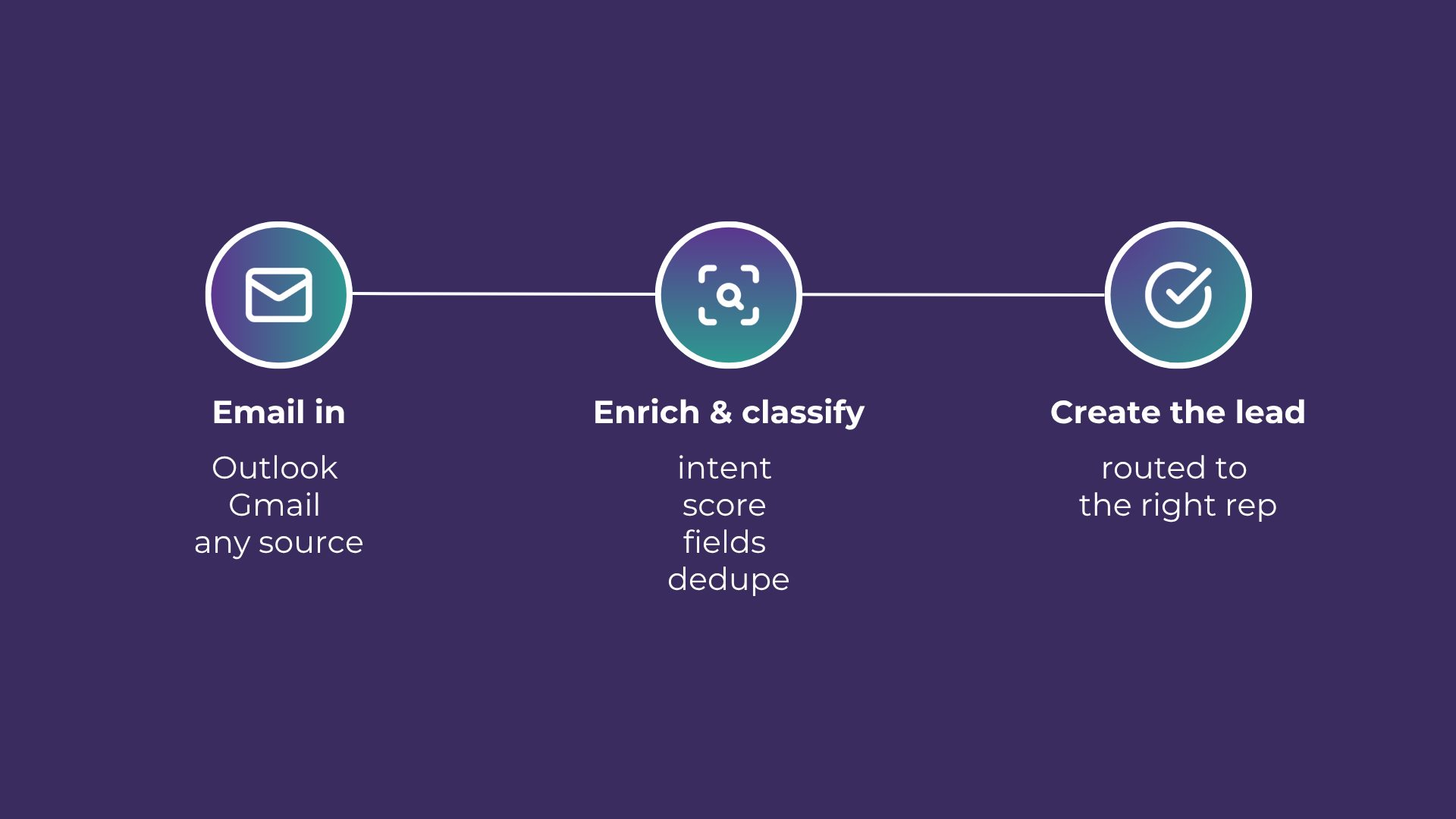
Email-to-Lead: Salesforce Lead Management with AI
Lead management is the lifeblood of any successful sales operation. At a time where customer expectations are higher than ever, ensuring that potential leads are captured and nurtured effectively can make all the difference. Introducing Email-to-Lead – AI Edition.
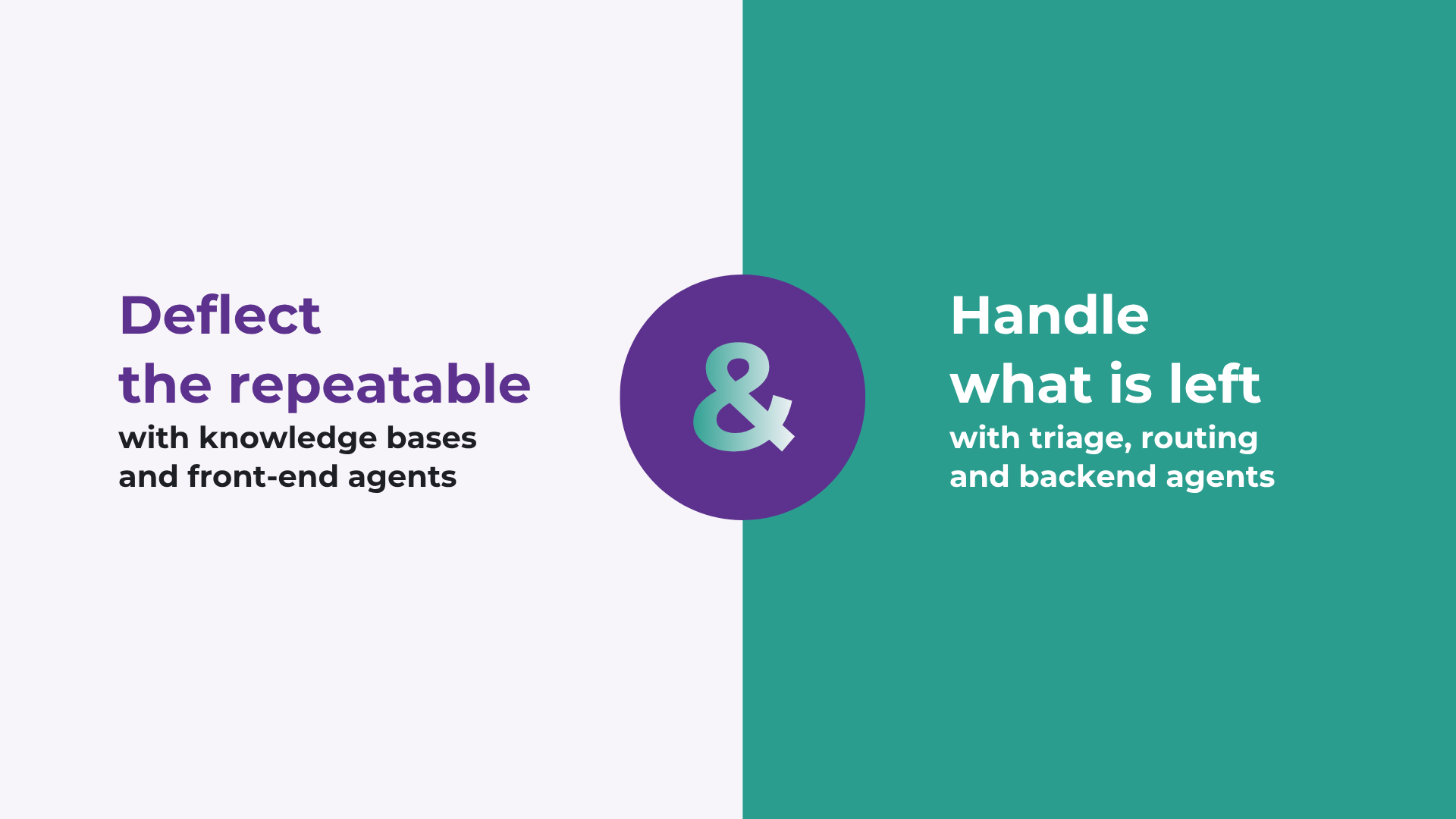
How to improve Salesforce case deflection rates
Deflection only solves half the problem. The cases that do not deflect are the ones that breach SLA. How to improve deflection rates, and how to handle what is left.

Stopping SLA Breaches in High Volume Salesforce Workflows
Learn how to move from reactive reporting to proactive management for better service level agreement adherence.
READY TO SEE IT IN ACTION
Map your workflows with our team.
30 minutes, no prep needed. We will map one workflow you handle today and identify where orchestration would change the outcome.