Proactive Lead Supervision to Prevent Salesforce Decay

The Real Cause of Lead Decay
Lead decay is often seen as a natural cost of doing business. It is not. It is a direct symptom of passive operational management. Teams frequently misjudge stale leads as an unavoidable outcome of time passing, rather than a preventable failure in their workflow supervision. The truth is that leads do not simply expire on their own. They decay because of broken or absent processes.
Inconsistent follow-up routines, a lack of clear ownership and no defined pathway for leads that are not immediately sales-ready all create the conditions for decay. When a process fails, the lead stalls. This is where proactive lead supervision becomes the necessary alternative to reactive data clean-ups. Instead of waiting for the damage to be done, this approach involves the continuous monitoring of lead health and engagement signals within Salesforce.
To prevent lead decay in Salesforce, organisations must make a fundamental mental shift. The goal is not to get better at periodic clean-ups. The goal is to build a system that makes them unnecessary. Moving from a reactive mindset to a proactive supervision model is the first step toward maintaining a healthy pipeline and improving your core business processes.
The Hidden Costs of a Stale Pipeline

A pipeline filled with stale leads is more than just an inconvenience. It carries significant and often hidden costs that erode the operational intelligence of the business. The most obvious impact is on revenue. Sales teams waste valuable time and effort attempting to contact unresponsive leads, which directly lowers conversion rates and drags down performance.
Beyond the immediate commercial damage, lead decay corrodes data integrity. When your pipeline is unreliable, forecasting becomes guesswork. Executive reports lose credibility and trust in Salesforce as a single source of truth begins to fracture. This uncertainty undermines strategic decision-making across the entire organisation.
Finally, there is a human cost. Forcing sales representatives to work with poor-quality data is deeply demotivating. It creates friction between sales and marketing teams, who may blame each other for the pipeline’s poor health. The true cost of lead decay extends far beyond lost opportunities. It includes:
- Wasted marketing spend on acquiring leads that are never properly worked.
- Inaccurate sales forecasting leading to poor resource allocation.
- Diminished team morale and high turnover in sales roles.
- Erosion of CRM value as users lose faith in the data.
These factors combine to create a cycle of inefficiency that is difficult to break without addressing the root cause of the decay.
Common Failure Patterns in Lead Management
Lead decay is rarely caused by a single mistake. It is the result of systemic flaws in the Salesforce lead lifecycle. These common failure patterns guarantee that a portion of your pipeline will become inactive and unresponsive over time.
- Inconsistent status management. Ambiguous or poorly enforced lead statuses create black holes in the sales funnel. When a lead’s status is not updated accurately – for example, from ‘Contacted’ to ‘Nurturing’ – it becomes impossible to track its journey or identify when it goes cold. As research from Rework.com highlights, systematic disposition tracking is essential for maintaining funnel visibility. Without it, leads simply vanish from view.
- Neglecting systematic Salesforce data hygiene. This is a deeper issue than simple data entry errors. It is the failure to implement automated checks for critical data quality indicators. When there are no processes to handle email bounces, identify duplicate records or flag incomplete information, the pipeline inevitably degrades. This lack of Salesforce data hygiene allows small errors to accumulate until they render large segments of your data unusable.
- The absence of defined re-engagement protocols. Many organisations have no clear, automated process for handling leads that go dormant. A prospect might show initial interest but is not ready to buy. Without a workflow to move this lead into a nurturing sequence after a period of inactivity, it is effectively abandoned. The sales team moves on and a potentially valuable future opportunity is lost.
These patterns are not isolated incidents. They are symptoms of a reactive approach to lead management that allows value to leak from the pipeline every day.
A Model for Proactive Supervision

Effective proactive lead supervision is not about adding more manual tasks for your team. It is about building a self-regulating system in Salesforce that maintains pipeline health with minimal human intervention. This model is built on three core components.
- Structured disposition tracking. Implement a clear and mandatory set of lead statuses that reflect every possible stage of the lifecycle. This goes beyond ‘New’ and ‘Qualified’. It should include statuses like ‘Nurturing – Long Term’, ‘Unresponsive’ and ‘Disqualified – Bad Timing’. This creates the granular visibility needed to understand exactly where every lead is in its journey.
- Automated hygiene gates. Use Salesforce flows or triggers to perform data quality checks at key transition points. For example, a rule can prevent a lead from being assigned to a sales rep if the phone number field is empty. Another rule could automatically flag a record for review after a hard email bounce is detected. These gates stop bad data from polluting the pipeline at the source.
- Automated lead re-engagement workflows. Design a process where inactivity triggers a specific action. If a lead has no logged calls, emails or status changes for a set period – say, 60 days – a workflow can automatically change its status to ‘Dormant’ and enrol it in a targeted re-engagement campaign. This ensures that no lead is ever truly abandoned. This type of automated lead re-engagement is a core part of a resilient system, much like the patterns used for effective lead assignment in Salesforce.
By combining these three elements, you create a system that actively works to preserve the value of your leads, rather than passively watching them decay.
Designing Resilient and Responsive Workflows
A resilient system is one that can monitor itself and adapt. In the context of lead management, this means creating feedback loops that use data to drive continuous improvement. The primary signal to monitor is the inactivity threshold. Using Salesforce reports and dashboards to flag leads that have not had any interaction within a defined period is the earliest warning sign of potential decay.
This is where modern tools can help improve lead quality. As noted in an analysis by Everworker.ai, AI-driven lead scoring can help prioritise sales efforts on the most engaged prospects. However, this technology must be governed by clear business rules and remain subject to human oversight. AI is a tool to assist prioritisation – not a replacement for a well-designed process.
A truly resilient workflow is never finished. It requires regular analysis of performance data to identify bottlenecks and refine automation rules. Are leads getting stuck in a particular status? Is the inactivity window too long or too short? Building a resilient system means creating the feedback loops needed to answer these questions and make incremental improvements over time.
Building a Healthy Pipeline for the Long Term
Preventing lead decay is an active and continuous process of operational supervision – not a one-off data cleaning project. It requires building resilient systems inside Salesforce that monitor lead health, enforce data quality and automate re-engagement. A healthy, responsive pipeline is the foundation for predictable growth and sales effectiveness. By implementing these proactive patterns, organisations can protect the value of their most important assets.
Ask an Expert any question about preventing lead decay in Salesforce by emailing sales@ortooapps.com.
Related insights
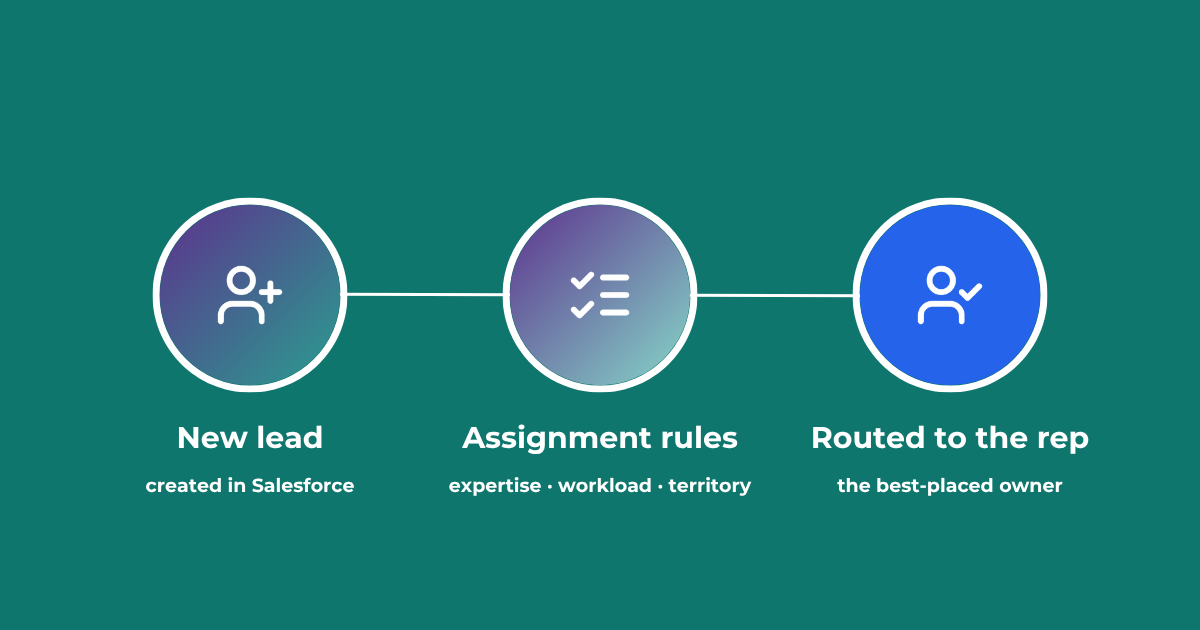
Lead Assignment Rules in Salesforce: Automate with Q-assign
This comprehensive guide to optimizing lead assignment rules in Salesforce will stand you in good stead for maximizing your sales reps’ productivity and performance. Understand the benefits of highly effective lead assignment, explore Salesforce best practices and stay ahead of the competition – with added insights into AI-driven revenue orchestration

Lead to Account Matching: Seamlessly Connect Leads to Accounts in Salesforce
Lead to account matching connects every inbound lead to the right account in Salesforce. Here is how it works, where it breaks, and how to automate it without manual data entry.
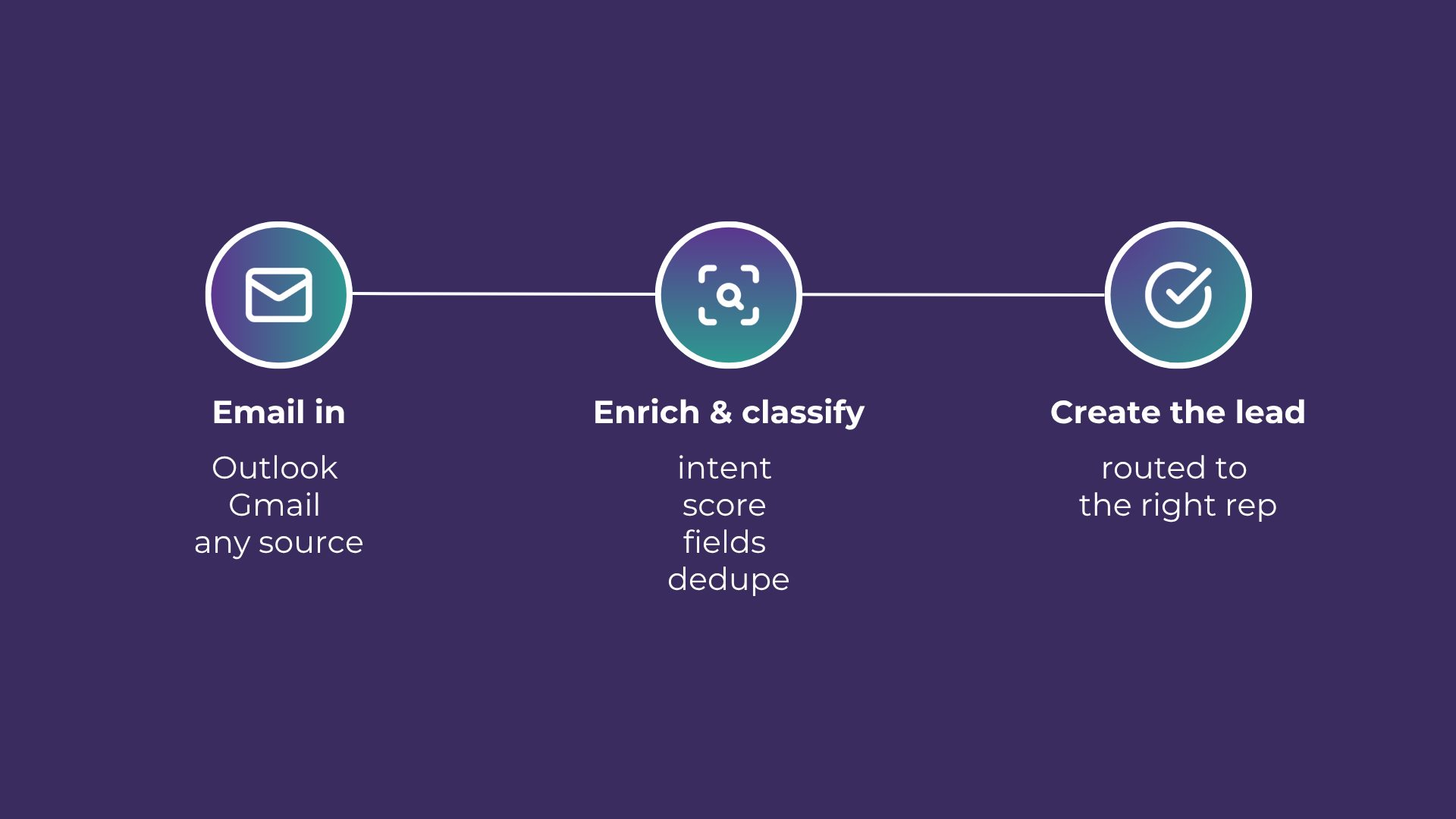
Email-to-Lead: Salesforce Lead Management with AI
Lead management is the lifeblood of any successful sales operation. At a time where customer expectations are higher than ever, ensuring that potential leads are captured and nurtured effectively can make all the difference. Introducing Email-to-Lead – AI Edition.
READY TO SEE IT IN ACTION
Map your workflows with our team.
30 minutes, no prep needed. We will map one workflow you handle today and identify where orchestration would change the outcome.