Preventing Lead Decay in High Volume Salesforce Workflows

In high-volume sales operations, the value of a new lead is measured in minutes not days. Many teams misjudge this window, viewing a growing queue as a sign of healthy demand when it is actually a critical revenue risk. This is the essence of lead decay. It is not just the passage of time but the rapid erosion of opportunity as a buyer’s needs change or a competitor responds faster. When a lead goes cold, the marketing spend used to acquire it is wasted. More than that, it damages sales team morale and introduces deep inaccuracies into forecasting.
The core problem is that traditional weekly or monthly reports only show decay after the fact. They are historical documents that confirm a missed opportunity rather than tools that prevent one. In a workflow where minutes matter, this reactive approach is no longer viable. To effectively prevent lead decay in Salesforce, teams must shift from analysing the past to supervising the present moment. The cost of inaction is simply too high when every stalled lead represents a direct hit to the bottom line.
The Real Cost of Inaction on New Leads
In high-volume sales, the value of a lead is measured in minutes not days. This isn’t just a catchy phrase – it’s an operational reality. The problem of lead decay is often misunderstood as a simple backlog. In truth, it is a critical revenue risk where opportunity becomes irrelevant as a buyer’s needs evolve or a competitor moves faster. Every minute a lead sits idle, its potential value diminishes.
The financial consequences of this decay at scale are significant. It represents wasted marketing spend, as qualified interest is left to go cold. It also lowers sales morale when teams are handed leads that are no longer viable, creating a cycle of frustration and disengagement. This directly impacts the accuracy of sales forecasting, as a pipeline filled with decaying leads provides a false sense of security. The challenge is that traditional weekly or monthly reports are inadequate for this environment. They show decay after the fact, which is far too late in a workflow where speed is everything. To truly prevent lead decay in Salesforce, the focus must shift from historical analysis to immediate action.
Shifting from Reporting to Real-Time Supervision

The answer to the problem of lead decay lies in moving from passive reporting to active, real-time salesforce supervision. This approach is fundamentally different from reviewing historical data. Instead of looking back at what went wrong, it provides immediate oversight to maintain momentum and context for every single lead. This is especially important in complex workflows where manual handoffs between teams can introduce friction and delays.
Adopting this model has a profound cultural impact on a sales team. When response times and follow-ups are monitored as they happen, it creates a shared sense of urgency and diligence. This is not about micro-management. It is about building a supportive framework that clarifies ownership and defines the next best action for every opportunity. With real-time visibility, there is no ambiguity about who is responsible for a lead or what needs to happen next. This ensures no opportunity is left idle, turning the sales pipeline into a dynamic and responsive system rather than a static queue. This active supervision is the operational mindset required to protect lead value from the moment it enters Salesforce.
Actionable Models for Preventing Lead Decay in Salesforce
Moving from theory to practice requires concrete strategies within your Salesforce environment. These models provide the guardrails to ensure speed and consistency in your lead management process.
-
SLA-based routing and enforcement
The first step is to establish clear Service Level Agreements for lead follow-up. For example, you might set a rule that every high-priority lead must receive a first contact within 15 minutes. Using Salesforce automation, you can configure alerts that notify a manager if an SLA is breached or automatically escalate the lead to an available representative. This practice of salesforce sla monitoring turns an internal goal into an enforceable operational standard. For teams looking to refine their routing logic, understanding the mechanics of lead assignment in Salesforce is a critical starting point. -
Tracking critical response metrics
You cannot improve what you do not measure. The most vital metric to track is ‘Time to First Contact’. As research from QFlow.ai highlights, many organisations still have average response times of 42 hours, which severely damages conversion rates. Making this metric highly visible on team dashboards creates accountability and encourages swift action. The goal is to continuously improve lead response time by identifying bottlenecks in the assignment and follow-up process. When this single metric becomes a priority, the entire pace of the sales floor changes. -
Automated re-engagement and alerts
Even with fast initial contact, leads can stall later in the process. Automated workflows can monitor for inactivity. If a high-value lead has not been updated within a set period, a workflow can trigger a nurturing email sequence to maintain engagement or send a notification directly to the sales manager. This creates a safety net, ensuring that valuable opportunities do not slip through the cracks due to human oversight. It keeps the pipeline moving and holds everyone accountable for progress.
Early Warning Signals of Pipeline Stagnation

The key to effective high-volume lead management is spotting problems before they become critical. Instead of waiting for revenue to dip, you can monitor specific symptoms within Salesforce that signal pipeline stagnation. These are the early warning signs that require immediate attention.
-
A stagnant lead queue
One of the clearest indicators is a lead queue where records show no activity. A simple Salesforce report can be built to flag any lead that has not had a task, call or email logged against it within a 24 to 48 hour window. A growing number of these stagnant leads points directly to poor routing rules or overloaded representatives. -
Frequent lead reassignments
When you see the same lead being passed between multiple owners, it is often a symptom of confusion. This pattern suggests that the qualification criteria are unclear or the territory rules are not well defined. Each reassignment introduces another delay and creates a poor experience for the potential customer. -
Declining engagement rates
After the initial contact, are your engagement rates dropping off? Tracking email opens, click-throughs or call connection rates can provide a quantitative measure of decaying interest. A sharp decline often indicates that the follow-up was too slow or the content being shared is not relevant to the buyer’s needs.
| Warning Signal | Likely Cause | Recommended Action |
|---|---|---|
| Stagnant Lead Queue | Poor routing or rep overload | Review and automate assignment rules |
| Frequent Reassignments | Unclear ownership or territory rules | Refine territory and qualification criteria |
| Declining Engagement Rates | Slow follow-up or irrelevant content | Implement SLA alerts and review nurture tracks |
How Supervision Varies in Regulated Industries
In regulated industries, the principles of real-time supervision are just as relevant but carry additional weight. Here, speed must be balanced with strict compliance and audibility.
Consider the UK financial services sector. When a potential customer requests a mortgage application or an insurance quote, the response must be both immediate and compliant. Real-time supervision ensures that the lead is actioned instantly by a qualified advisor. It also guarantees that all necessary compliance checks and disclosures are logged correctly in Salesforce from the very first interaction. This prevents both lead decay and significant regulatory risk. The time-sensitive nature of these products means that effective insurance operations depend on this level of oversight.
The same urgency applies in the healthcare sector. A patient enquiry or a referral cannot be left waiting in a queue. Delays can have serious consequences for patient outcomes. Automated alerts for unassigned or uncontacted leads are not just a matter of good business – they are a critical component of patient care. In both of these environments, the universal principle holds true. The value of an inbound lead is highest at its origin and erodes with every minute of inaction. Active supervision is the only effective countermeasure.
Building a Resilient Lead Management System
Preventing lead decay in high-volume Salesforce workflows is an active discipline. It requires a deliberate shift away from historical reports and towards a system of real-time supervision, automated guardrails and clear operational rules. By implementing these practices, you can turn a leaky pipeline into a resilient and predictable revenue engine. To learn more about building robust operational systems, explore the resources at ortooapps.com.
Ask an Expert any question about preventing lead decay by emailing sales@ortooapps.com.
Related insights
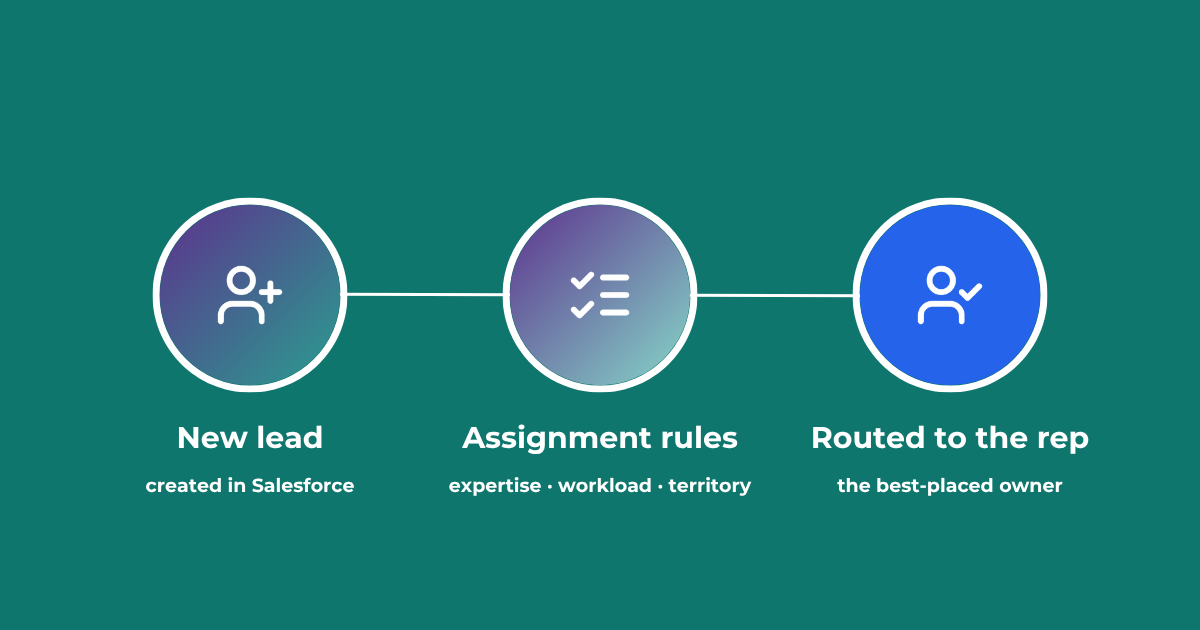
Lead Assignment Rules in Salesforce: Automate with Q-assign
This comprehensive guide to optimizing lead assignment rules in Salesforce will stand you in good stead for maximizing your sales reps’ productivity and performance. Understand the benefits of highly effective lead assignment, explore Salesforce best practices and stay ahead of the competition – with added insights into AI-driven revenue orchestration
Lead to Account Matching: Seamlessly Connect Leads to Accounts in Salesforce
Lead to account matching connects every inbound lead to the right account in Salesforce. Here is how it works, where it breaks, and how to automate it without manual data entry.
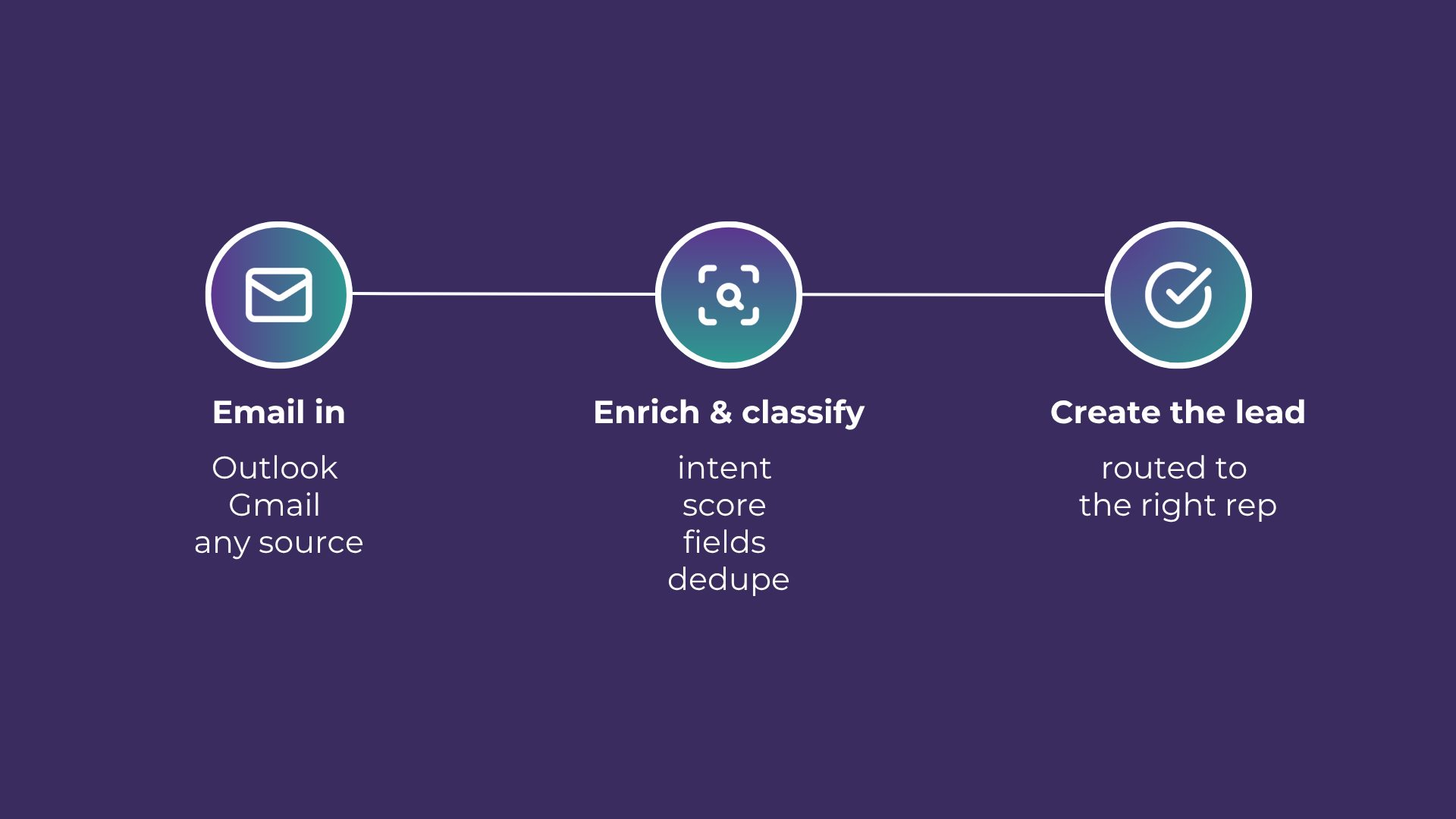
Email-to-Lead: Salesforce Lead Management with AI
Lead management is the lifeblood of any successful sales operation. At a time where customer expectations are higher than ever, ensuring that potential leads are captured and nurtured effectively can make all the difference. Introducing Email-to-Lead – AI Edition.
READY TO SEE IT IN ACTION
Map your workflows with our team.
30 minutes, no prep needed. We will map one workflow you handle today and identify where orchestration would change the outcome.