Orchestrating Complex Patient Intake with Salesforce Workflows for Healthcare

The Misconception of Linear Intake Processes
Most process diagrams for patient intake show a neat, sequential journey. A patient arrives, is admitted, assessed and then treated. This linear model is simple to draw but it fails to capture the reality of UK healthcare operations. The truth is that intake is a web of parallel activities, feedback loops and complex dependencies that span clinical and administrative teams.
Consider a typical admission. The admissions team, clinical assessors, finance department and social care coordinators often need to work concurrently, not one after the other. A simple step-by-step workflow cannot manage this interplay. It forces a sequence where none exists, creating bottlenecks as one team waits for another to complete a task that could have been done at the same time. This is where many Salesforce workflows for healthcare fall short.
This flawed model leads to fragmented lifecycle ownership. When a patient record is handed from one team to the next, accountability is lost in the gaps between stages. A case can stall with no one certain who is responsible for the next action. The primary challenge in complex multi-team intake processes is not optimising individual tasks but orchestrating the handoffs between them. Failure to manage these transitions is the root cause of inefficiency and delay.
The Hidden Costs of Poorly Managed Handoffs

The consequences of a flawed intake model extend far beyond simple inefficiency. For patients, the experience is one of frustration. They are asked for the same information multiple times by different departments, face administrative delays and get a sense of disorganisation that erodes confidence in their care provider.
These gaps also introduce significant clinical and compliance risks. A clinical team might proceed with a care plan without vital information that is stuck with an administrative team. Deadlines for reporting to bodies like the CQC can be missed simply because a case is stranded between departments with no clear owner. This isn’t just a process failure – it’s a risk to patient safety and organisational standing.
Within Salesforce itself, the technical debt grows. When defined processes fail, teams create their own shadow workarounds. This leads to duplicate records, conflicting data and an inability to get a single, coherent view of the patient journey. These are not isolated incidents. They create a compounding negative effect that degrades the quality of care, increases operational overhead and exposes the organisation to unnecessary risk.
A Hub-and-Spoke Model for Salesforce Workflows for Healthcare
To solve these challenges, we need a different pattern. A hub-and-spoke orchestration model provides a more robust framework for managing complex intake. In this model, a central ‘hub’ process in Salesforce owns the end-to-end patient intake lifecycle. This hub then initiates and coordinates multiple ‘spoke’ processes assigned to different teams.
This is how the model handles the parallel work that breaks linear workflows. The hub can launch multiple team-specific sub-flows at once – for instance, a clinical review and a financial clearance – and then wait for both to complete before advancing the patient to the next stage. This ensures all dependencies are met without creating artificial queues. This approach to healthcare process orchestration establishes clear lifecycle ownership. The central hub is the ultimate owner of the patient journey, while each spoke has an unambiguous owner for its specific set of tasks.
As detailed in Salesforce’s own guidance on how to Orchestrate Complex Processes with Flow Orchestration, this pattern aligns perfectly with modern platform capabilities. It provides a centralised, visible and controllable way to manage non-linear intake processes, which is fundamental to improving business operations at scale.
| Factor | Linear Workflow Model | Hub-and-Spoke Orchestration Model |
|---|---|---|
| Process Flow | Sequential, one step after another | Parallel and sequential steps coordinated by a central hub |
| Team Dependencies | Creates bottlenecks as teams must wait for others | Manages concurrent work across multiple teams simultaneously |
| Lifecycle Ownership | Fragmented and ambiguous during handoffs | Centralised in the hub, with clear ownership for each spoke |
| Visibility | Limited to the current step, no end-to-end view | Complete visibility of the entire intake process and all sub-tasks |
| Flexibility | Rigid and difficult to adapt to exceptions | Adaptable to complex patient pathways and exceptions |
Key Signals of Orchestration Failure

Recognising the symptoms of a broken intake process is the first step toward fixing it. These signals are not minor issues but leading indicators of systemic problems that require attention.
- High ‘Time-in-Stage’ Metrics: The most effective way to identify bottlenecks is to track how long a patient case remains in a specific status. If cases consistently spend too much time at a handoff point between two teams, it is a critical red flag that the process is failing.
- Prevalence of Manual Chasing: Observe how your teams communicate. When staff regularly use emails, calls or instant messages to ask for updates or prompt the next team into action, your automated process has broken down. The system should be driving the work, not people.
- Task Ownership Ambiguity: Look for processes where ownership is unclear. This often appears as tasks assigned to a shared queue that no one actively manages, or situations where multiple teams believe another is responsible for the next step. This ambiguity is a direct result of poor handoff design.
These signals precede service failures. Addressing them with a proper orchestration model is essential to prevent a negative impact on patient care and operational stability.
Putting Orchestration into Practice
Adopting a new model does not require a ‘big bang’ approach. The most effective strategy is to start with a single, critical intake pathway – such as oncology or elective surgery – to prove the value of orchestration before expanding. It is vital to co-design the new workflow with the clinical, administrative and support staff who will use it every day. This ensures the process reflects operational reality and helps secure user buy-in.
The core principle is simple: managing the handoffs is more critical than managing the individual tasks. Effective healthcare process orchestration is the key to building scalable and patient-centric intake systems. For organisations evaluating these patterns, a detailed workflow assessment is a logical next step.
Ask an Expert any question about designing Salesforce workflows for healthcare by emailing sales@ortooapps.com.
Related insights
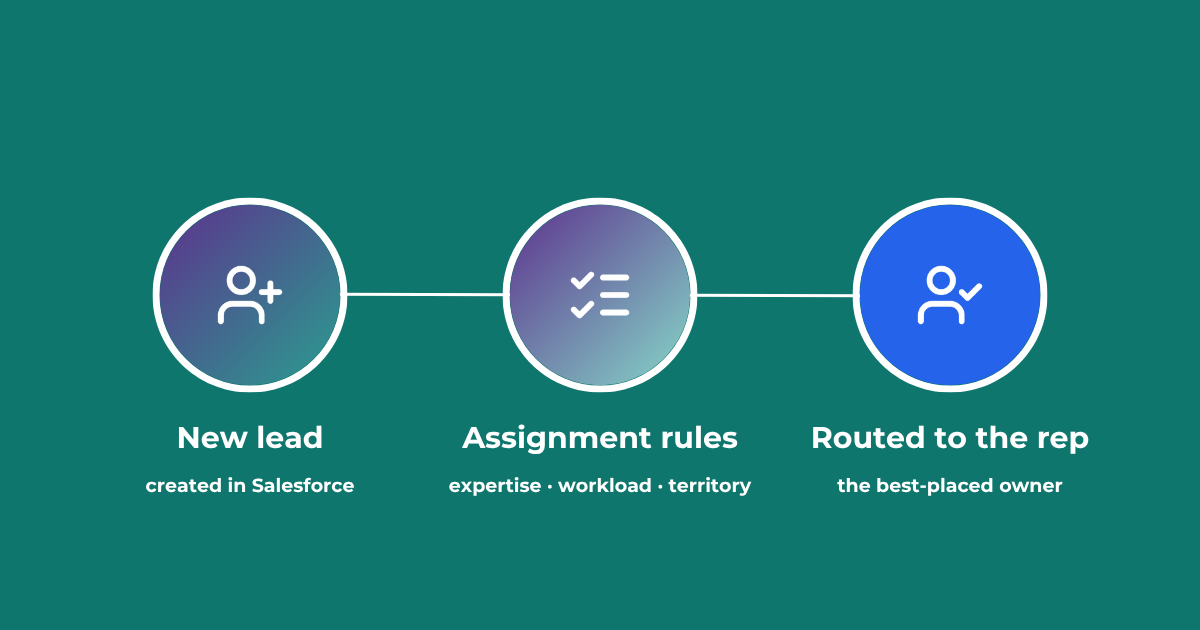
Lead Assignment Rules in Salesforce: Automate with Q-assign
This comprehensive guide to optimizing lead assignment rules in Salesforce will stand you in good stead for maximizing your sales reps’ productivity and performance. Understand the benefits of highly effective lead assignment, explore Salesforce best practices and stay ahead of the competition – with added insights into AI-driven revenue orchestration
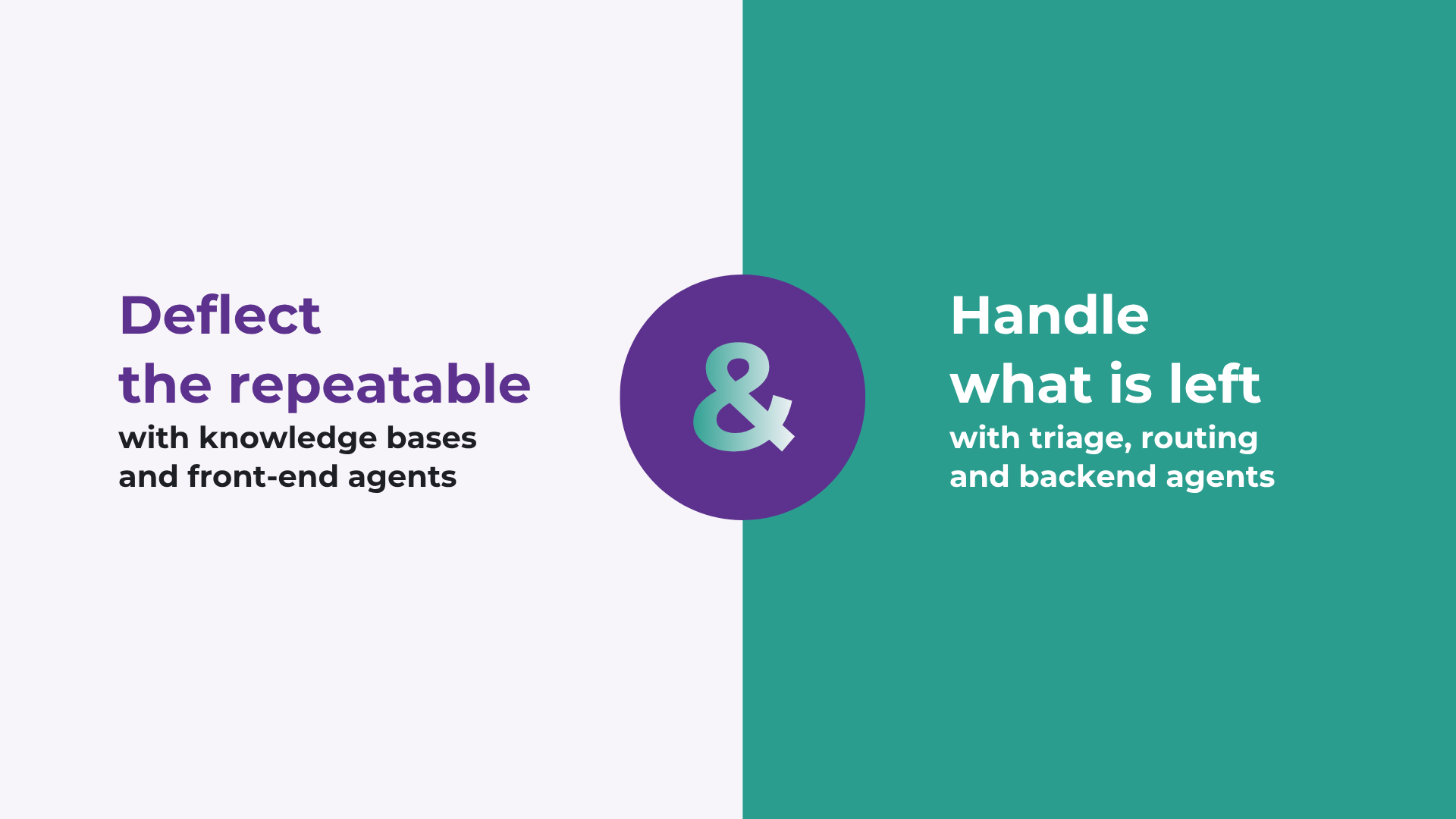
How to improve Salesforce case deflection rates
Deflection only solves half the problem. The cases that do not deflect are the ones that breach SLA. How to improve deflection rates, and how to handle what is left.

Calling Salesforce is easy. Defining what happens next is the hard part.
Salesforce workflows don’t break because of missing automation. They break because no single system defines what should happen. Here’s what actually fixes it.
READY TO SEE IT IN ACTION
Map your workflows with our team.
30 minutes, no prep needed. We will map one workflow you handle today and identify where orchestration would change the outcome.