How to Frame Work Orchestration as a Control for Throughput Risk

Moving Beyond Siloed Team Metrics
Operations leaders and Chief Operating Officers often speak different languages. Operations teams report on activity – cases closed, leads actioned, tasks completed. A COO, however, thinks in terms of systemic risk, throughput and cost-to-serve. This disconnect is a common source of friction and misunderstanding when it comes to justifying investment in operational improvement. The challenge is to translate day-to-day operational pain into a language the C-suite understands.
Standard Salesforce dashboards, while useful for team-level tracking, often fail to provide this executive view. They present static snapshots of past performance but conceal the cumulative drag of handoffs, hidden queues and process delays that occur between teams and objects. We can all picture the report showing a high volume of closed cases, but what it doesn’t show is the customer churn caused by delays before those cases were even assigned. This is the hidden factory of inefficiency in high-volume workflow management.
To communicate effectively with a COO, the conversation must shift from isolated team metrics to the health of the entire system. The goal is to reframe the dialogue around end-to-end flow, efficiency and resilience. These are the factors that directly impact a COO’s mandate to run a predictable and cost-effective operational machine. The question changes from “How busy are we?” to “How much risk is embedded in our core processes?”.
Quantifying the Cost of Uncoordinated Workflows

The next step is to translate that systemic drag into financial terms. This means defining Salesforce throughput risk for your COO: the measurable probability that a core business process will fail to meet its commercial targets – like an SLA, a conversion goal or a revenue milestone – due to systemic inefficiency, not just individual error. It is the risk of work getting stuck, dropped or delayed between the boxes on a process diagram.
Consider a mortgage application process at a London-based bank. The journey spans sales, underwriting and legal teams, each working in Salesforce but with manual handoffs between them. An application might meet the sales team’s KPI for submission but then sit in an underwriter’s unmanaged queue for three days. That delay extends the entire cycle time, frustrates the customer and puts the revenue at risk. This isn’t a person’s fault; it is a system design failure.
This primary risk creates secondary impacts that resonate with executives:
- Compliance failures from fragmented audit trails that cannot prove a consistent process was followed.
- Governance gaps where no single system can attest that every required step was completed correctly.
- Increased cost-to-serve from the manual effort needed to find and fix stalled work items.
This risk is not theoretical. As highlighted in the 2025 State of Process Orchestration & Automation Report from Camunda, 87% of enterprises achieved measurable business growth after implementing orchestration to solve these very issues. The data shows a clear link between coordinated workflows and commercial performance.
| Metric | Uncoordinated Workflow (Typical State) | Orchestrated Workflow (Target State) |
|---|---|---|
| End-to-End Cycle Time | Variable and unpredictable; often exceeds targets | Consistent and measurable; aligned with SLA |
| Throughput Risk | High; frequent bottlenecks and dropped work | Low; predictable flow and proactive monitoring |
| Cost-to-Serve | High due to manual intervention and rework | Lowered through automation and reduced exceptions |
| Governance & Auditability | Fragmented; difficult to reconstruct process history | Centralised; single source of truth for audit |
Presenting Orchestration as a System of Control
Once the problem is quantified, you can introduce the solution. The key is to present work orchestration as a disciplined operational model, not just another technology. The way to explain work orchestration to a COO is to define it as the coordination of all automated and manual tasks across Salesforce to ensure they execute as a single, governable, end-to-end process. It is a framework for ensuring work flows smoothly from start to finish without falling through the cracks.
This approach builds a ‘system of work’ on top of Salesforce’s ‘system of record’. While Salesforce stores the data, orchestration manages the journey of the work itself. It provides the structure for defining task dependencies, managing data handoffs between objects and supervising the entire lifecycle of a work item – from a new lead to a closed case. This is one of the most effective workflow control models for complex operations because it imposes order on chaos.
It is important to contrast this with basic automation. A Salesforce Flow is like a highly efficient worker performing a single task perfectly. Work orchestration, on the other hand, is the factory manager overseeing the entire assembly line. It ensures the work item moves correctly between different teams, systems and stages of its journey. It supervises the process, watches for delays and intervenes when things go wrong. This turns Salesforce into a true system for managing business operations, not just data.
This model delivers the control layer that COOs demand. It makes the entire process observable, measurable and governable from a single place. An abstract operational flow becomes a manageable asset with predictable performance and clear risk parameters. You are no longer just managing records; you are controlling outcomes.
The Critical Signals of Operational Health

To make this control tangible, the conversation must turn to metrics. The reports that land on a COO’s desk are often filled with activity metrics that create an illusion of productivity. An orchestration model allows you to replace this noise with signals that measure the health of the entire system. This is fundamental to building operational resilience in Salesforce.
There are three critical signals a COO should watch:
- End-to-End Cycle Time: The total time a work item takes from creation to resolution. This is the ultimate measure of process velocity and customer experience.
- SLA Compliance Rate: The percentage of work completed within its target timeframe. This is a direct measure of process predictability and commercial reliability.
- Process Exception Rate: The frequency with which manual intervention is needed to fix a broken or stalled process. This is a direct indicator of process fragility and hidden operational costs.
A work orchestration platform surfaces these metrics on unified dashboards, providing a single source of truth for risk assessment. The reporting language transforms. Instead of “we closed 500 cases last week”, the conversation becomes “our average resolution time for P1 cases is now 3.2 hours, with 99.1% SLA compliance, and the exception rate has fallen by 15% this quarter”. This is the language of control, continuous improvement and tangible business impact.
Building Alignment with a Shared Language
Ultimately, a shared understanding of work orchestration as a system of control aligns technical and non-technical teams. When everyone – from Salesforce architects to operations leaders – views a process as a single, end-to-end system, collaboration on risk and efficiency improves dramatically. Arguments over whose queue is causing the bottleneck are replaced by constructive discussions about how to improve the entire flow.
Using shared visual models that map the entire workflow ensures all stakeholders are working from the same blueprint. This allows risk controls and performance targets to be designed into the process from the start, not bolted on as an afterthought. It creates a common ground for architects who build the system and leaders who are accountable for its performance.
Work orchestration is an operating model first and a technology second. It provides the framework and vocabulary needed to manage complex Salesforce environments at scale. Framing it as a control for throughput risk moves the discussion from technical features to business resilience – a conversation every COO is ready to have. This framework provides a clear path for managing Salesforce at scale, a principle that underpins our approach to work orchestration.
Ask an Expert any question about how to explain work orchestration to your COO by emailing sales@ortooapps.com.
Related insights
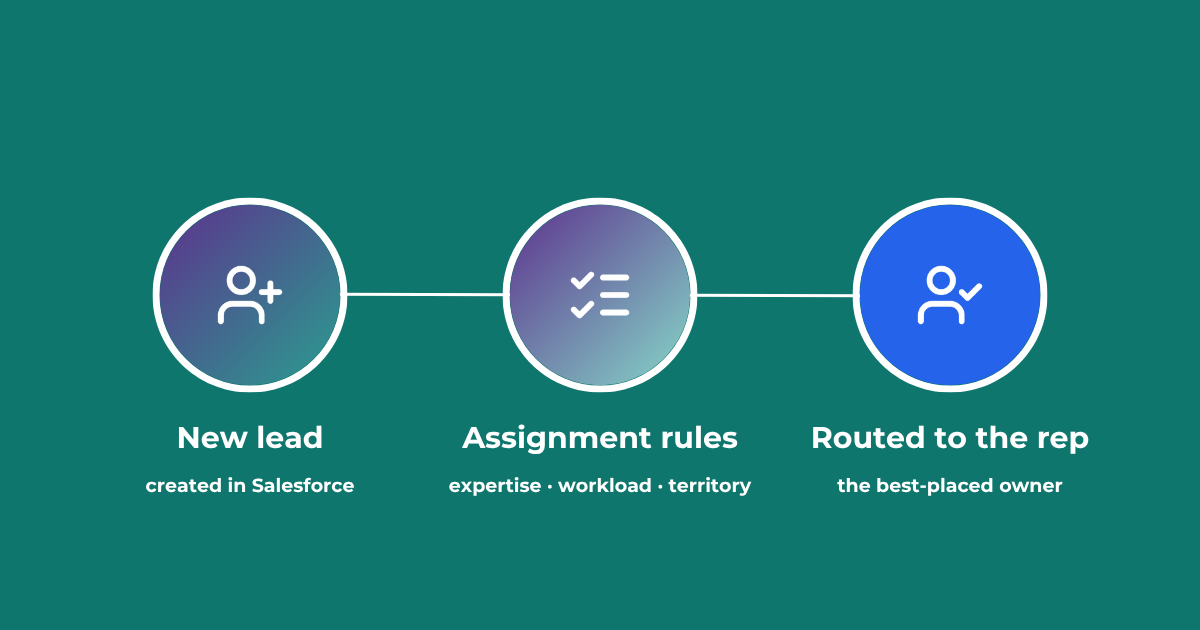
Lead Assignment Rules in Salesforce: Automate with Q-assign
This comprehensive guide to optimizing lead assignment rules in Salesforce will stand you in good stead for maximizing your sales reps’ productivity and performance. Understand the benefits of highly effective lead assignment, explore Salesforce best practices and stay ahead of the competition – with added insights into AI-driven revenue orchestration
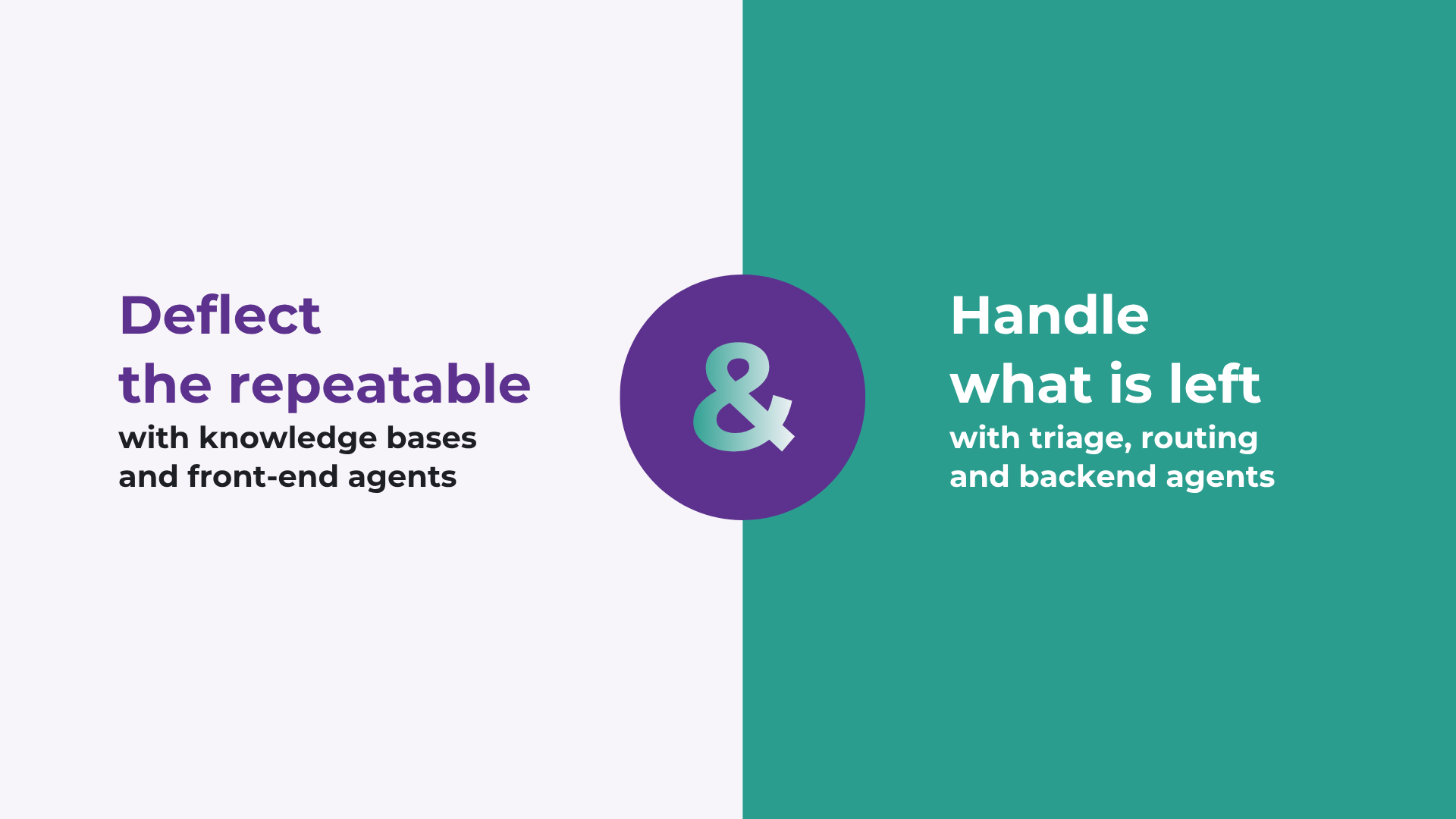
How to improve Salesforce case deflection rates
Deflection only solves half the problem. The cases that do not deflect are the ones that breach SLA. How to improve deflection rates, and how to handle what is left.

Calling Salesforce is easy. Defining what happens next is the hard part.
Salesforce workflows don’t break because of missing automation. They break because no single system defines what should happen. Here’s what actually fixes it.
READY TO SEE IT IN ACTION
Map your workflows with our team.
30 minutes, no prep needed. We will map one workflow you handle today and identify where orchestration would change the outcome.