How Governed AI in Salesforce Improves Case Routing

The Misconception of AI as a Simple Automaton
Many teams approach AI for Salesforce case classification with a simple goal: speed. They see it as an automaton – a plug-in tool to process inbound cases faster than any human could. This view however ignores a critical reality of high-stakes work. Treating AI as an unmanaged black box creates decisions that are difficult to trust audit or defend.
In regulated UK sectors like financial services or healthcare the defensibility of a decision is as important as its speed. An insurer cannot simply say an algorithm denied a claim. They must be able to explain why based on clear and fair criteria. This is where the common perception of AI as a simple accelerator falls short. It prioritises efficiency over accountability.
A more mature approach involves governed AI in Salesforce. This is not about slowing things down. It is about operating within a defined framework of rules transparency and human oversight. A governed model is a predictable and reliable part of the workflow not an unaccountable variable. It ensures that every automated classification or routing decision can be traced back to an established business logic making the entire process transparent and defensible.
The Operational Cost of Ungoverned AI

Adopting AI without a governance structure is not just a compliance risk – it creates tangible operational costs that ripple through a service department. When an AI model for Salesforce case classification operates without guardrails it introduces instability and inefficiency that teams can feel every day. The downstream consequences often outweigh any perceived gains in initial speed.
These costs manifest in several distinct ways:
- Systemic bias at scale. An ungoverned model learning from historical Salesforce data can easily inherit and amplify old biases. For example it might learn to deprioritise insurance claims from certain postcodes not because of risk but because of past operational patterns. This leads to unfair outcomes reputational damage and regulatory penalties.
- Misclassification and rework. Even a small error rate in an automated system creates significant downstream work. A case misrouted by AI must be manually identified reassigned and re-contextualised by an agent. This inflates resolution times frustrates customers and puts pressure on service level agreements.
- A widening compliance gap. For UK organisations an unauditable AI process is a major liability. Without a clear governance framework as detailed in guides for Salesforce architects it is nearly impossible to demonstrate GDPR compliance for automated decision-making. This exposes the business to significant fines and erodes customer trust.
Ultimately an ungoverned AI becomes a source of operational friction. It creates work rather than reducing it and introduces risks that the business is unprepared to manage.
A Blueprint for Governed AI in Salesforce
A responsible AI implementation does not happen by accident. It requires a deliberate and structured approach that balances technological capability with operational reality and regulatory obligations. This blueprint provides a clear pattern for teams looking to introduce governed AI in Salesforce without creating unintended risks. It is a framework for building trust into the system from the very beginning.
The process involves four key stages:
- Establish a Governance Council. Before a single line of code is written a cross-functional team must be assembled. This council – comprising leaders from operations compliance IT and data science – is responsible for setting the policies risk thresholds and success metrics for the AI model. They define the rules of engagement.
- Conduct a Risk-First Assessment. The council’s first task is to identify and document potential risks. This includes mapping out dangers like algorithmic bias data privacy breaches or the potential for large-scale misclassification. For each identified risk the team must plan specific mitigation strategies.
- Prioritise Data Quality and Hygiene. An AI model is only as good as the data it learns from. This step involves a rigorous audit and cleanup of the Salesforce data that will be used for training. Inconsistent field entries incomplete records or outdated information must be addressed to ensure the model learns from a clean and accurate source.
- Design for Human Oversight. Governed AI is not about full automation. It is about intelligent augmentation. This means designing human-in-the-loop workflows where agents have the final say. For high-stakes decisions or low-confidence AI suggestions the system should route the case to a human for validation. This keeps an expert in control.
| Role | Primary Responsibility in AI Governance | Key Question They Ask |
|---|---|---|
| Operations Lead | Ensures AI models align with business processes and SLAs. | ‘Does this model improve our resolution time without creating new bottlenecks?’ |
| Compliance Officer | Monitors adherence to regulatory standards (e.g. GDPR FCA rules). | ‘Can we produce a clear audit trail for every AI-driven decision?’ |
| IT/Salesforce Architect | Oversees technical implementation data integrity and system security. | ‘Is the data pipeline clean and is the model’s integration secure?’ |
| Data Scientist | Builds validates and monitors the performance and fairness of the model. | ‘Are we measuring for and mitigating potential bias in the training data?’ |
Monitoring Performance and Identifying Drift

Deploying a governed AI model is not the end of the process. It is the beginning of a continuous cycle of monitoring and refinement. Over time a model’s performance can degrade as business realities change – a phenomenon known as model drift. A product line might be discontinued a new regulation introduced or customer behaviour might shift. Continuous monitoring is therefore non-negotiable for maintaining a trustworthy system.
Performance monitoring must go beyond simple accuracy metrics. Teams should track a balanced scorecard of indicators to get a full picture of the model’s health and impact:
- Model confidence scores. How certain is the model about its predictions? A steady decline in average confidence is an early warning sign of drift.
- Fairness across segments. Is the model performing equally well for all customer groups products or regions? Tracking this helps catch emergent bias before it becomes systemic.
- Rate of human overrides. How often are agents correcting the AI’s suggestions? This is a direct measure of the model’s alignment with expert judgement.
One of the clearest signals to watch is a rising rate of manual re-routing of AI-classified cases. When agents frequently have to move cases to different queues it is a primary indicator that the model is no longer aligned with business reality and that the underlying rules for case assignment need review. A comprehensive audit trail of every AI decision and subsequent human action is essential for this diagnostic work and for maintaining accountability in regulated industries.
Closing the Loop on Governed AI
Ultimately governed AI in Salesforce is a strategic necessity not a technical hurdle. It is the framework that transforms AI from a potential liability into a reliable and trustworthy operational asset. By moving beyond the simplistic view of AI as a pure automation tool teams can build systems that are not only efficient but also fair transparent and defensible.
A structured approach grounded in risk assessment human oversight and continuous monitoring is the only sustainable way to use AI for Salesforce case classification safely and effectively. For teams evaluating how to structure these governance patterns within their Salesforce environment a practical demonstration can often clarify the steps involved and make the principles tangible.
Ask an Expert any question about governed AI in Salesforce by emailing sales@ortooapps.com.
Related insights
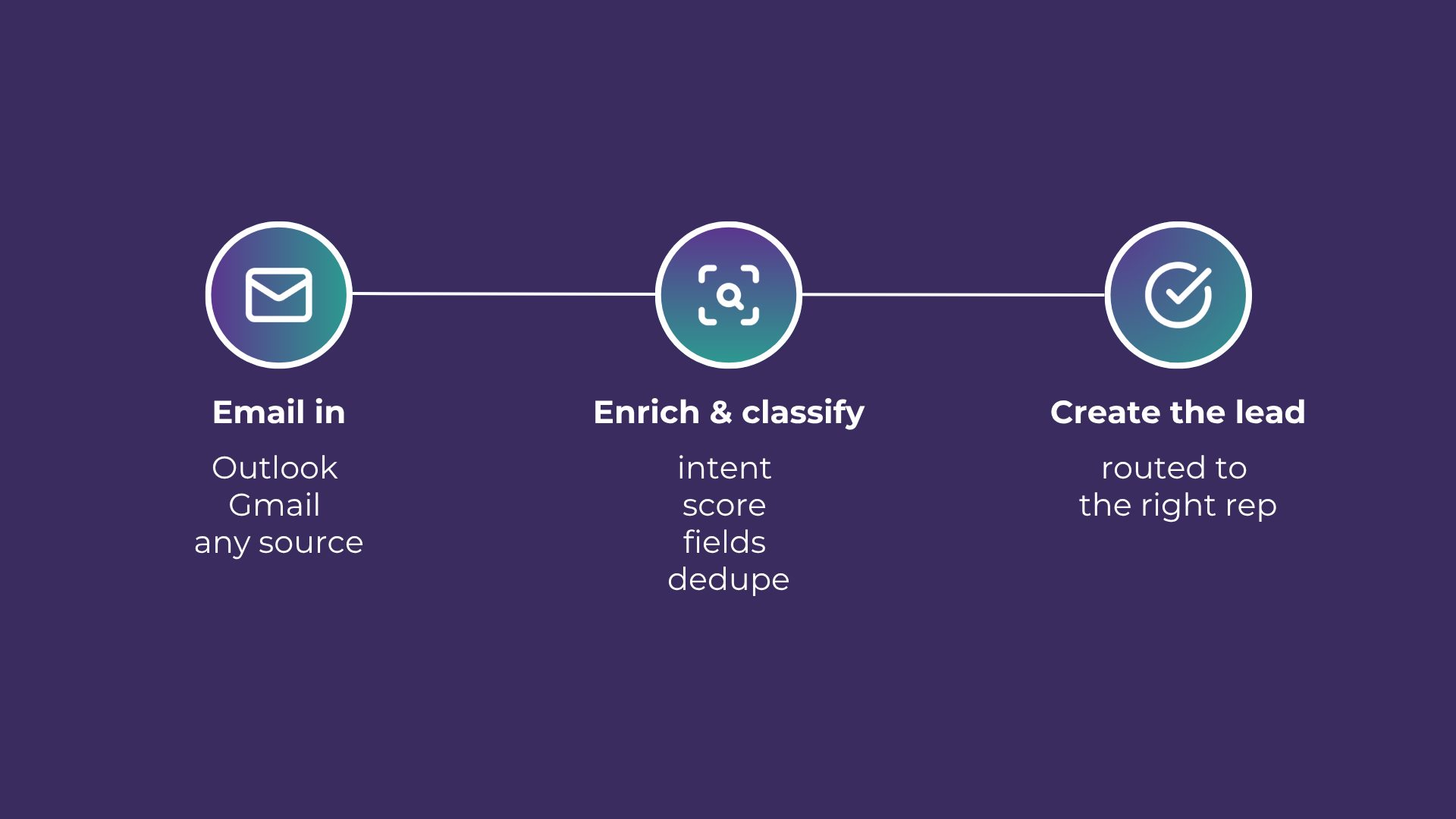
Email-to-Lead: Salesforce Lead Management with AI
Lead management is the lifeblood of any successful sales operation. At a time where customer expectations are higher than ever, ensuring that potential leads are captured and nurtured effectively can make all the difference. Introducing Email-to-Lead – AI Edition.
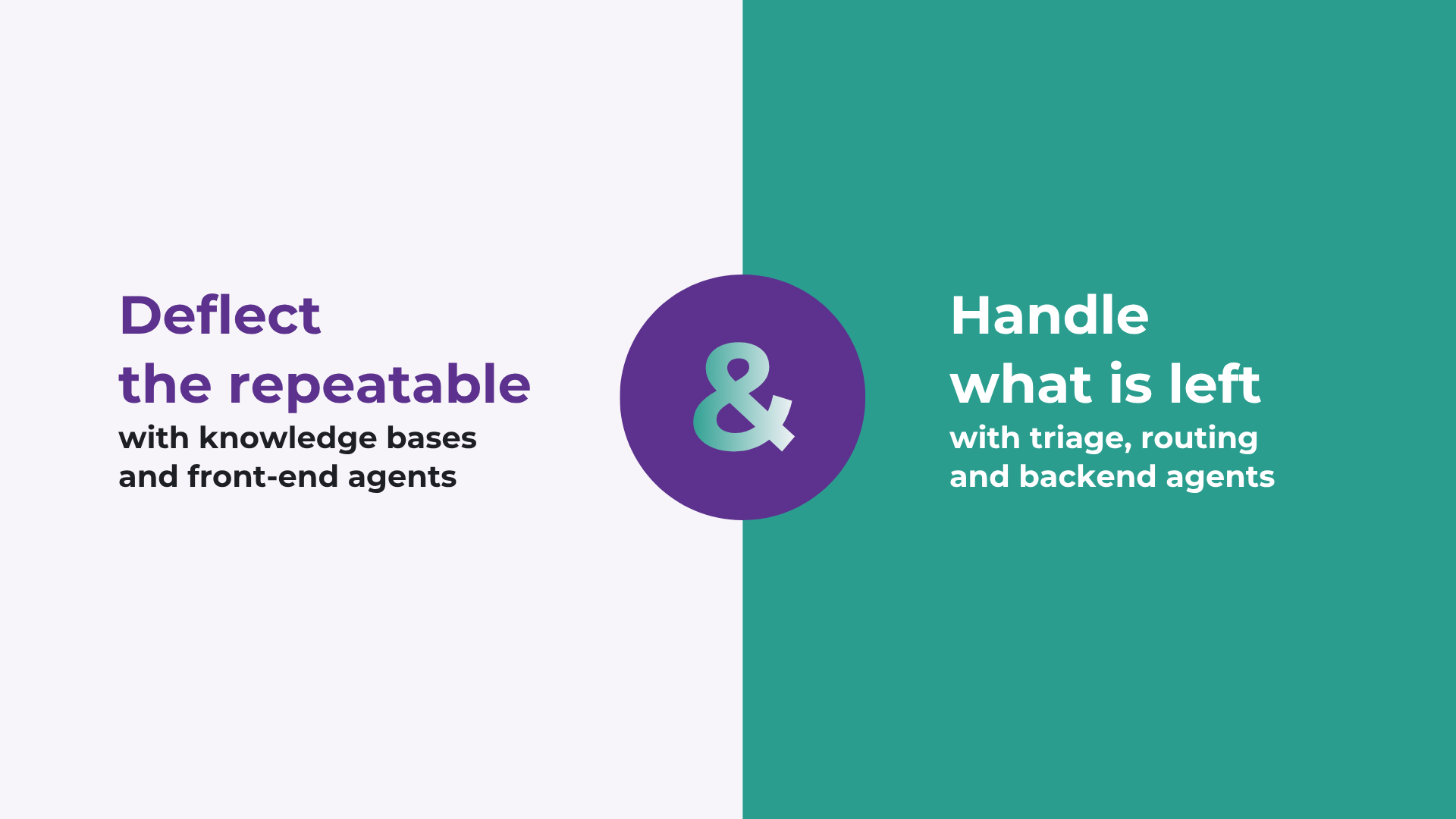
How to improve Salesforce case deflection rates
Deflection only solves half the problem. The cases that do not deflect are the ones that breach SLA. How to improve deflection rates, and how to handle what is left.

Stopping SLA Breaches in High Volume Salesforce Workflows
Learn how to move from reactive reporting to proactive management for better service level agreement adherence.
READY TO SEE IT IN ACTION
Map your workflows with our team.
30 minutes, no prep needed. We will map one workflow you handle today and identify where orchestration would change the outcome.