Giving Admins Direct Control of Complex Salesforce Logic

The Hidden Costs of Externalising Logic Changes
For many large UK organisations, the speed of business consistently outpaces the speed of IT. This disconnect is felt most acutely by Salesforce admins, who possess deep operational insight but often lack the authority to modify critical workflow logic. Instead, they must file a Jira ticket and wait for a developer. This process creates an immediate and costly bottleneck, slowing down the entire operation.
A significant issue is the ‘translation cost’. Nuanced operational needs get lost when converted into formal development requests. An urgent adjustment to high-priority case criteria for a new product launch might seem straightforward to an admin. Yet, when it enters a two week development sprint, the context is diluted and the final implementation can miss the mark. The business requires daily agility but the development cycle imposes a rigid, slower pace.
This dependency creates another risk: ‘black box’ logic. When complex processes are built entirely in Apex, they become opaque to the very admins responsible for their performance. Troubleshooting a minor issue requires developer intervention, which undermines the admin’s role and makes effective Salesforce complex logic management nearly impossible. The people closest to the work are left without the tools to manage it, waiting for a ticket to be resolved while operational pressures mount. This model is not just inefficient; it is unsustainable for any organisation aiming for operational resilience.
Shifting Ownership with Declarative Orchestration

Restoring Salesforce admin control begins by rethinking the tools they use. Salesforce Flow is often seen as a simple automation tool, but its real value lies in its capacity as a platform for building and managing transparent, scalable operational logic without code. It allows admins to see, understand and modify the processes they oversee, moving logic out of the developer’s black box and into a visible, accessible environment.
A core principle here is modularity, a cornerstone of effective Salesforce Flow best practices. As the Salesforce Admin Blog notes in a post about scalable automation, breaking down large, monolithic processes into smaller, interconnected subflows makes the entire system more resilient. Each subflow handles a specific, dedicated task. This approach makes complex logic far easier to manage, test and modify without risking the integrity of the end to end process.
This shift does not eliminate the need for developers. Instead, it reframes their role. A highly effective model involves developers building specific, reusable ‘invokable actions’ in Apex for heavy calculations or integrations. Admins then orchestrate these components within their Flows, retaining control over the business process itself. Developers focus on deep technical challenges while admins manage the operational workflow.
This is not about restrictive gatekeeping. The goal is to establish enabling guardrails. With clear naming conventions, documentation standards and testing protocols, admins can work autonomously and safely. This framework for work orchestration empowers them to build and adapt workflows, ensuring that business logic remains aligned with real time operational needs. It is a fundamental step in improving how our operational models function at scale.
A Framework for Effective Admin Enablement
Handing over control of complex logic requires more than just access to tools. Effective training must focus on developing architectural thinking. Admins need to learn how to evaluate when to build a new flow versus modifying an existing one and how to design for future business needs, not just immediate requirements. This strategic mindset is what separates a good admin from a great one.
A phased handover strategy is essential for transferring ownership safely. This process builds confidence and capability over time:
- 1. Documentation: The process begins with admins documenting existing Apex-driven processes. This exercise builds a deep, foundational understanding of how the current logic works and where its limitations lie.
- 2. Co-ownership: For a set period, admins and developers co-own flows. The developer acts as a mentor, guiding the admin through modifications and troubleshooting sessions.
- 3. Independent Build (Non-Critical): Admins then start building new logic for non-critical workflows independently. This provides a safe environment to apply their skills without risking core operations.
- 4. Full Ownership: Finally, admins progress to owning and modifying high-stakes, complex systems with confidence.
Strong governance is the glue that holds this model together. As highlighted in the Salesforce Admin Blog’s guide to Flow standards, practices like mandatory peer reviews for any new or modified flow build collective ownership and improve quality. This aligns with established Salesforce Flow best practices and ensures changes are robust and well-considered. In a UK logistics firm, an admin could manage a flow that automates order fulfilment based on inventory and shipping zones. In manufacturing, they might own a process that dynamically re-routes support cases for delayed shipments based on customer tier. These are not simple tasks; they are complex, high-value operations managed directly by those with the best operational context.
Measuring the Shift to Admin Self-Sufficiency
The most direct signal that this model is working is a measurable reduction in the volume and cycle time of Jira tickets related to workflow logic. When admins can make changes themselves, the queue of development requests for minor operational adjustments shrinks. This is a clear, quantitative indicator of increased autonomy and efficiency.
Qualitative signals are just as important. Monitor feedback from business stakeholders on the speed of change implementation. Listen for reports from admins expressing greater confidence and ownership over their operational domains. When you hear an admin say, “I was able to fix that in an hour,” you know the shift is taking hold.
True work orchestration is achieved not by simply automating tasks but by placing control in the hands of those closest to the work. By empowering admins to manage complex logic, organisations build a more resilient and adaptive operating model. This approach helps Salesforce evolve from a system of record into a true system of work. If you are evaluating how to better structure your Salesforce workflows, you can email sales@ortooapps.com to discuss your use case.
Ask an Expert any question about Salesforce complex logic management by emailing sales@ortooapps.com.
Related insights
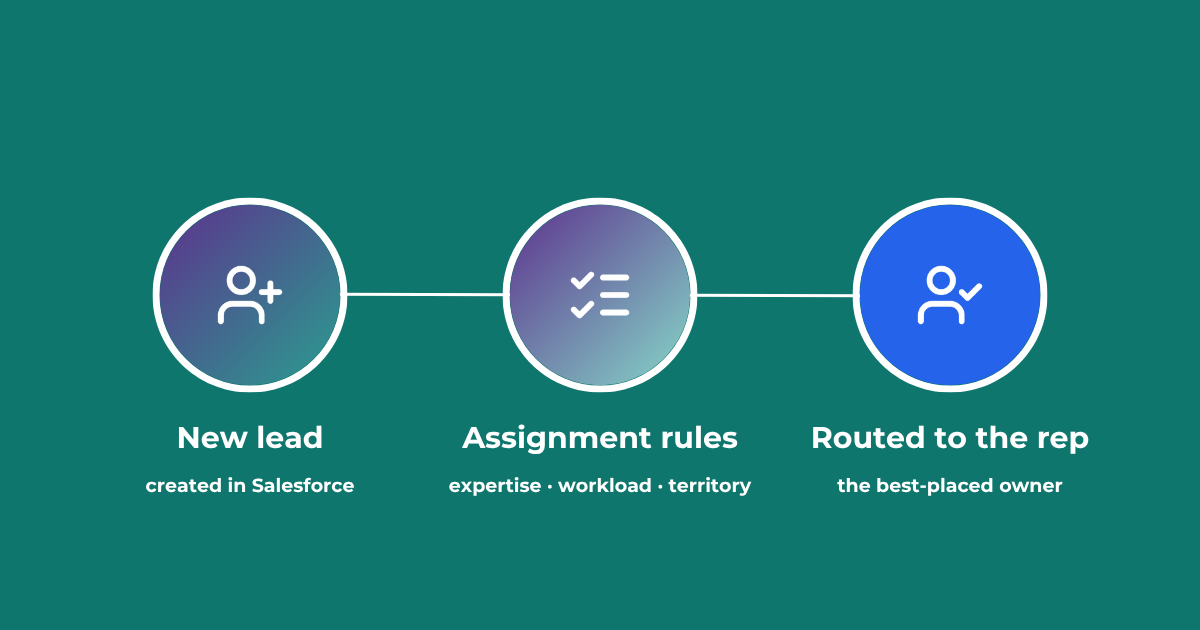
Lead Assignment Rules in Salesforce: Automate with Q-assign
This comprehensive guide to optimizing lead assignment rules in Salesforce will stand you in good stead for maximizing your sales reps’ productivity and performance. Understand the benefits of highly effective lead assignment, explore Salesforce best practices and stay ahead of the competition – with added insights into AI-driven revenue orchestration
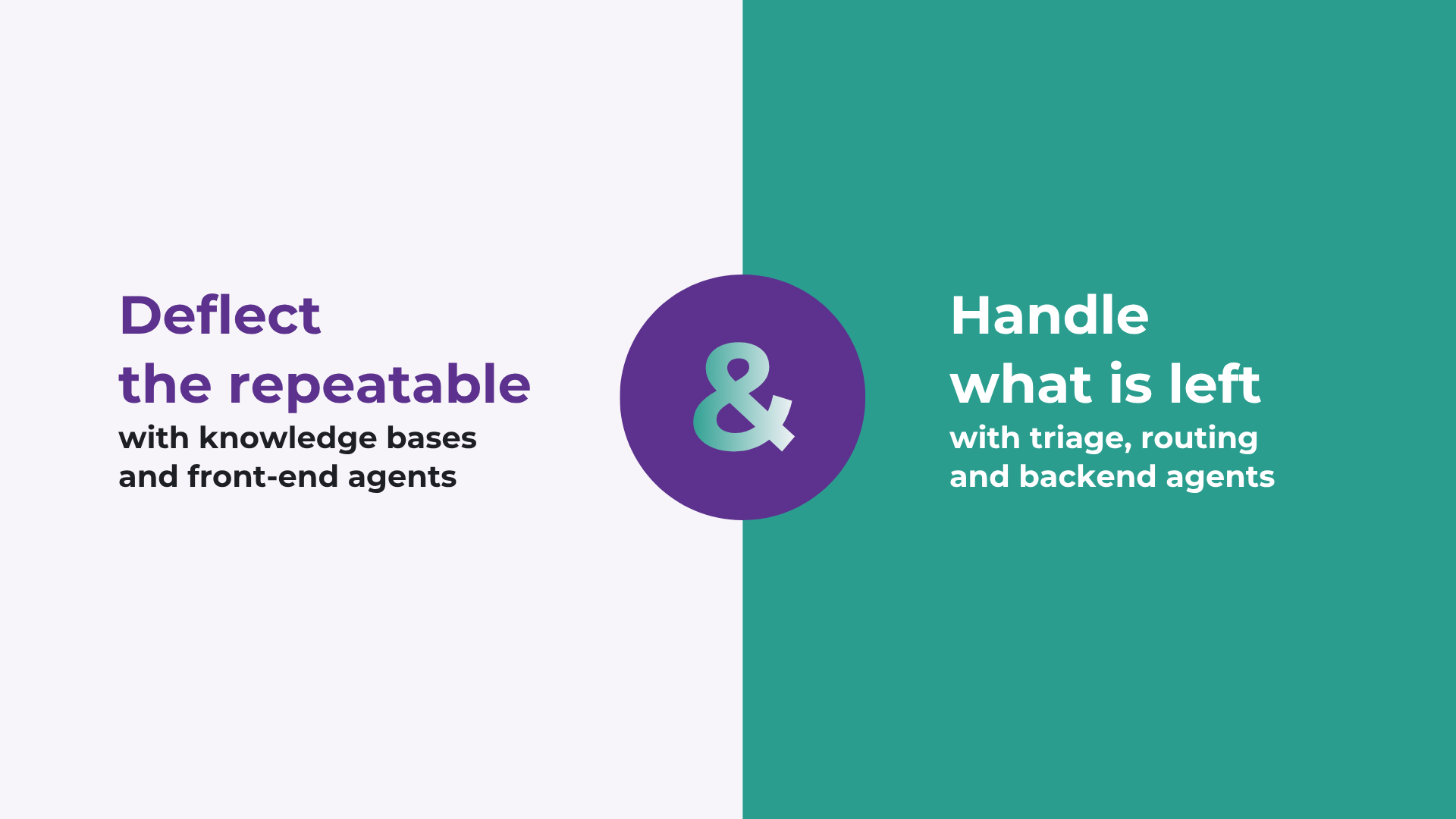
How to improve Salesforce case deflection rates
Deflection only solves half the problem. The cases that do not deflect are the ones that breach SLA. How to improve deflection rates, and how to handle what is left.

Calling Salesforce is easy. Defining what happens next is the hard part.
Salesforce workflows don’t break because of missing automation. They break because no single system defines what should happen. Here’s what actually fixes it.
READY TO SEE IT IN ACTION
Map your workflows with our team.
30 minutes, no prep needed. We will map one workflow you handle today and identify where orchestration would change the outcome.