Fixing High Volume Case Routing When Salesforce Queues Fail

The Common Misconception About Queue Scalability
Salesforce queues are a foundational tool for organising work. Many teams view them as the default method for distributing cases and assume they will scale with the business. This reliance often becomes a critical point of failure as volume grows. The issue is not a flaw in the queue itself but a fundamental misunderstanding of its purpose. Queues are designed for organisation and visibility – they provide a holding area where work can be categorised and viewed. They were never intended for high-throughput, concurrent processing.
Think of a single, large queue as a single-lane road during rush hour. You can add more drivers – or agents – but that does not widen the road. The architectural bottleneck remains. This is one of the core Salesforce queue limitations. When hundreds or thousands of cases are pushed into one queue simultaneously, the system experiences contention. It struggles to process assignments, leading to delays that have nothing to do with agent availability.
Effective Salesforce queue management at scale means recognising this architectural constraint. Simply adding more resources to a congested queue will not solve the underlying problem. Relying on default queue behaviour for scaling your high-volume case routing is a path to operational failure. The solution lies in redesigning the routing architecture itself not in applying temporary fixes to a system that is being used for a purpose it was not designed for.
The Operational Cost of Queue Congestion and Failure

When a queue becomes a bottleneck the consequences extend far beyond simple processing delays. The most immediate impact is on Service Level Agreements. Assignment delays directly translate into missed response and resolution targets. In regulated UK industries like finance or utilities this is not just poor service – it can lead to significant contractual penalties and regulatory scrutiny. As the system becomes overwhelmed it can lead to a state of ‘queue exhaustion’ where cases are dropped or experience severe processing errors.
This is not a theoretical risk. As an incident report on the Salesforce Help site highlighted on June 26th, high load can cause critical failures in core processes like email handling. When the platform itself is under strain a congested queue becomes the weakest link in the chain. This technical issue creates a very human problem. Agents faced with a massive, unordered queue often resort to ‘cherry-picking’ the simplest cases first. This creates an unfair workload distribution harms team morale and leaves complex or high-priority cases to stagnate.
What starts as a system bottleneck quickly becomes a major operational risk eroding customer trust and creating internal chaos that requires costly manual intervention to resolve impacting all facets of your business operations. The hidden costs of manual clean-ups and reputational damage often far exceed the perceived savings of sticking with a default queue setup.
A Repeatable Pattern for Scalable Routing Architecture
The most effective way to handle high-volume case routing is to move away from a single monolithic queue. A more robust approach involves a system of multiple specialised queues built on the principles of partitioning and load balancing. Partitioning means dividing incoming work into smaller logical streams before it ever hits a queue. This is where effective Salesforce case assignment rules become critical. Instead of one complex rule set you create simpler rules for each partition.
Common criteria for partitioning include:
- Priority – such as P1 P2 and P3
- Product line or service type
- Customer tier – for example Enterprise or SMB
- Geographical region
With work separated into these streams an intelligent load balancer can distribute cases evenly across the partitioned queues. This prevents any single queue from becoming a bottleneck and ensures a fair distribution of work. For organisations facing unpredictable surges in case volume an event-driven approach provides further resilience. As explained in the Salesforce Developers Blog on Pub/Sub API scalability using this API for case ingestion helps manage spikes effectively. Its built-in retry logic and backoff mechanisms can handle transient system failures without losing cases ensuring your intake process remains stable under pressure. This combination of partitioning load balancing and event-driven intake creates truly scalable routing systems.
| Factor | Monolithic Queue | Partitioned Architecture |
|---|---|---|
| Scalability | Becomes a bottleneck under load | Scales horizontally with volume |
| Resilience | Single point of failure | Isolates failures to specific partitions |
| Workload Fairness | Prone to ‘cherry-picking’ | Enables balanced skill-based distribution |
| Maintenance | Complex rules in a single object | Simpler modular rules per queue |
This table contrasts the structural limitations of a single monolithic queue with the benefits of a partitioned architecture for high-volume case routing. The comparison is based on common operational challenges in Salesforce environments.
One Key Signal Your Routing System Is at Risk

Dashboard metrics can be misleading. A queue that shows zero items might look healthy but it could be hiding a serious problem. One of the most telling signals that your routing system is failing is the ‘feast or famine’ experience for agents. This is where queues sit empty for long stretches and then are suddenly flooded with a batch of cases. This pattern is a dangerous symptom. It indicates the system is no longer processing records in real-time and is instead batching them after a significant delay creating a hidden backlog that is invisible on a standard dashboard.
Another clear signal is a steady increase in the number of cases requiring manual reassignment. When you see supervisors or team leads constantly stepping in to move cases from one agent to another it is definitive proof that the automated logic is failing. They are performing the work that the system should be doing. These workflow patterns are far more reliable indicators of trouble than a report showing average handle time. If you observe them it shows the automated routing logic is no longer fit for purpose and that a more robust approach to case assignment is required.
Moving Beyond Default Queues
Standard Salesforce queues have a breaking point. For any organisation experiencing growth designing a scalable routing architecture is an operational necessity – not a premature optimisation. The focus must shift from simply managing a single queue to orchestrating a system of queues through intelligent partitioning and load balancing. This proactive approach is the only sustainable way to maintain fairness and efficiency as your case volumes rise. If you are considering how to implement such a system our team can help you evaluate your options.
Ask an Expert any question about high-volume case routing by emailing sales@ortooapps.com.
Related insights
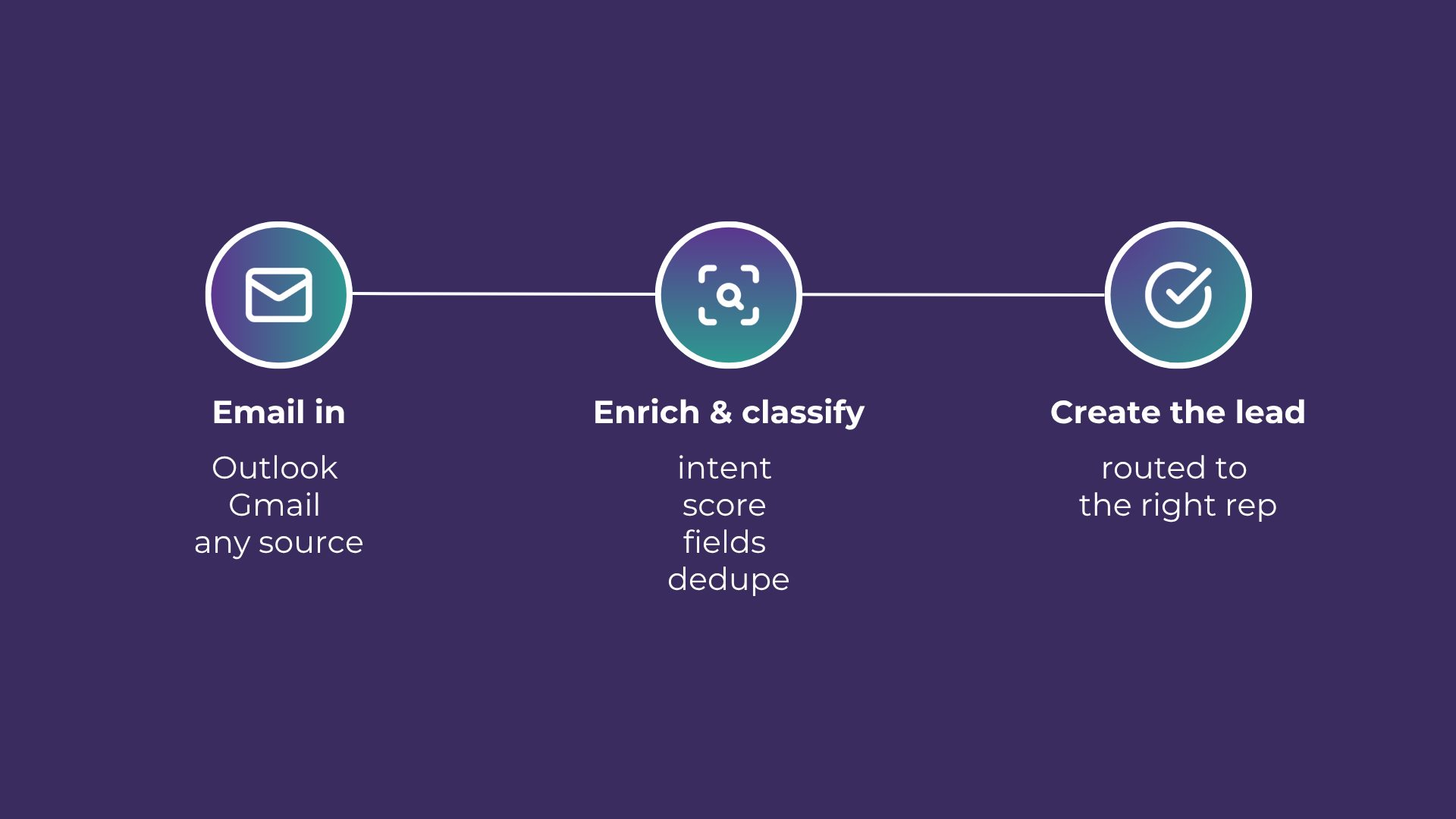
Email-to-Lead: Salesforce Lead Management with AI
Lead management is the lifeblood of any successful sales operation. At a time where customer expectations are higher than ever, ensuring that potential leads are captured and nurtured effectively can make all the difference. Introducing Email-to-Lead – AI Edition.
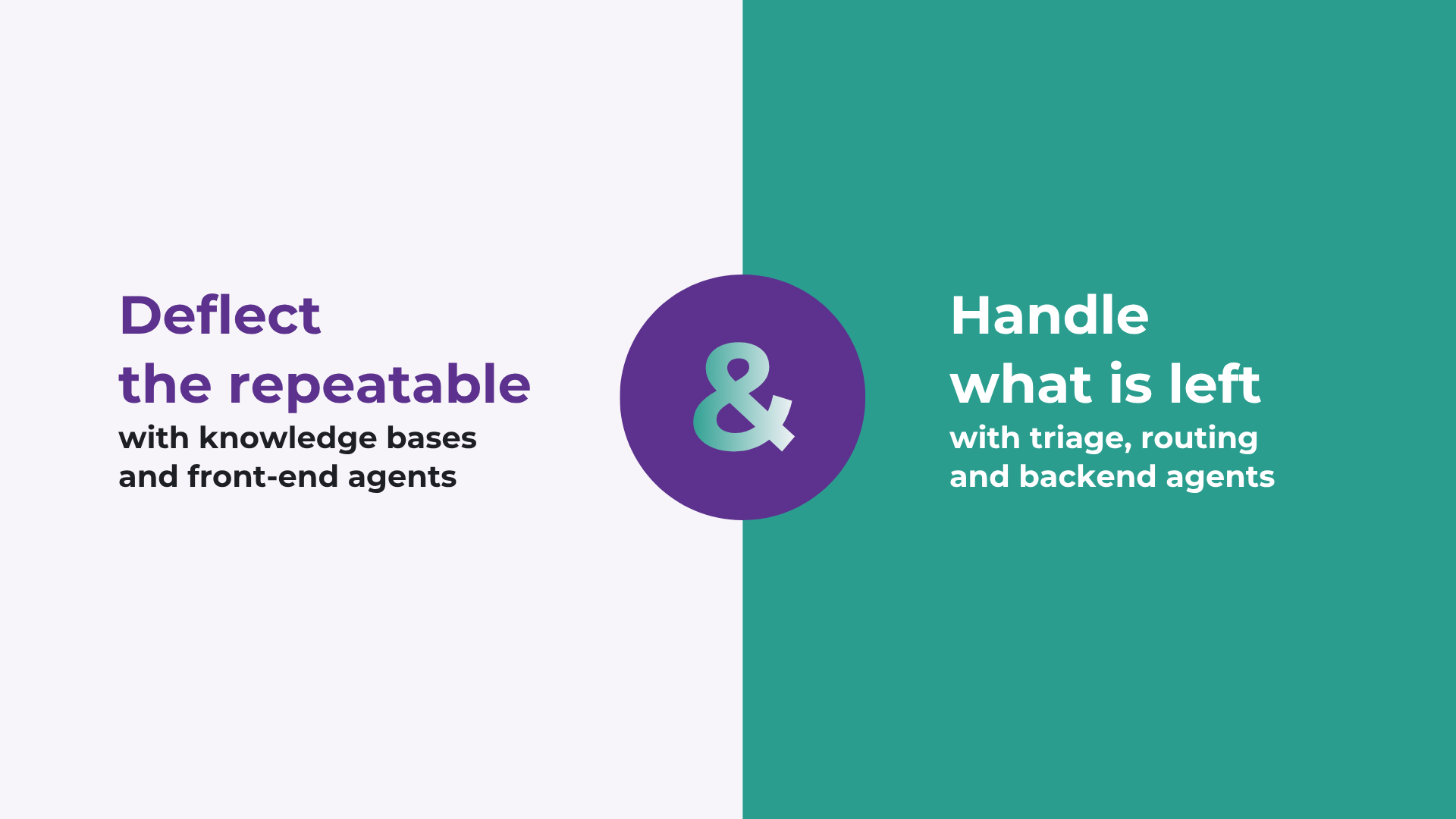
How to improve Salesforce case deflection rates
Deflection only solves half the problem. The cases that do not deflect are the ones that breach SLA. How to improve deflection rates, and how to handle what is left.

Stopping SLA Breaches in High Volume Salesforce Workflows
Learn how to move from reactive reporting to proactive management for better service level agreement adherence.
READY TO SEE IT IN ACTION
Map your workflows with our team.
30 minutes, no prep needed. We will map one workflow you handle today and identify where orchestration would change the outcome.