Designing Salesforce Workflows for Complex Utility Field Services

The UK’s national grid and water networks are built on a principle of constant availability. Even minor service interruptions can create cascading consequences across communities. This reality exposes a fundamental flaw in how many utility providers approach their field service operations – they adopt models designed for commercial convenience not for managing critical national infrastructure.
The Misjudgement in Scaling Utility Field Services
Many utility firms mistakenly adapt standard commercial field service models for their Salesforce implementation. This approach fundamentally underestimates the pressures of managing systems where failure is not an option. The focus is not on customer satisfaction scores but on public safety, system stability and stringent regulatory oversight from bodies like Ofgem and Ofwat. A delayed broadband installation is an inconvenience. A delayed response to a gas leak is a public safety incident.
The implications of this misjudgement are severe. They move beyond simple inefficiency into tangible operational risk. We see significant financial penalties for breaching service level agreements, reputational damage that erodes public trust and direct threats to safety during critical events like power outages or water main breaks. The cost of getting it wrong is measured in regulatory fines and public confidence not just lost revenue.
Effective design of Salesforce workflows for utilities requires a shift in thinking. It moves from a reactive, job-by-job approach to a holistic orchestration model that accounts for physical assets, legal frameworks and the non-negotiable demands of public infrastructure. It is about building a system that anticipates failure and manages risk proactively.
A Repeatable Model for Workflow Orchestration

A resilient operational model for utilities is built on three interconnected pillars within Salesforce. These are not separate functions but parts of a single, cohesive system designed for orchestration. The pillars are intelligent dynamic assignment, end-to-end lifecycle supervision and proactive field service SLA enforcement.
First is Dynamic Assignment. In the utility context, this is far more than scheduling. It is an automated process that matches the right engineer with the correct skills, certifications like Gas Safe and equipment to a job. It uses real-time data inputs such as asset failure alerts, engineer location and even UK weather patterns to make the optimal decision without manual intervention.
Next is Lifecycle Supervision. This is the mechanism for creating an unbroken chain of custody for data. It tracks a work order and its associated asset from initiation to resolution and audit. This complete, auditable trail is essential for regulatory reporting to bodies like Ofwat and for informing long-term asset management strategies.
Finally, there is proactive SLA Enforcement. This is not a report you run at the end of the week. It is an automated system of rules and alerts that monitors service commitments in real time. The goal is to flag jobs at risk of a breach well before it happens, giving dispatchers the time and information needed to intervene effectively.
Implementing Dynamic Assignment for Real-World Conditions
Configuring dynamic assignment Salesforce workflows for utilities means designing for the unexpected. Unlike commercial services, these workflows must be event-driven – triggered by an IoT alert from a network asset or a predictive maintenance flag – rather than simply driven by a customer’s calendar. The system must weigh multiple complex variables to make an optimal assignment without human intervention.
A well-designed workflow considers factors such as:
- Engineer certifications for specific equipment like high-voltage transformers.
- Proximity to the site, factoring in real-time traffic data from UK road networks.
- Current engineer workload and the availability of required parts on their vehicle.
A robust system also handles exceptions and emergencies gracefully. A severe weather warning from the Met Office, for instance, could trigger the workflow to automatically re-prioritise jobs. It might pause routine maintenance and re-assign engineers to emergency preparedness tasks. This is not about replacing human oversight but augmenting it. The best systems provide dispatchers with intelligent recommendations, allowing them to approve or override automated assignments based on situational knowledge. This human-in-the-loop principle ensures governance and control over critical operations. You can learn more about how Ortoo supports these complex operational frameworks by exploring our approach to operational excellence.
Achieving Full Visibility with Lifecycle Supervision
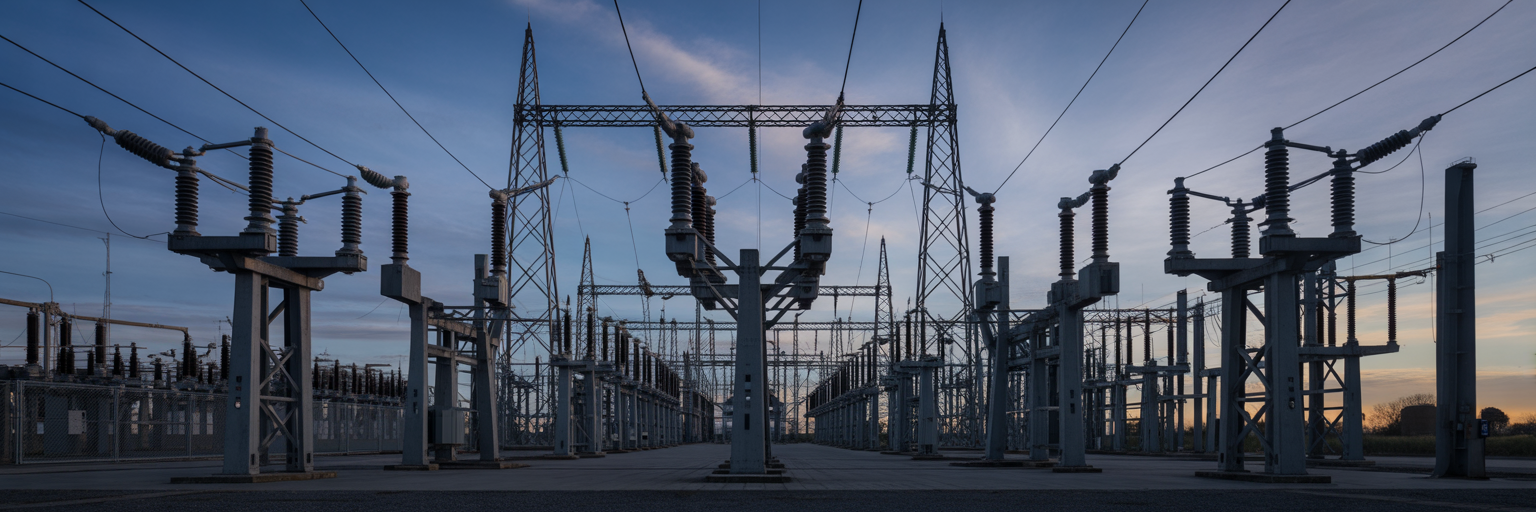
For UK regulatory bodies like Ofgem, an incomplete job record is a compliance failure. There is no room for ambiguity. Lifecycle supervision workflows in Salesforce are designed to ensure every step of a service event is documented automatically, creating a single source of truth for every asset and every action taken.
The process begins by linking every work order directly to a specific asset record in Salesforce. This builds a comprehensive service history for every pump, transformer or pipeline – data that is invaluable for capital planning and predictive maintenance. Workflows then automate status transitions based on field actions. When an engineer updates a job on their mobile device to ‘On Site’, the system automatically logs the arrival time and notifies the back office. This removes manual data entry and the risk of human error.
The journey of a work order is a structured process that ensures a complete and auditable data trail.
| Lifecycle Stage | Key Action | Automated Data Capture | Operational Purpose |
|---|---|---|---|
| Initiation | Asset alert or customer call generates work order | Timestamp, source of alert, asset ID | Creates an auditable starting point |
| Assignment | Workflow assigns engineer based on rules | Assigned engineer, estimated travel time | Ensures optimal resource allocation |
| In-Progress | Engineer updates status on mobile device | On-site arrival time, job status changes | Provides real-time visibility to dispatch |
| Resolution | Engineer completes work and submits report | Fault codes, parts used, resolution notes | Ensures data quality for analysis |
| Audit | System archives the completed work order | Complete job history linked to asset record | Builds long-term asset service history for compliance |
Finally, the workflow must ‘close the loop’. It should enforce the collection of mandatory information – such as fault codes, resolution notes and parts used – before a job can be marked as complete. This guarantees high-quality data for future analysis, reporting and regulatory scrutiny.
Proactive Field Service SLA Enforcement
Effective field service SLA enforcement in utilities is about prediction not reaction. It is too late to act once a breach has already occurred. The goal is to use Salesforce’s analytical capabilities to monitor leading indicators – like travel time estimates against live traffic or repair durations for similar historical jobs – to flag a work order that is at risk. As highlighted in guidance from Salesforce, automation is essential to accelerating field service management for utilities.
A practical, multi-stage escalation workflow can be configured to manage this proactively:
- At 50% of SLA time: An automated notification is sent to the assigned engineer’s mobile device as a reminder.
- At 75% of SLA time: An alert is sent to the dispatcher, flagging the job for review and potential support.
- At 90% of SLA time: The job is automatically escalated to a regional manager’s dashboard for immediate intervention.
Centralised Salesforce dashboards give dispatchers a single, real-time view of SLA performance across all active jobs. This allows for macro-level oversight and intelligent resource balancing to prevent breaches before they happen. It is also critical to remember that not all SLAs are equal. Workflows must be configured to distinguish between a priority-1 emergency response and a routine maintenance visit, applying different rules and escalation paths automatically to reflect the urgency of the task.
The Critical Signal Your Workflow Health Depends On
The single most important metric to monitor for workflow health is ‘Time to Resolution Variance’. This is the difference between the estimated and actual time taken to resolve a job. A consistently high variance is not an isolated issue – it points to a systemic problem in planning, assignment or execution that needs immediate attention. It is the early warning sign that your orchestration model is under stress.
A well-designed system of Salesforce workflows for utilities is a core operational capability not merely a technology project. By building a model based on dynamic assignment, lifecycle supervision and proactive enforcement, utility firms can achieve the operational orchestration needed to ensure resilience, compliance and public trust. For more on building robust operational systems, visit https://www.ortooapps.com. Ask an Expert any question about designing Salesforce workflows for complex field service operations by emailing sales@ortooapps.com.
Related insights
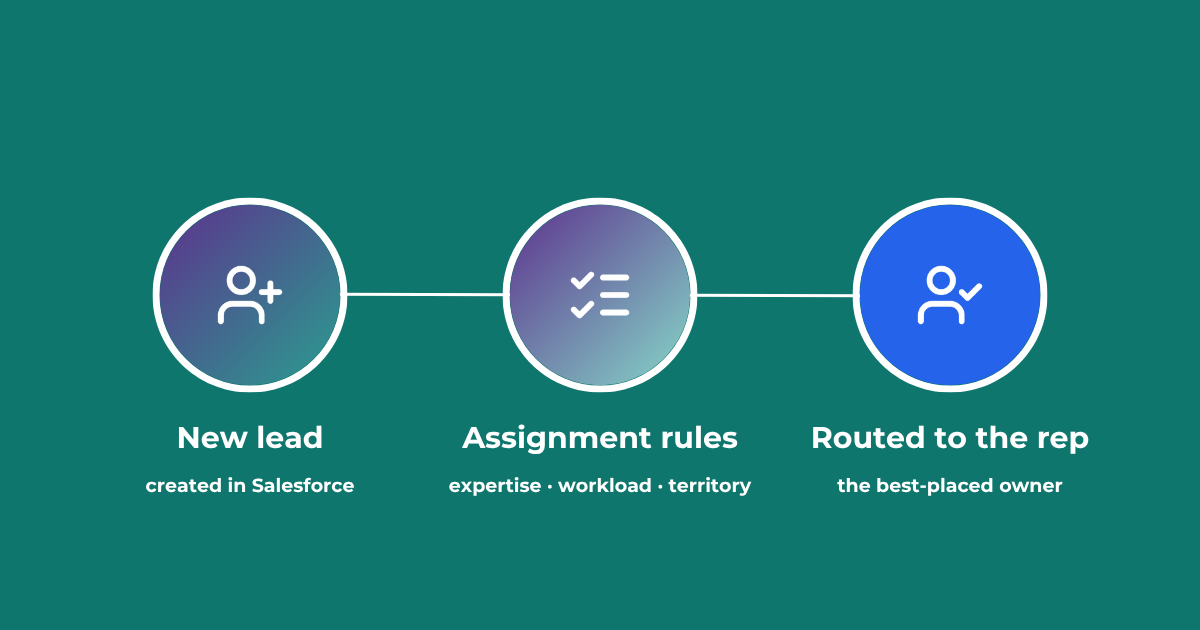
Lead Assignment Rules in Salesforce: Automate with Q-assign
This comprehensive guide to optimizing lead assignment rules in Salesforce will stand you in good stead for maximizing your sales reps’ productivity and performance. Understand the benefits of highly effective lead assignment, explore Salesforce best practices and stay ahead of the competition – with added insights into AI-driven revenue orchestration
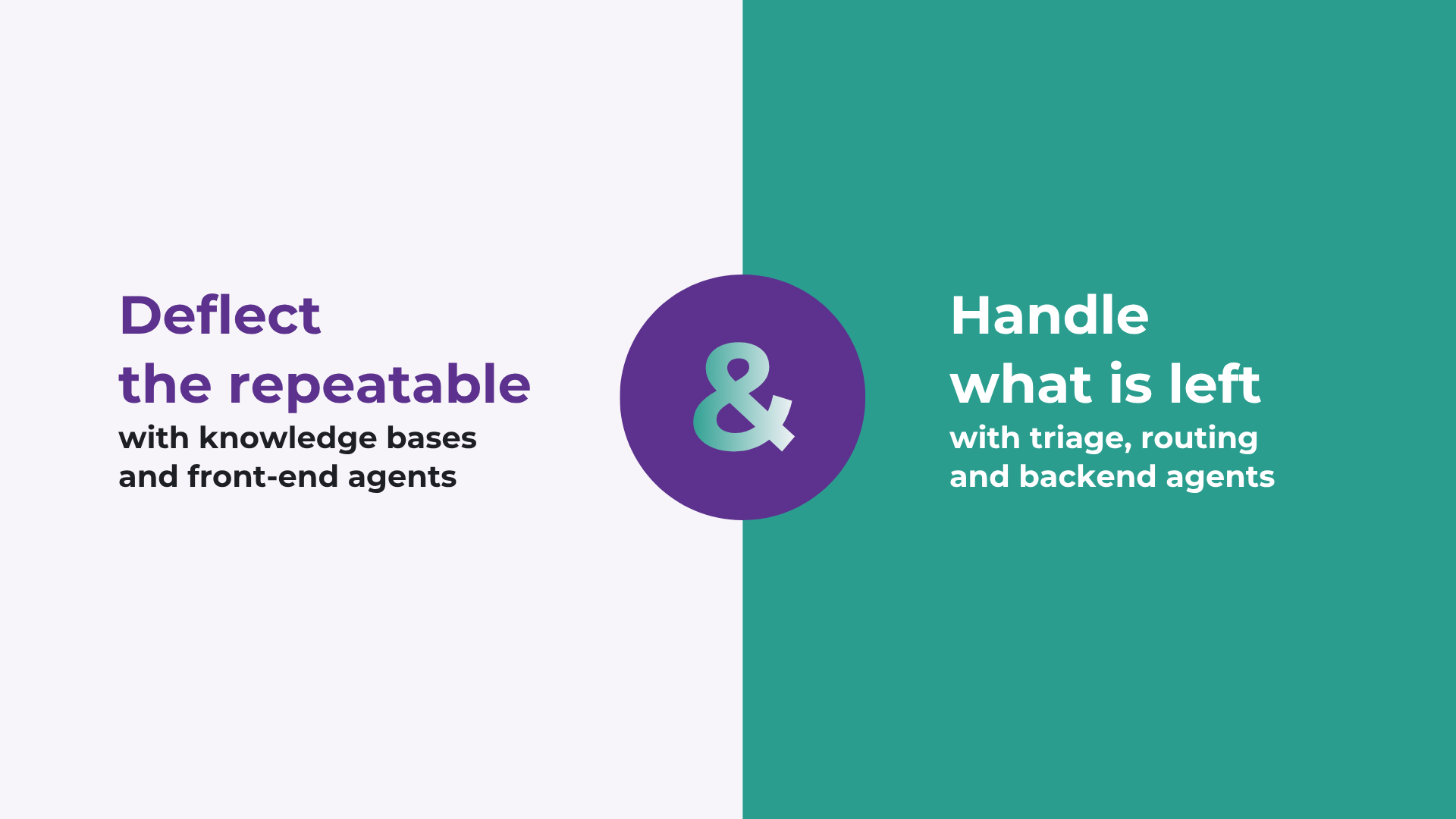
How to improve Salesforce case deflection rates
Deflection only solves half the problem. The cases that do not deflect are the ones that breach SLA. How to improve deflection rates, and how to handle what is left.

Calling Salesforce is easy. Defining what happens next is the hard part.
Salesforce workflows don’t break because of missing automation. They break because no single system defines what should happen. Here’s what actually fixes it.
READY TO SEE IT IN ACTION
Map your workflows with our team.
30 minutes, no prep needed. We will map one workflow you handle today and identify where orchestration would change the outcome.