Designing Reusable Orchestration Patterns in Salesforce

Beyond Single-Use Automation
Most Salesforce automation begins reactively. A team faces an immediate problem – perhaps leads are getting stuck or case assignments are inconsistent – and builds an isolated workflow to fix it. This approach is natural but it is not sustainable. The foundational error is treating each process for leads, cases or claims as entirely unique, which creates significant operational friction as the business grows.
This single-use model leads to a rapid build-up of technical debt. You end up with dozens of similar yet slightly different flows that are difficult to manage and update. This results in inconsistent service delivery, duplicated effort between departments and a high cost for implementing any system-wide changes. A simple update to your SLA policy might require modifying multiple, disconnected automations, increasing the risk of errors.
A more strategic and disciplined method is needed to design scalable and maintainable operations. This is achieved through the use of reusable orchestration patterns, which provide a structured framework for building consistent and adaptable workflows across your entire Salesforce environment.
The Principles of a Pattern-Based Approach

A reusable orchestration pattern is not a specific tool but a standardised, configurable template for a recurring operational process like intake, assignment or approval. Think of it as an industrial blueprint for how a certain type of work should flow through the system, regardless of whether that work is a sales lead, a support case or an insurance claim. This approach to salesforce workflow design is built on a few core principles.
- Modularity: Complex end-to-end workflows are broken down into smaller, independent components. Each component handles a specific task – like validation or enrichment – and can be reused across different processes. This is like building with Lego bricks instead of carving a single block of wood. The entire system becomes more flexible and far easier to manage.
- Standardisation: Patterns enforce consistent logic and data structures for similar tasks, even when they apply to different objects or departments. When assignment logic is standardised, for example, you get predictable outcomes and simplified reporting. This consistency also reduces the burden of user training and governance.
- Abstraction: A well-designed pattern hides the underlying complexity from the end-user or calling process. A user simply submits a record for processing and the pattern handles all the detailed steps, conditional logic and error handling in the background. This creates a clean, predictable interface for complex operations.
A Framework for Designing Reusable Orchestration Patterns
Creating a library of patterns requires a methodical design process. It is less about the specific tools you use and more about how you analyse and structure your operational logic. Following a clear framework ensures that the patterns you build are truly reusable and scalable. Here are the essential steps.
- Identify and Analyse Recurring Processes: Begin by looking for common sequences across the business. Compare how new sales leads are qualified with how new support cases are triaged or how new insurance claims are initiated. The objective is to find the common denominator in these workflows, such as the need for validation, enrichment and initial assignment.
- Define the Core Logic: Isolate the essential, non-negotiable steps that are common to all variations of the process. For an assignment pattern, this core logic might involve checking an agent’s skills, availability and current workload. This logic remains constant whether you are assigning a high-value lead or a critical service ticket.
- Design the Inputs and Outputs: Specify exactly what information the pattern needs to execute and what it should produce as an outcome. An input might be a record ID and a priority level. The output could be an updated record owner, a new task or a status change. This creates a clear ‘contract’ for how the pattern is used by other processes.
- Build for Configuration, Not Customisation: This is a critical distinction. The pattern must be adaptable through configurable parameters – like business hours, SLA thresholds or territory rules – rather than requiring a new Flow for every minor variation. Adhering to these flow orchestration best practices is what allows the pattern to scale across different teams and use cases without creating more technical debt.
Applying Patterns Across Leads, Cases and Work Orders

The true value of this approach becomes clear when a single pattern is applied across different Salesforce objects. Consider a common pattern for ‘Intake and Triage’. The core logic – receive, validate, enrich and assign – is universal, but its application is specific to the context of the object. This is a core concept in effective salesforce process automation.
For sales leads, the pattern could be triggered by a web form submission. It would validate the data, use a third-party service to enrich the record with firmographic details and then route the lead to the correct regional sales queue. For insurance claims, the same pattern structure can receive a First Notice of Loss (FNOL), create the claim record and assign it to an adjuster based on claim type, a common challenge in high-volume insurance operations. For field service, the pattern could process a new work order from a customer portal, confirm contract details and assign it to the appropriate dispatcher.
The underlying mechanics are identical, ensuring consistency and efficiency. Only the specific data points and configuration parameters change.
| Pattern Stage | Application to Leads | Application to Insurance Claims | Application to Work Orders |
|---|---|---|---|
| Intake | Receive new lead from web form | Receive First Notice of Loss (FNOL) via email | Receive service request from customer portal |
| Validation | Check for required fields (email, company) | Verify policy number and coverage status | Confirm customer SLA and contract details |
| Enrichment | Append firmographic data (e.g. industry, size) | Link to related policy and customer records | Associate with site location and asset records |
| Initial Assignment | Route to appropriate regional sales queue | Assign to adjuster queue based on claim type | Assign to territory dispatcher queue |
Governance and Maintenance of Your Pattern Library
Building a library of reusable assets is not a one-time project – it requires ongoing discipline and governance. Tools like Salesforce Flow Orchestration provide a native framework for defining these multi-step, reusable processes, but the responsibility for managing them rests with your team. Patterns are not ‘set and forget’ assets. To ensure their long-term value, you must establish clear best practices.
- Clear Documentation: Every pattern in your library must have clear documentation. This should explain its purpose, its required inputs and expected outputs and all available configuration options. Without this, patterns become black boxes that are difficult to use and maintain.
- Version Control: As business needs change, your patterns will need to be updated. A formal process for testing and deploying new versions without disrupting live operations is essential. This prevents unintended consequences when a single pattern is used by multiple critical processes.
- Ownership: Assign clear ownership for each pattern to a specific team or individual. This designated owner is responsible for the pattern’s maintenance, documentation and lifecycle management, ensuring it remains a reliable asset.
Your pattern library is a strategic asset that underpins your entire operational model. This requires central oversight to prevent fragmentation and ensure new workflows adopt standard enterprise design patterns wherever possible, a principle echoed in Salesforce’s own guidance on enterprise architecture. By enforcing this discipline, you maintain the integrity of your operational model and turn Salesforce into a true system of work. Ask an Expert any question about designing reusable orchestration patterns by emailing sales@ortooapps.com.
Related insights
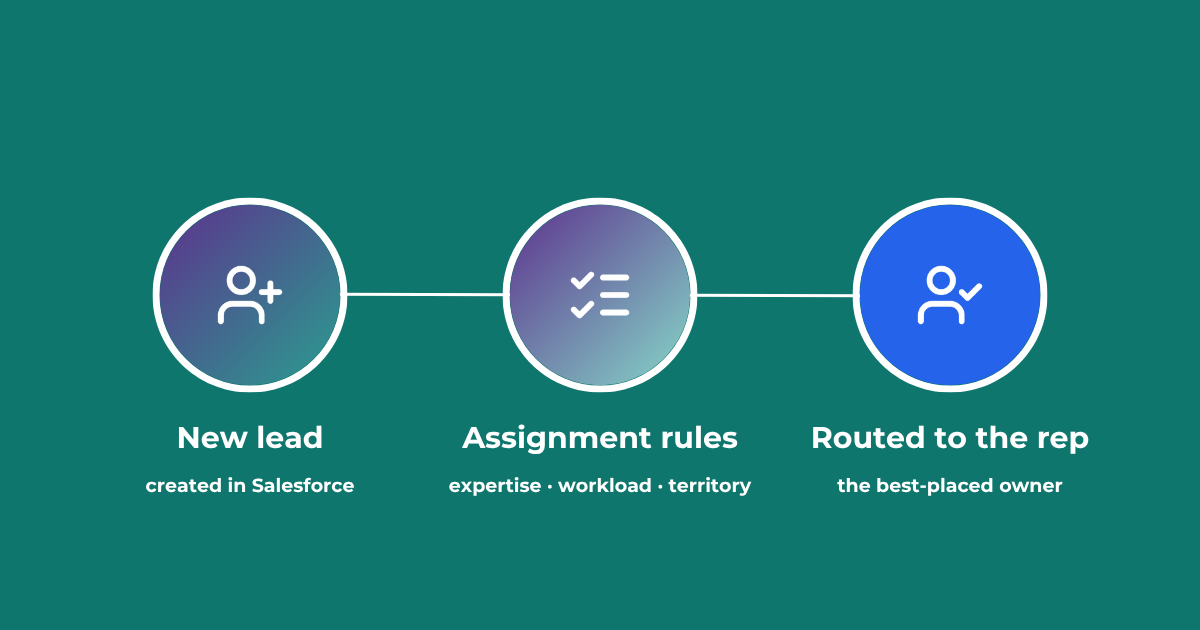
Lead Assignment Rules in Salesforce: Automate with Q-assign
This comprehensive guide to optimizing lead assignment rules in Salesforce will stand you in good stead for maximizing your sales reps’ productivity and performance. Understand the benefits of highly effective lead assignment, explore Salesforce best practices and stay ahead of the competition – with added insights into AI-driven revenue orchestration
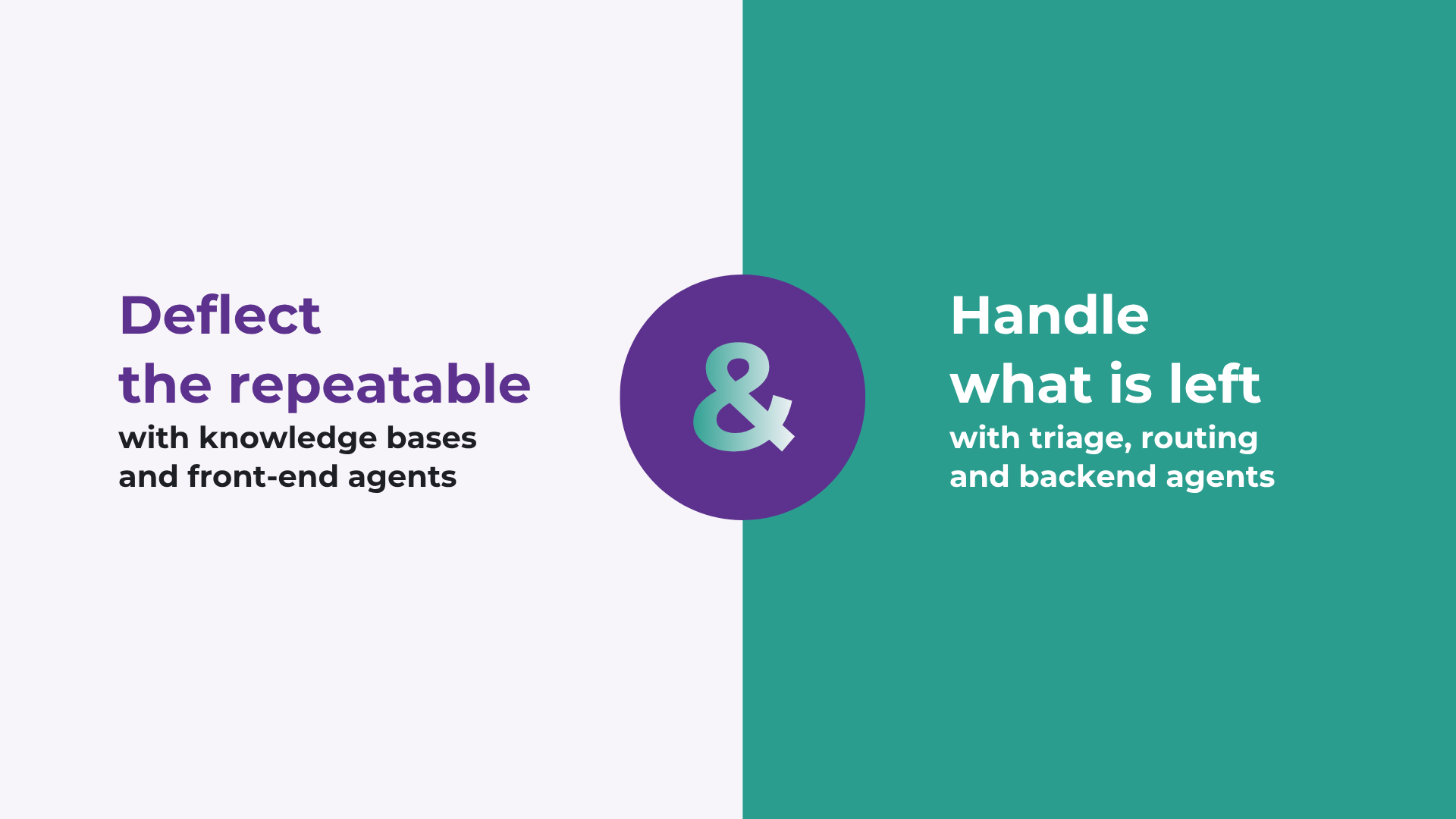
How to improve Salesforce case deflection rates
Deflection only solves half the problem. The cases that do not deflect are the ones that breach SLA. How to improve deflection rates, and how to handle what is left.

Calling Salesforce is easy. Defining what happens next is the hard part.
Salesforce workflows don’t break because of missing automation. They break because no single system defines what should happen. Here’s what actually fixes it.
READY TO SEE IT IN ACTION
Map your workflows with our team.
30 minutes, no prep needed. We will map one workflow you handle today and identify where orchestration would change the outcome.