Building Resilient Lead Routing Models in Salesforce

In transaction-heavy UK industries like insurance or telecommunications, the speed of response is directly tied to revenue. A lead that waits is often a lead lost to a competitor. This reality exposes a critical vulnerability in many Salesforce instances: lead routing models that were never designed for the pressure of high-volume operations.
Why Standard Lead Routing Fails at Scale
Many Salesforce teams begin with a straightforward set of assignment rules. This sequential, if-then logic works perfectly well when lead volume is low and the rules are simple. But as the business scales, this approach creates a fragile chain where a single broken link can halt the entire process. A user being out of office, a rule that fails to execute or an unexpected data format can create an immediate bottleneck, leaving valuable leads sitting untouched.
The pressures in these industries are unique and complex. Consider routing insurance leads based on intricate product lines, postcode territories and regulatory requirements. Or think of telecoms leads that must be segmented by customer history, service eligibility and contract type. Standard models struggle to handle these exceptions, forcing teams into slow and error-prone manual intervention. We have all seen the consequences: a high-value lead is manually reassigned hours later, only to find the prospect has already signed with a faster rival.
This is not just an operational inconvenience. An inadequate system for high-volume lead management presents a direct commercial risk. It actively undermines conversion rates and threatens revenue. When your routing model cannot keep pace with your business, it becomes a liability that grows with every new lead that enters the system.
Core Principles of a Resilient Routing Architecture

Moving beyond fragile rule chains requires a shift in thinking. Building resilient lead routing models is less about writing more rules and more about adopting an architecture designed for fault tolerance and adaptability. The goal is a system that anticipates failure and adapts gracefully.
The first principle is decentralised logic. Instead of a single, monolithic process, a resilient model is built from smaller, independent components. If a postcode lookup service fails, for example, it should not prevent leads from other regions being assigned. As noted in Salesforce’s own guidance on Enterprise Agentic Architecture, a design where the failure of one component does not compromise the entire system is fundamental to resilience. This modularity isolates failures and keeps the majority of leads flowing without interruption.
Next is dynamic adaptation. A resilient model avoids hardcoded user assignments which quickly become outdated. It should be designed to query agent availability, skills and current workload in real time, often using Salesforce Omni-Channel. This ensures leads are always routed to the best-qualified person available at that moment, not just the next person in a static list.
Intelligent prioritisation is another core element. A simple ‘first-in, first-out’ queue is inefficient during peak times. A resilient system can use AI-driven scoring to identify high-intent leads and ensure the most valuable opportunities are actioned first. Finally, every rule must have a built-in fallback. This ‘what if’ path, which could route a lead to a general queue or escalate it to a manager, guarantees that no lead ever gets stuck in the system.
| Characteristic | Standard Sequential Routing | Resilient Decentralised Routing |
|---|---|---|
| Architecture | Monolithic, single process flow | Modular, independent components |
| Fault Tolerance | Low – single point of failure halts all | High – component failure is isolated |
| Adaptability | Rigid – requires manual updates for changes | Dynamic – adapts to agent availability and workload |
| Exception Handling | Manual workarounds or process failure | Automated fallbacks and escalation paths |
| Scalability | Brittle under high volume | Designed to handle peaks and growth |
A Pattern for Designing Your Salesforce Routing Model
With those principles in mind, designing a resilient system in Salesforce follows a clear pattern. This approach moves from business strategy to technical implementation, ensuring the final model is both robust and aligned with organisational goals.
-
Define Business-Aligned Routing Criteria
The first step is not technical. It involves mapping your business strategy to routing logic. Go beyond simple territory assignments. Consider criteria like product specialisation for insurance agents, customer tier for account managers or required certifications for handling leads in regulated financial services. This ensures your routing model actively supports your business strategy, rather than just distributing work. -
Structure Automation with Salesforce Flow
Use Flow as the core engine for your routing logic. We recommend a modular pattern. A primary flow acts as a controller, invoking separate sub-flows for discrete tasks like lead scoring, data enrichment and the final assignment. This component-based structure makes the system far easier to maintain. You can update a specific part, like the scoring logic, without disrupting the entire process. -
Integrate Omni-Channel for Dynamic Assignment
This is where the model becomes truly dynamic. Flow and Omni-Channel should work in tandem. Flow answers the questions ‘what is this lead?’ and ‘who is qualified to handle it?’. Omni-Channel then answers the crucial next question: ‘of those qualified, who is available right now?’. This powerful combination is the key to an effective Salesforce lead assignment system that adapts to your team’s real-time capacity. You can learn more about the nuances of effective Salesforce lead assignment we have shared previously. -
Plan for Exception Handling
Build error-handling paths directly into your Flow. A lead should never get stuck because of a technicality. For instance, if a lead has incomplete data that prevents a match, the Flow should not fail. Instead, it should trigger an automated action. This could be creating a task for a data quality team or routing the lead to a dedicated review queue. This ensures 100% of leads are actioned, even when they are not perfect.
Monitoring Performance and Identifying System Strain

A resilient system is not a ‘set and forget’ project. It requires continuous monitoring to ensure it performs under pressure and adapts to changing business conditions. The key is to focus on the vital few metrics that act as a clear signal of system health.
Instead of tracking dozens of data points, concentrate on three critical performance indicators. First is ‘Time to Assign’, which measures how long a lead waits for an owner. Second is ‘Lead Acceptance Rate’, which tells you if agents are frequently rejecting the assignments they receive. A low rate can indicate a mismatch in skills or workload. Third is the ‘Volume of Fallback-Routed Leads’. This metric shows how often your exception paths are being used. A sudden spike in any of these KPIs is a clear warning that a part of your model is under strain or misaligned.
To make this data useful, build a dedicated dashboard in Salesforce to track these metrics in real time. This gives operations managers immediate visibility into system health. It allows them to identify bottlenecks before they begin to impact revenue. As highlighted in guides on the topic, a key part of any robust lead routing strategy is the ability to monitor performance and make data-driven adjustments. This visibility is non-negotiable for maintaining a healthy system.
Finally, a resilient model must evolve. We recommend a formal process, such as a quarterly review of routing rules, performance data and alignment with current business priorities. This disciplined approach ensures the system remains a valuable asset over the long term, rather than slowly degrading into another legacy process.
Maintaining Resilience as Your Business Grows
Building resilient lead routing models in Salesforce is ultimately about adopting an architectural mindset. It is a commitment to planning for failure, designing for adaptability and maintaining constant vigilance over performance. This approach is a fundamental shift away from rigid, sequential rules that break under pressure.
A robust system protects revenue and enhances operational efficiency, which is particularly critical in high-volume industries. By moving to a dynamic, fault-tolerant model, teams transform their lead management process from a potential liability into a durable business asset. This pattern ensures that as your business grows, your operational capacity grows with it. For a deeper discussion on how this fits into broader operational excellence, you can explore more on orchestration patterns.
Ask an Expert any question about designing resilient lead routing models by emailing sales@ortooapps.com.
Related insights
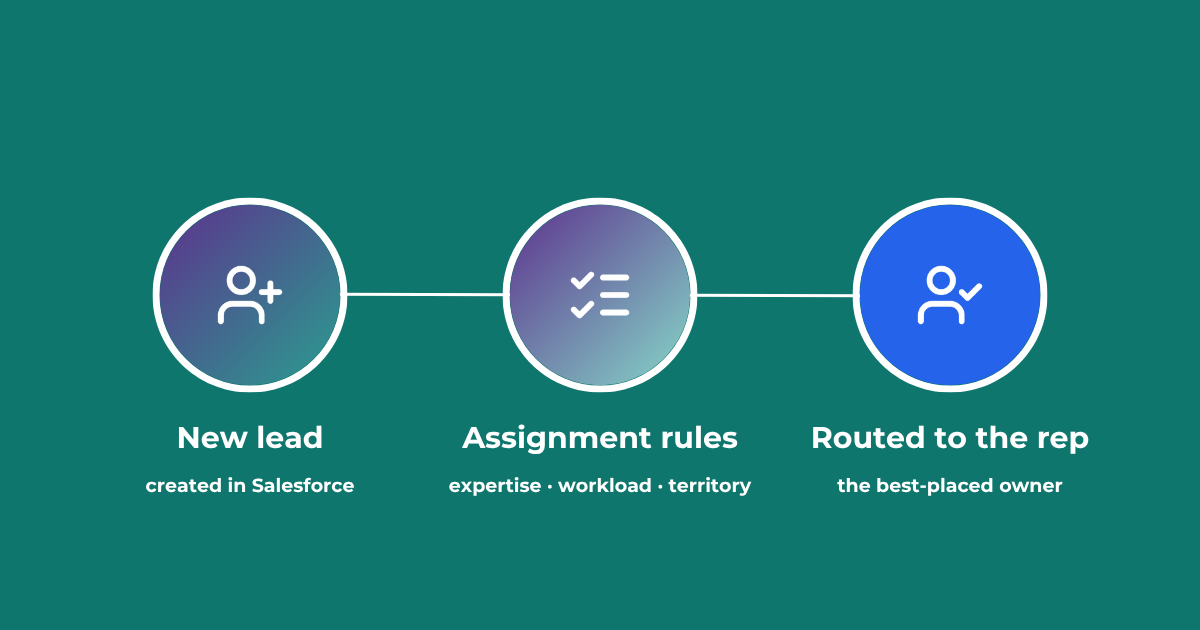
Lead Assignment Rules in Salesforce: Automate with Q-assign
This comprehensive guide to optimizing lead assignment rules in Salesforce will stand you in good stead for maximizing your sales reps’ productivity and performance. Understand the benefits of highly effective lead assignment, explore Salesforce best practices and stay ahead of the competition – with added insights into AI-driven revenue orchestration

Lead to Account Matching: Seamlessly Connect Leads to Accounts in Salesforce
Lead to account matching connects every inbound lead to the right account in Salesforce. Here is how it works, where it breaks, and how to automate it without manual data entry.
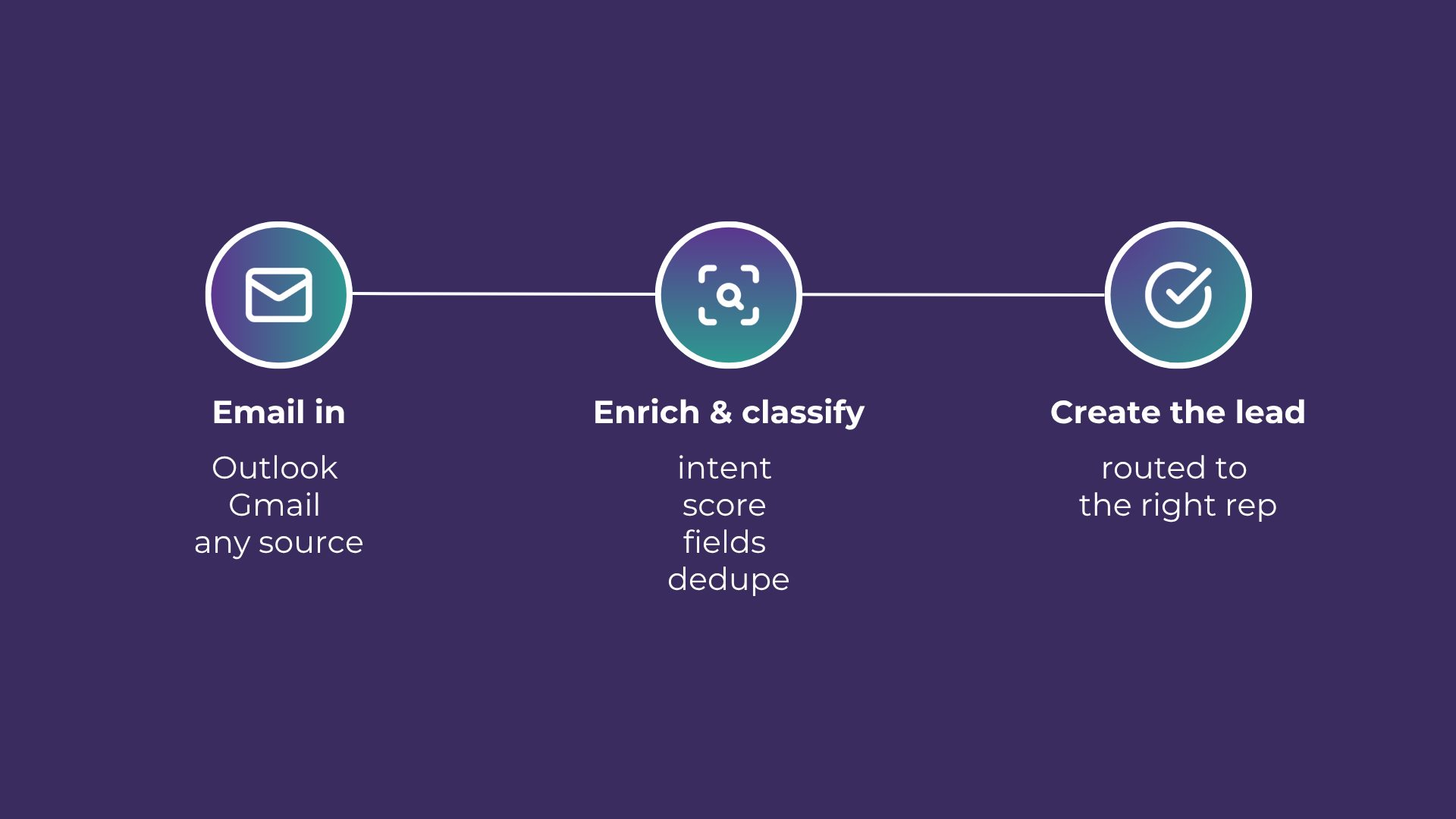
Email-to-Lead: Salesforce Lead Management with AI
Lead management is the lifeblood of any successful sales operation. At a time where customer expectations are higher than ever, ensuring that potential leads are captured and nurtured effectively can make all the difference. Introducing Email-to-Lead – AI Edition.
READY TO SEE IT IN ACTION
Map your workflows with our team.
30 minutes, no prep needed. We will map one workflow you handle today and identify where orchestration would change the outcome.