Building a High Velocity Lead Engine in Salesforce

For years, speed-to-lead has been the dominant benchmark for sales operations. Teams build entire dashboards around it, chasing faster response times. Yet many who hit their targets still watch qualified leads and revenue slip away. This points to a fundamental problem not with the team’s effort, but with the metric itself.
The Illusion of Speed-to-Lead Dashboards
Most speed-to-lead dashboards are retrospective. They report on what has already happened, offering a summary of past performance. This is like trying to steer a car by looking only in the rear-view mirror. While the data shows where you have been, it offers little guidance on how to navigate the road ahead in real time. The goal is to improve speed to lead, but dashboards often measure the outcome without fixing the cause of delays.
The core issue is that speed alone is not enough. As analysis from NC-Squared highlights, speed without accuracy simply leads to failure faster. An aggregated average on a dashboard can create a dangerous false sense of security. It might show a five-minute average response time, but this figure can easily mask critical underlying issues. High-value leads from key accounts might be left waiting for an hour while low-priority inquiries are actioned instantly, skewing the average. This single metric fails to capture the nuance of a high-performing sales process, rewarding activity over intelligent action.
The True Cost of Latency and Mis-routing

The operational flaws masked by simplistic dashboards carry a significant business cost. Research cited by LeadOps.io points to a concept known as the ‘golden hour’. Data originally published in Harvard Business Review shows that qualification odds can drop dramatically after the first 60 minutes a lead is left untouched. Every minute of delay directly erodes potential revenue.
This problem is compounded by mis-routing. When a lead is assigned based on a static rule – like round-robin or territory – to a representative who is unavailable, it enters an operational black hole. The lead sits idle, its value decaying, until someone notices and manually re-assigns it. This friction completely negates any initial speed advantage. The time spent correcting the error is time that could have been spent engaging the prospect.
At scale, this becomes unsustainable. During a major marketing campaign or a period of high inbound volume, simple automation and manual workarounds inevitably fail. The system cannot cope with the complexity of matching the right lead to the right person at the right time. This is not a reporting failure. It is a fundamental flaw in the design of the lead management system itself, where a lack of intelligent orchestration creates costly bottlenecks.
A Systemic Pattern for Dynamic Orchestration
A true high velocity lead engine is not built on dashboards but on a systemic pattern of intelligent work orchestration. It moves beyond static rules to a model that adapts to changing conditions in real time. This approach is built on a few core principles that work together as a cohesive system, using sophisticated lead orchestration models to direct work.
Dynamic Lead Routing at the Point of Intake
This is far more than basic assignment. True dynamic lead routing evaluates multiple factors the moment a lead enters Salesforce. It considers the lead’s score and source, but also the real-time availability, current workload, and specific skills of each sales representative. Instead of blindly assigning a lead to the next person in a queue, the system makes an intelligent decision to find the best possible match for immediate and effective engagement. For those looking to understand the mechanics further, we have shared deeper insights on lead assignment within Salesforce.
Continuous Prioritisation Based on Behaviour
A lead’s priority is not static. A prospect who downloads a whitepaper is interesting, but one who subsequently visits the pricing page and views a case study is demonstrating clear intent. A dynamic system continuously re-prioritises leads based on these behavioural signals. This ensures that sales capacity is always focused on the leads that are most likely to convert, rather than just the oldest ones in the queue.
Unified Intake for All Inbound Channels
Leads come from everywhere – web forms, chatbot conversations, event lists and partner portals. A resilient system consolidates these sources into a single, orchestrated intake flow. This eliminates the data silos and process inconsistencies that create confusion and delays. Every lead, regardless of its origin, is subjected to the same intelligent routing and prioritisation logic, ensuring a consistent and efficient process across the board.
| Factor | Static Routing (Dashboard-Driven) | Dynamic Orchestration (Engine-Driven) |
|---|---|---|
| Decision Logic | Fixed rules (e.g., round-robin, territory) | Multi-factor logic (e.g., availability, workload, skills, score) |
| Timing | Batch processing or simple triggers | Real-time at the moment of intake |
| Adaptability | Requires manual updates or code changes | Can be adjusted on the fly by operations teams |
| Prioritisation | One-time scoring, if any | Continuous re-prioritisation based on new data |
| Blind Spots | Rep availability, current workload, outliers | Designed to eliminate capacity and workload blind spots |
Signals of a Truly Healthy Lead Engine

With an orchestrated system in place, the metrics for success must also evolve. Instead of focusing on raw speed, a healthy engine is measured by the quality and efficiency of its outcomes. This requires a new set of signals for effective Salesforce lead management.
Consider tracking these indicators instead:
- Time-to-Meaningful-Engagement: For top-tier leads, measure the time it takes to have a productive two-way conversation, not just send an automated first email. This metric focuses on quality interaction over automated activity.
- Routing Accuracy: Track the percentage of leads that are actioned by the first assignee without needing manual re-assignment. A high accuracy rate – above 95% – indicates the routing logic is working effectively.
- Workload Distribution: Monitor how work is balanced across the team. A healthy engine prevents individual burnout and systemic bottlenecks by distributing leads equitably based on real-time capacity.
Even the most sophisticated automation has its limits. Experienced operators know that exceptions and nuance are part of any real-world process. Therefore, a critical component of a healthy system is human-in-the-loop governance. This allows managers to handle outliers, adjust priorities and apply judgment where an algorithm cannot, providing a balanced and credible operational model.
Evolving Salesforce into a System of Work
Relying on speed-to-lead dashboards is no longer sufficient for ambitious revenue teams. True performance comes from an orchestrated system that combines dynamic routing with intelligent, continuous prioritisation. This represents a critical shift in thinking – from using Salesforce as a passive system of record to an active system of work that directs and optimises action in real time.
Building scalable workflows is a core discipline for modern operations teams. You can explore more resources and concepts for designing these systems at ortooapps.com. Ask an Expert any question you have about building a high velocity lead engine by emailing sales@ortooapps.com.
Related insights
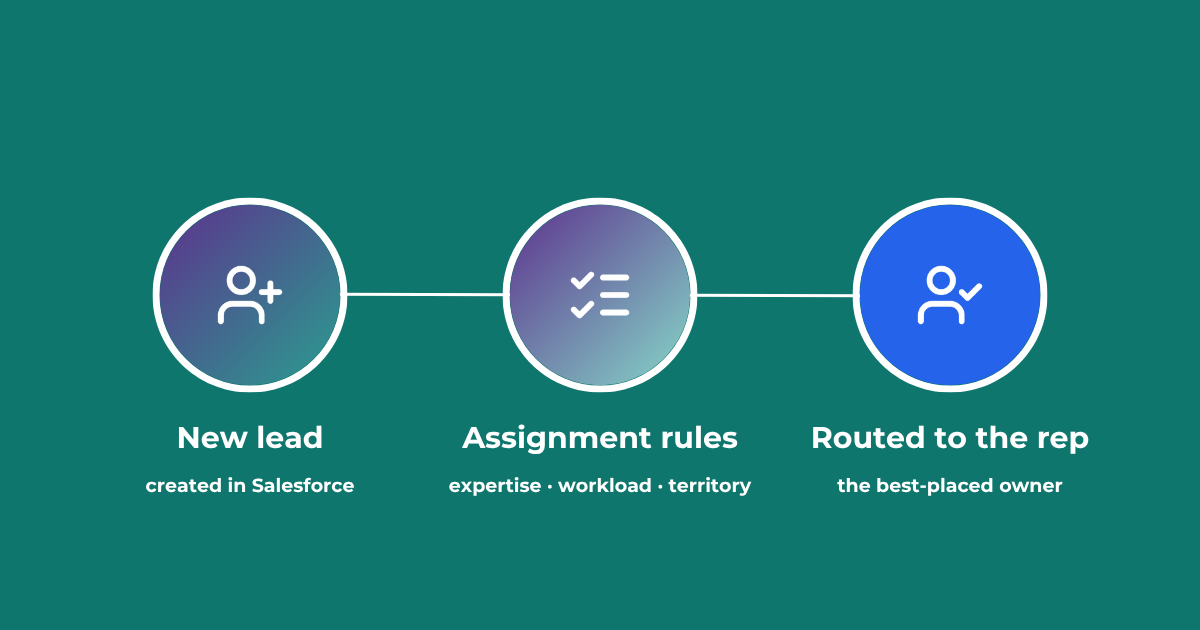
Lead Assignment Rules in Salesforce: Automate with Q-assign
This comprehensive guide to optimizing lead assignment rules in Salesforce will stand you in good stead for maximizing your sales reps’ productivity and performance. Understand the benefits of highly effective lead assignment, explore Salesforce best practices and stay ahead of the competition – with added insights into AI-driven revenue orchestration
Lead to Account Matching: Seamlessly Connect Leads to Accounts in Salesforce
Lead to account matching connects every inbound lead to the right account in Salesforce. Here is how it works, where it breaks, and how to automate it without manual data entry.
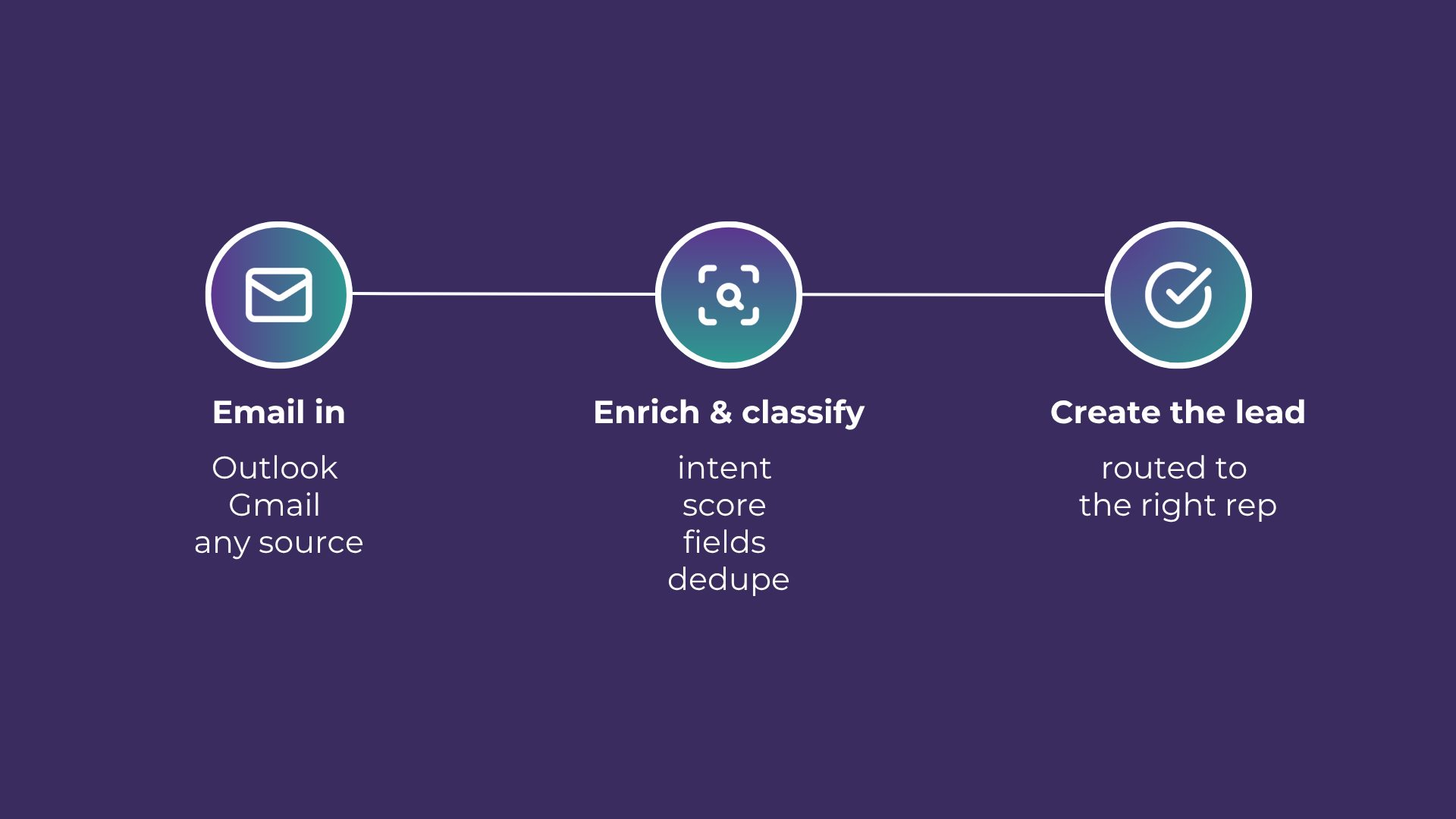
Email-to-Lead: Salesforce Lead Management with AI
Lead management is the lifeblood of any successful sales operation. At a time where customer expectations are higher than ever, ensuring that potential leads are captured and nurtured effectively can make all the difference. Introducing Email-to-Lead – AI Edition.
READY TO SEE IT IN ACTION
Map your workflows with our team.
30 minutes, no prep needed. We will map one workflow you handle today and identify where orchestration would change the outcome.