A Practical Pattern for Resilient Salesforce Workflows in Healthcare

Many healthcare organisations invest in Salesforce with the expectation of streamlining operations only to find their standard automation fails under pressure. This isn’t a fault in the tools themselves. It is a misapplication. Basic automation is designed for simple, linear tasks not the complex, multi-stage reality of modern patient case management.
The Point Where Standard Automation Breaks
Brittleness emerges with high-volume case handling. In a UK healthcare context, this is most visible when managing patient pathways or referral-to-treatment timelines. A standard process flow is rigid. When it encounters an exception – a common occurrence with patient data – it often stops cold. The system lacks the state awareness to pause, escalate or recover. This creates process gaps that force teams into time-consuming manual clean-up.
We have all seen the result. A patient referral sits in a digital limbo because a single data field was incorrect. A care plan fails to progress because a required approval was not routed correctly. These small failures accumulate into significant operational drag and risk.
This is where we must draw a sharp distinction between automation and orchestration. Automation executes a single task like creating a patient record or sending a notification. Orchestration manages the entire end-to-end journey – from initial referral to discharge – coordinating multiple steps, systems and people. This reframes the problem. The question is not ‘how do we automate more tasks’ but ‘how do we manage a complete process’.
The Operational Cost of Brittle Workflows

The consequences of failing automation extend far beyond administrative inconvenience. A broken workflow can mean a delayed diagnostic test, a missed specialist appointment or a failure to meet critical care deadlines. These are not just process failures. They are risks to patient safety and outcomes. In the UK, they also represent significant compliance risks, undermining the ability to meet regulatory standards set by bodies like the Care Quality Commission.
The effect on staff is just as severe. When systems are unreliable, administrative and clinical teams are forced into constant manual intervention and error correction. This hidden workload increases administrative overhead and contributes directly to staff burnout – a critical issue within the NHS and private healthcare. The workflow becomes a source of frustration rather than a tool for support. Think of the clinical coordinator who spends an hour each morning chasing the status of cases that should be progressing automatically.
Finally, brittle automation destroys process integrity. With basic flows, there is often no clear audit trail when something goes wrong. It becomes difficult to determine a case’s status, identify the point of failure or guarantee that all required steps were completed. This lack of visibility makes it impossible to manage high-volume case handling effectively and undermines the principles of effective operations management we advocate for.
Designing a Resilient Orchestration Pattern
The solution is to move from linear, task-based automation to a state-based design. This is the foundation of resilient Salesforce workflows. The goal is to build a system that understands the entire process state, not just the next immediate task. It knows if a case is in ‘Triage’, ‘Awaiting Results’ or ‘Ready for Discharge’ and what must happen for it to transition to the next stage.
This pattern can be broken down into three clear steps:
- Map the end-to-end process. This must go beyond a simple flowchart. It means documenting every human touchpoint, system interaction and data requirement from patient intake to resolution. Who needs to review the referral? What system holds the patient’s clinical history? What information is needed before a case can be closed? This detailed blueprint is essential for building a robust orchestration.
- Define explicit stages and transitions. The next step is to segment the mapped process into logical stages using Salesforce Flow Orchestration. A clinical example might include ‘Patient Triage’, ‘Consultant Review’ and ‘Treatment Scheduling’. Each stage must have clear entry and exit criteria. This prevents a case from progressing prematurely – for instance, a case cannot move to ‘Consultant Review’ until all initial diagnostic results are attached to the record.
- Isolate tasks into discrete, manageable steps. Each stage is built from smaller, independent steps. These can be automated background actions like data validation or interactive assignments for staff. This modularity is key. It allows for easier testing, maintenance and modification without risking the integrity of the entire workflow. For those new to the concept, Salesforce Trailhead offers guidance on how to build a simple orchestration to get started.
Managing Handoffs and Background Processing

A resilient workflow design requires careful thought about how work is structured. A critical first step is to separate background and interactive steps. Use background steps for automated tasks that do not require user input – like validating a patient’s NHS number or updating a record field. This keeps the system responsive and prevents the user interface from freezing while the system processes data. It ensures a smooth experience for the user who is actively managing the case.
The next focus is orchestrating the ‘human-in-the-loop’. Interactive steps in Salesforce Flow Orchestration are designed for this. They assign tasks requiring human judgment – such as a clinical review of diagnostic images or a patient follow-up call – to specific users or teams. These steps come with built-in tracking and deadlines, ensuring accountability and timely completion. This is how you move from a passive system that simply holds data to an active one that drives work forward.
Finally, a resilient workflow must anticipate failure. You must design alternative paths for when things go wrong. For example, if a data validation step fails or a case is flagged as urgent, the process should not simply halt. Instead, it should automatically route to an exceptions queue or escalate to a manager for immediate resolution. This built-in fault tolerance is a core principle of effective Salesforce healthcare automation.
Monitoring Workflow Health and Performance
A resilient system is one that can be monitored. The goal is to track the health of the entire process, not just the success or failure of individual tasks. This provides the visibility needed to manage operations at scale and identify systemic issues before they impact patient care.
Key performance indicators for healthcare operations include:
- Average time per stage – for example, the time from referral to triage
- Frequency of escalations or error path usage
- User task completion rates and bottlenecks
- Overall case throughput time from intake to resolution
Salesforce dashboards and automated alerts can track these metrics in near real-time. This allows operations teams to spot a recurring bottleneck in the clinical review stage or a high error rate from a specific referral source. As noted in industry discussions on agent orchestration dashboards, like this analysis from CallSphere, real-time visualisation is key to managing complex workflows. This monitoring becomes a powerful tool for continuous improvement, allowing organisations to refine processes based on actual performance data.
From Fragile Automation to Robust Operations
The journey from brittle, task-based automation to robust, state-aware orchestration is a necessary evolution for any healthcare organisation managing high-volume case handling in Salesforce. This shift is fundamental to maintaining operational integrity, ensuring compliance and delivering safe, effective patient care.
We encourage you to assess your current Salesforce healthcare automation strategy against the orchestration patterns discussed here. Building systems that are resilient to the scale and complexity of healthcare is not just an efficiency gain – it is an operational imperative. For more information on building robust operational frameworks, explore the insights we have shared.
Ask an Expert any question about building resilient Salesforce workflows by emailing sales@ortooapps.com.
Related insights
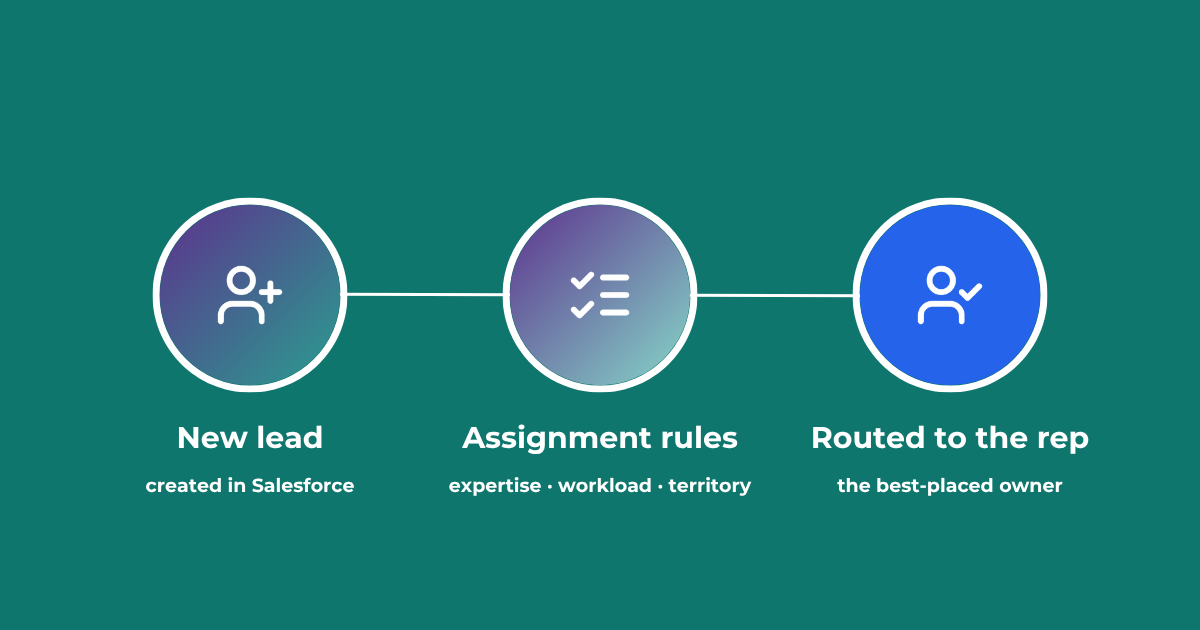
Lead Assignment Rules in Salesforce: Automate with Q-assign
This comprehensive guide to optimizing lead assignment rules in Salesforce will stand you in good stead for maximizing your sales reps’ productivity and performance. Understand the benefits of highly effective lead assignment, explore Salesforce best practices and stay ahead of the competition – with added insights into AI-driven revenue orchestration

Lead to Account Matching: Seamlessly Connect Leads to Accounts in Salesforce
Lead to account matching connects every inbound lead to the right account in Salesforce. Here is how it works, where it breaks, and how to automate it without manual data entry.
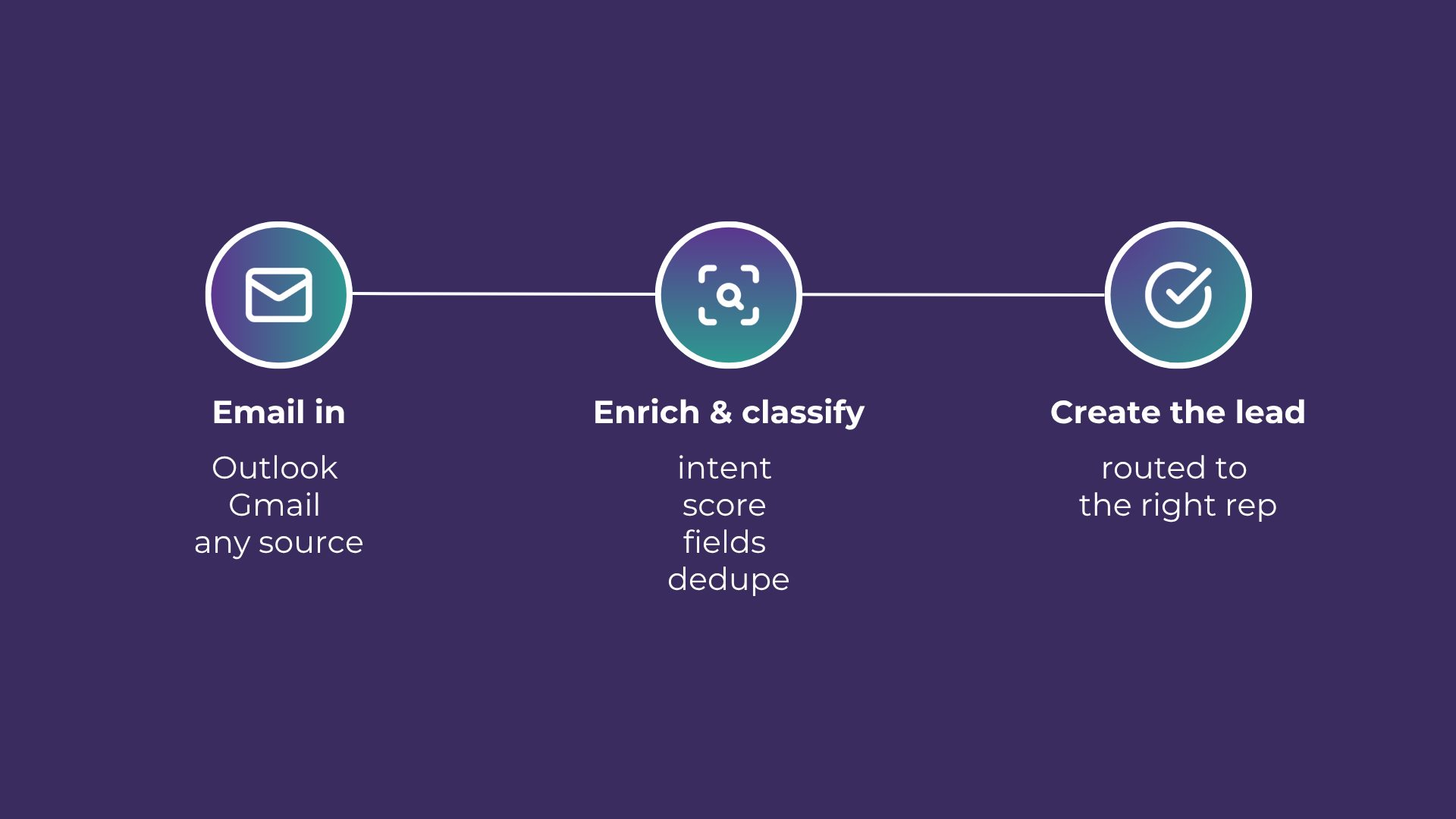
Email-to-Lead: Salesforce Lead Management with AI
Lead management is the lifeblood of any successful sales operation. At a time where customer expectations are higher than ever, ensuring that potential leads are captured and nurtured effectively can make all the difference. Introducing Email-to-Lead – AI Edition.
READY TO SEE IT IN ACTION
Map your workflows with our team.
30 minutes, no prep needed. We will map one workflow you handle today and identify where orchestration would change the outcome.