A Practical Model for Salesforce Workflows in Healthcare

Many healthcare organisations misjudge patient case management by applying principles from generic customer service. This approach prioritises metrics like speed and volume which are poorly suited to the clinical and regulatory realities of healthcare. A patient inquiry is not a simple support ticket. It is a complex event carrying sensitive health information varying levels of clinical urgency and strict governance under regulations like GDPR.
A standard workflow that fails to distinguish between a routine appointment query and a critical care escalation creates significant operational and patient safety risks. The objective of effective Salesforce workflows for healthcare is not to close cases faster. It is to orchestrate a precise context-aware and compliant journey for every patient interaction from its point of origin. This requires a fundamental shift in thinking – away from ticket resolution and towards lifecycle supervision.
The Common Misjudgement in Healthcare Case Management
The core misjudgement in healthcare case management is treating patient inquiries like standard customer service tickets. This model values speed and volume above all else – metrics that are dangerously misaligned with clinical needs. A patient case is not a transactional request. It contains protected health information involves complex clinical variables and is governed by strict data protection laws. Applying a one-size-fits-all workflow creates immediate risk.
When a system cannot differentiate between a billing question and a report of adverse symptoms the entire process is compromised. This flawed approach to complex case handling means urgent issues can be delayed while non-critical ones are escalated unnecessarily. The consequences are not just inefficient operations. They include potential patient harm regulatory breaches and a loss of trust in the provider. The goal should never be to simply close a case quickly. It must be to manage its entire lifecycle with precision safety and full auditability.
The Scalability Risk of Manual Triage

A direct consequence of a flawed case model is an over-reliance on manual triage. As patient inquiry volumes grow this creates an immediate operational bottleneck. Teams spend their time sorting and redirecting cases instead of resolving them slowing the entire care pathway. You can picture the scene – a small team facing a queue of unread emails each one a potential clinical risk or a simple administrative task with no way to tell the difference without opening it.
This manual processing of sensitive patient data under pressure also magnifies the risk of human error. An accidental misclassification can send a critical case to the wrong department delaying care and creating a serious clinical governance failure. Each manual step is a potential point of failure for data integrity and compliance with UK data protection laws. These operational frictions translate directly into a poor patient experience. Delays in routing an inquiry to the correct clinical or administrative team cause patient anxiety and can negatively affect care outcomes. This is how trust is eroded – not through a single major event but through a pattern of small systemic inefficiencies.
A Stateful Model for Case Orchestration
A more robust approach to healthcare operations automation involves a stateful model that manages a case through distinct auditable stages. This pattern moves beyond reactive ticket-handling to provide supervised lifecycle management for every patient inquiry.
Intelligent Intake and Classification
The process begins by moving beyond basic email-to-case functionality. Automation should parse all inbound communications – whether from a patient portal email or web form – for keywords patient identifiers and urgency indicators. This initial classification provides the essential context needed for all subsequent steps creating a structured foundation for the case.
Dynamic Triage and Routing
This initial classification then drives the workflow. A case containing specific clinical terms is automatically escalated to a specialist team while a billing query follows a separate administrative path. This ensures the right expertise is engaged from the very beginning. Structuring this logic is central to building effective and scalable case assignment strategies that reduce manual intervention and accelerate response times.
Supervised Lifecycle Management
A case should progress through clear auditable stages from intake to closure. Salesforce Flow can automate the transitions between these stages and trigger notifications to prevent cases from stalling. This creates a visible and predictable journey for every inquiry. As guidance from Salesforce on setting up workflow paths for medical inquiries suggests, this structured approach is fundamental to managing complex interactions in a regulated environment. It is a core component of building effective healthcare compliance workflows within Salesforce Health Cloud UK.
Integrated Compliance Guardrails
Finally regulatory checks should be embedded directly into the workflow. Automation can flag cases that require specific consent forms have breached a service level agreement or contain data that requires special handling. This transforms compliance from a manual checklist into an integrated automated function that protects both the patient and the organisation.
| Case Stage | Purpose | Key Automation Example | Compliance Checkpoint |
|---|---|---|---|
| Intake | Capture and classify all inbound inquiries | Parse email body for clinical keywords | Verify patient identifier against records |
| Triage | Assign case to the correct team or specialist | Route cases with ‘urgent’ flag to clinical queue | Log assignment for audit trail |
| Assessment | Specialist reviews case details and determines next steps | Create sub-tasks for required actions | Check for required consent forms |
| Resolution | Action is completed and communicated to the patient | Send automated status update email | Confirm data handling meets GDPR standards |
| Closure | Case is formally closed and archived | Set a follow-up task for 30 days | Finalise audit log for the case lifecycle |
Note: This table provides a simplified model. Actual stages and automations should be tailored to the specific clinical and administrative needs of the healthcare provider.
The One Metric That Signals Workflow Health

To assess the health of a healthcare case workflow leaders should focus on one metric above all others – Time-to-Triage. This measures the time from case creation to its correct classification and assignment to the first appropriate responder. It is the single most important indicator of front-end process efficiency and safety.
Many organisations mistakenly focus on Time-to-Resolution. But a fast resolution for the wrong issue is a failure not a success. A low Time-to-Triage proves that the crucial first steps of intake and routing are working effectively. It confirms that the right expertise is engaged from the start which is the foundation of both operational performance and clinical safety. When this number is low everything that follows is more likely to be correct. When it is high it signals a fundamental bottleneck that puts the entire care pathway at risk.
Measuring this in Salesforce is straightforward. It can be tracked using standard case history reporting or by creating custom timestamp fields that are populated by automation at key intake and assignment stages. This provides a clear actionable signal for operations managers to monitor.
Closing the Loop on Complex Cases
The shift from a reactive ticket-based system to a proactive orchestrated workflow is essential for managing risk in modern healthcare operations. This model does not replace human expertise. It augments it by handling the administrative burden of classification routing and compliance. The ultimate purpose of designing better Salesforce workflows for healthcare is to build a reliable and compliant system that supports clinical staff protects patient data and delivers consistent care pathways.
Ask an Expert any question about designing Salesforce workflows for healthcare by emailing sales@ortooapps.com.
Related insights
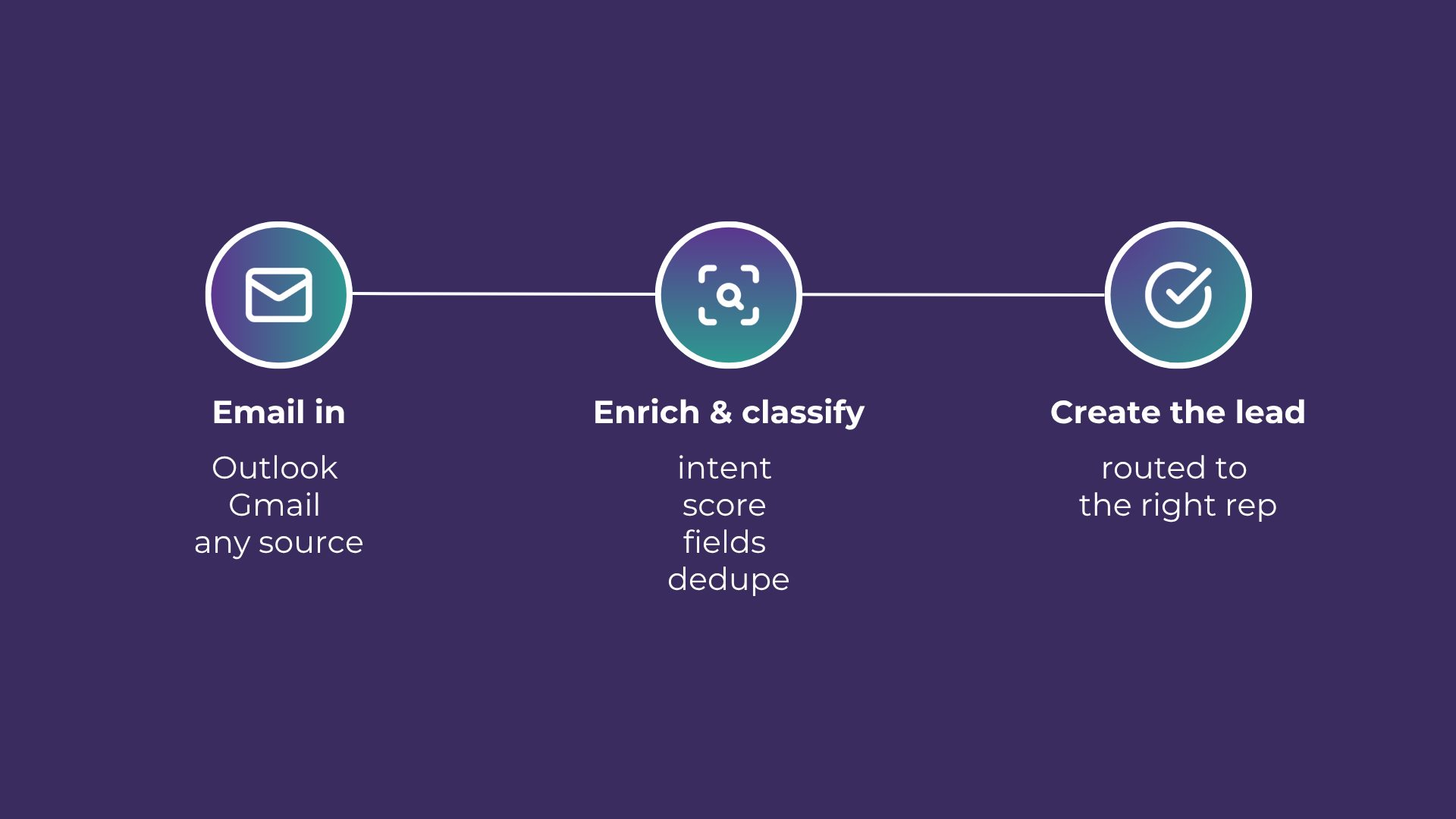
Email-to-Lead: Salesforce Lead Management with AI
Lead management is the lifeblood of any successful sales operation. At a time where customer expectations are higher than ever, ensuring that potential leads are captured and nurtured effectively can make all the difference. Introducing Email-to-Lead – AI Edition.
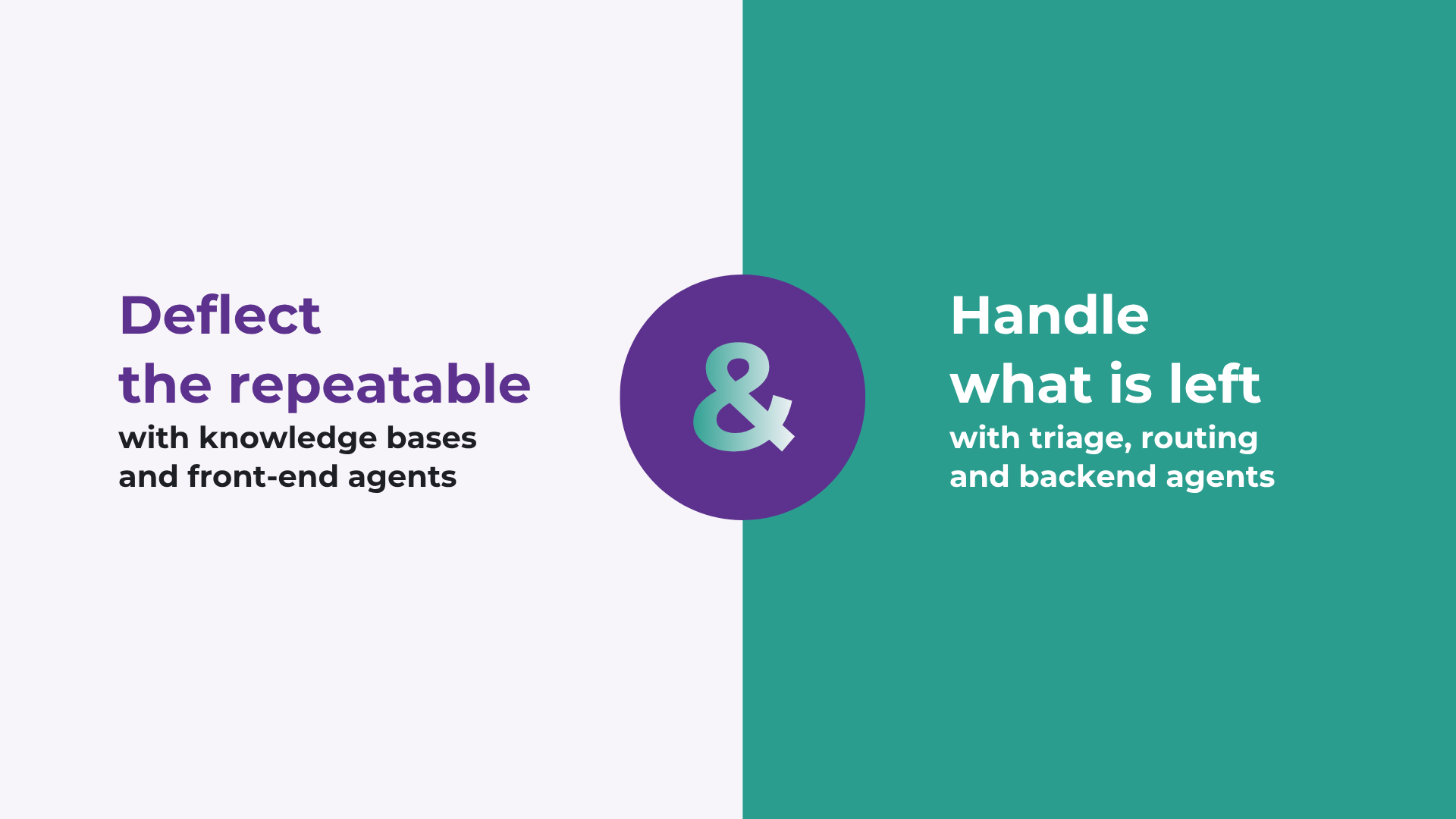
How to improve Salesforce case deflection rates
Deflection only solves half the problem. The cases that do not deflect are the ones that breach SLA. How to improve deflection rates, and how to handle what is left.

Stopping SLA Breaches in High Volume Salesforce Workflows
Learn how to move from reactive reporting to proactive management for better service level agreement adherence.
READY TO SEE IT IN ACTION
Map your workflows with our team.
30 minutes, no prep needed. We will map one workflow you handle today and identify where orchestration would change the outcome.