A Pattern for Enforcing Complex Financial SLAs in Salesforce

Since the Financial Conduct Authority’s Consumer Duty rules came into force, the pressure on UK firms to evidence fair client outcomes has become relentless. This makes robust SLA management a matter of survival not just good practice. Yet many firms still rely on systems that were not designed for this level of regulatory scrutiny.
The Hidden Risk in Standard SLA Workflows
Many financial services firms believe they have SLA management covered because a timer starts when a case is created in Salesforce. This confuses basic time-tracking with genuine enforcement. A standard Salesforce Flow can monitor a deadline but it often fails when complexity enters the picture – which it always does in finance. Multi-stage client onboarding, intricate complaint resolution paths and layered compliance checks create countless opportunities for a process to stall.
The real point of failure is not the clock. It is the inability of linear automation to manage exceptions. When a required document is missing or a compliance review needs more information, the process breaks. It defaults to manual intervention. We can all picture that moment – a high-priority case is stuck and teams start chasing updates over email or Slack. This is slow, prone to human error and leaves no clear audit trail. For Salesforce SLA enforcement financial services, this manual gap is a direct threat to regulatory compliance.
The Compounding Cost of Manual Exception Handling

When a workflow breaks and requires manual intervention, the costs multiply quickly. These are not just minor operational headaches – they represent a significant and often unmeasured drain on the business. The reliance on people to fix system shortcomings introduces financial, operational and strategic risks that compound over time.
- Direct Financial Costs: The most obvious costs are regulatory fines for breaching client service agreements. In the UK market, this can also include mandatory client compensation payments. Beyond penalties, the erosion of brand trust in a competitive environment has a long-term financial impact that is harder to quantify but just as damaging.
- Hidden Operational Costs: Think about who handles these exceptions. It is often highly skilled – and expensive – staff. Their time is spent triaging stalled cases, re-routing work and chasing updates. Every hour they spend fixing a broken process is an hour not spent on high-value work like advising clients or managing risk. This is a profound waste of expertise.
- Strategic Scalability Costs: A process that depends on manual fixes cannot scale. As client volume grows, the number of exceptions increases proportionally. The manual model becomes a bottleneck that prevents growth and introduces systemic risk. Poor exception handling is not just an operational issue – it is a direct threat to a firm’s ability to grow safely.
A Repeatable Orchestration Pattern for SLA Compliance
The solution is to move from simple automation to intelligent orchestration. Orchestration coordinates the multiple steps, people and systems needed to achieve a compliant outcome, especially when things go wrong. It is a system designed to guide work through complexity. A proper Salesforce workflow design using a tool like Flow Orchestrator provides a repeatable pattern for building resilient processes.
This pattern involves three key steps:
- Deconstruct the Process into Interactive Stages: Instead of a single monolithic process like ‘Resolve Complaint’, break it into smaller, defined stages. These could be ‘Initial Triage’, ‘Compliance Review’ and ‘Client Communication’. Each stage has a clear owner and specific entry and exit criteria. This clarity alone reduces ambiguity.
- Assign Stage-Specific Work and Exception Paths: For each stage, define the work required – often a screen flow guiding a user through specific actions. More importantly, build pre-defined ‘off-ramps’ for common exceptions. If a document is missing at the ‘Compliance Review’ stage, the orchestration can automatically send the case back to the previous stage with a clear task for the owner. This is the core of effective SLA compliance automation. As an article on Medium notes, orchestration is critical for managing automation at scale when processes become complex.
- Centralise Monitoring and Accountability: This pattern provides a single, real-time view of all in-flight processes. Managers can see exactly which stage a case is in, who is responsible and how long it has been there. This transforms SLA management from a reactive, report-driven task into a proactive discipline. Building a system to manage these complex service workflows is central to effective operations.
The Key Signal Your SLA Process Is at Risk

How can you tell if your current process is failing? There is one clear signal that rises above the noise – a high volume of cases being manually re-assigned or escalated outside of your defined Salesforce workflow. When your teams are constantly using email, Chatter or Slack to say “can you take a look at this?” it is proof that the system is not working.
This is not just a sign of inefficiency. It shows that the designed process is too rigid to handle real-world scenarios. It forces teams to work around the system, creating a compliance ‘black box’ where actions are not tracked and accountability is lost. Have you checked your Salesforce Case history recently? Audit the number of times the ‘Owner’ field changes on a single record or look for status updates accompanied by frantic manual notes. Quantifying these interventions provides a clear business case for adopting an orchestration model. A process that requires constant manual correction makes guaranteed SLA enforcement impossible.
Moving from Reactive to Resilient SLA Enforcement
For UK financial services firms operating under intense regulatory oversight, SLA compliance requires a fundamental shift. The goal is no longer to just track time with linear automation. It is to build resilient systems with orchestration that can guide teams through complexity and handle exceptions without manual workarounds. This is a necessary change in mindset for any firm serious about meeting its obligations. If you are evaluating how to implement these patterns, our team can help map your current process.
Ask an Expert any question about Salesforce SLA enforcement in financial services by emailing sales@ortooapps.com.
Related insights
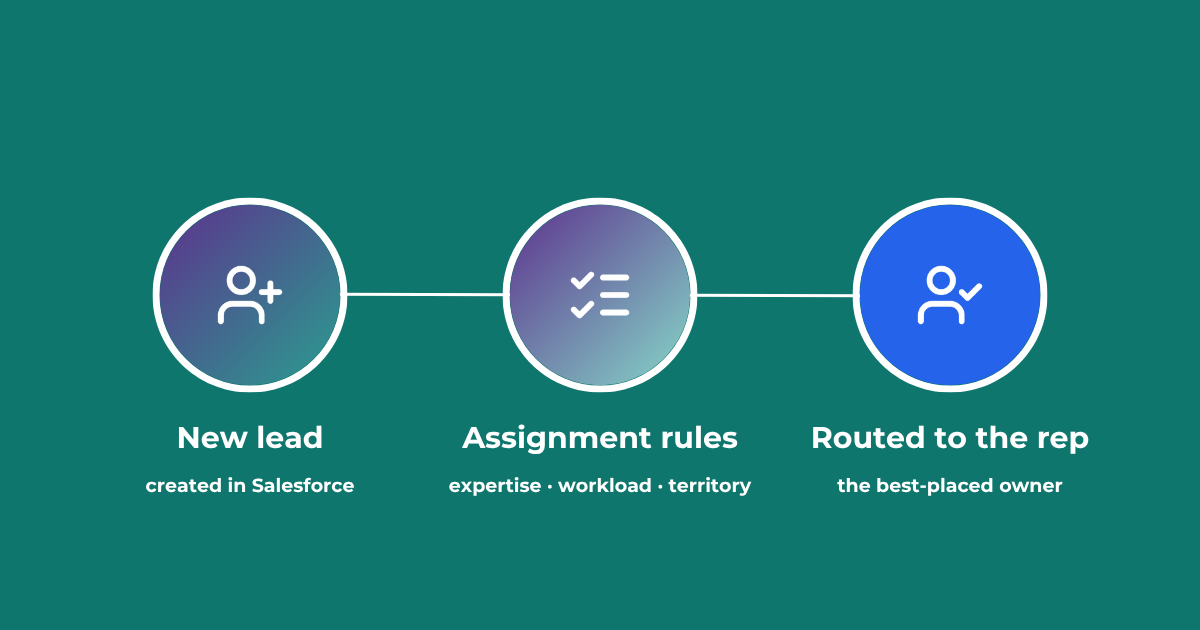
Lead Assignment Rules in Salesforce: Automate with Q-assign
This comprehensive guide to optimizing lead assignment rules in Salesforce will stand you in good stead for maximizing your sales reps’ productivity and performance. Understand the benefits of highly effective lead assignment, explore Salesforce best practices and stay ahead of the competition – with added insights into AI-driven revenue orchestration
Lead to Account Matching: Seamlessly Connect Leads to Accounts in Salesforce
Lead to account matching connects every inbound lead to the right account in Salesforce. Here is how it works, where it breaks, and how to automate it without manual data entry.
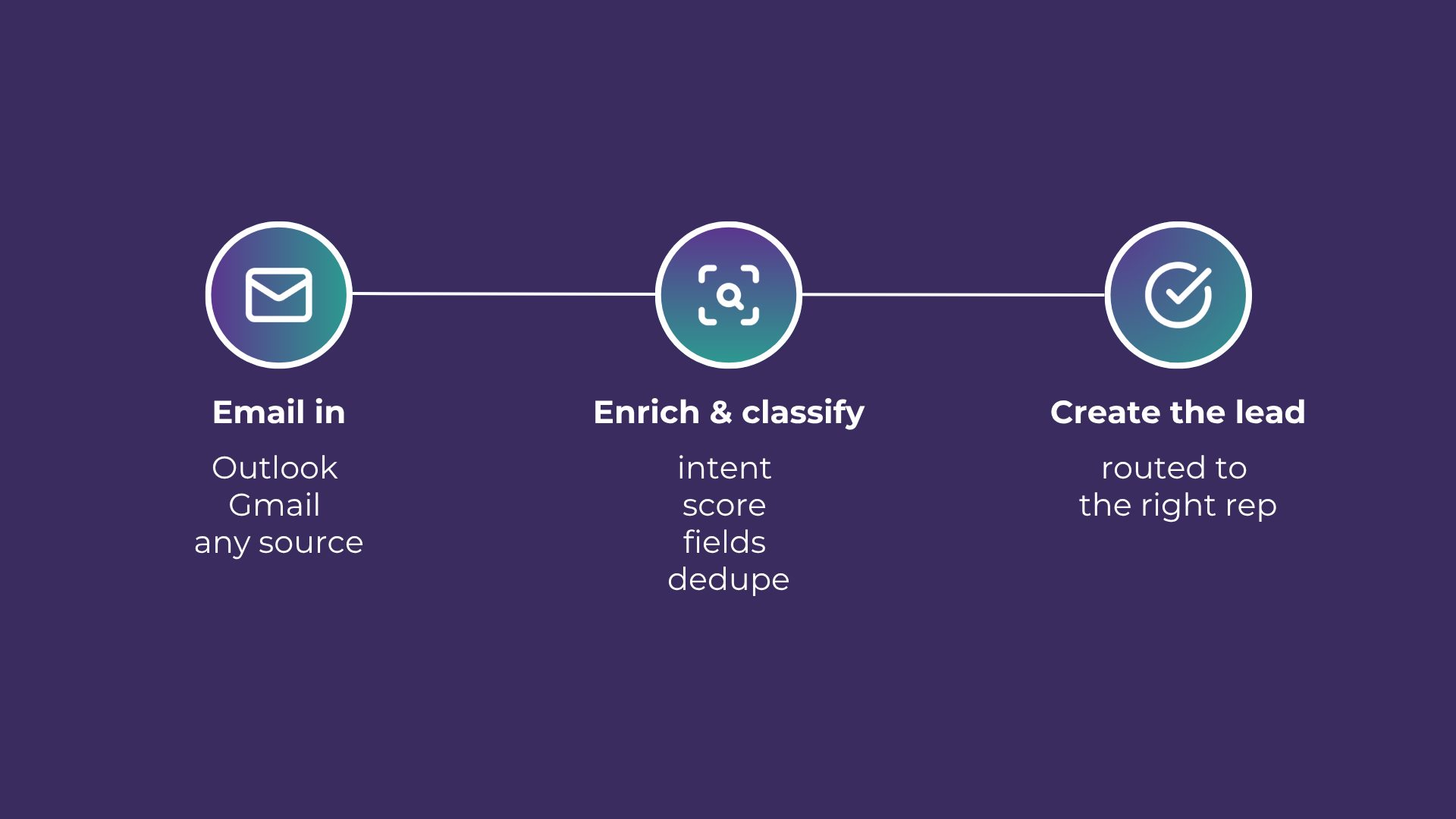
Email-to-Lead: Salesforce Lead Management with AI
Lead management is the lifeblood of any successful sales operation. At a time where customer expectations are higher than ever, ensuring that potential leads are captured and nurtured effectively can make all the difference. Introducing Email-to-Lead – AI Edition.
READY TO SEE IT IN ACTION
Map your workflows with our team.
30 minutes, no prep needed. We will map one workflow you handle today and identify where orchestration would change the outcome.